
After 11 years, Scottish punk band, the Rezillos, return with a new studio album, ‘Psycho Tornado’. Its original working title being ‘Explotando’, it does exactly what it says on the tin: whipping up a frenzied hurricane of loud punk rock energy, infectious hooks and punchy lyrics that give a much needed shake up to the gloom of the current times we live in. I caught up with founding members Eugene Reynolds and Fay Fife on their nationwide tour, in which they were also keeping it in the family with support from Martin Metcalfe’s Goodbye Mr McKenzie, who co-produced the album after also having worked with contemporary Scottish punk rockers, the Skids. We chatted about the band’s new album song-by-song, getting to grips with lyrics and double meanings, their New York glam days at the Peppermint Lounge and CBGBs, supporting the B-52s and why they’ll never reform their spin-off doppelgänger, the Revillos.
Firstly, I want to say well done on getting your first studio album out in 11 years.
F: That’s quite quick for the Rezillos: from the first to the second, it was hundreds of years. So 11 years is good for us.
How come it’s taken so long since ‘Zero’, your last one in 2015? I think it’s one of the best albums I’ve heard this year. I don’t know how long you’ve been working on it, but it’s better sometimes to wait until it’s ready.
F: I think the nature of the Rezillos [is] they’re a very creative bunch, but also at times towards constipation. So [we] get a bit creatively blocked and also because we’re so well known as a live band and people want to see us live, that we get quite involved in that. Whereas, my main interest is recording, but we tend to go that way. So it took us a lot to get in the studio. I had to keelhaul a few people, but I got them there in the end.
E: I don’t think it’s uncommon and sometimes it takes you a while to move those building blocks around until you get a song in a position where you feel it’s expressed, and even when you record it, quite often you listen back to it and think, “I wish we’d done that there,” or “wish it said that there.” But you just have to draw a line. Some of the songs came together earlier than the others, and some of them got finished in the studio. And even those songs in particular, quite often, when you start playing them live, you think, “Oh, maybe that’s the way to do it.”
You’ve had a lineup change as well. Did you have a consistent lineup at the time when you were doing this album?
F: Yes, it was a consistent lineup when we did the album. But the other thing as well, I brought in Martin Metcalfe to help out. He co-produced the album, but he also did a wee bit of side guitar and backing singing and just helped with things like that. So he was a sort of an addition, I suppose, and he’s on tour with us at the moment.
I think it’s better when you leave time because it’s like this explosion of creativity comes out over that period. It’s building up and to get that product out later on is actually not a bad thing. You’ve kept the punk genre alive because punk’s so worn out now after so many years because you’re very limited in what you can do. I wanted to ask about some of the tracks because I know you’re not really a political band, but there’s definitely some references to things that are going on now, and that’s why the genre of punk is quite good to air those.
F: I would say this: I think we’re all politically engaged, but we’re not a sort of band that’s going to make slogans or anything like that. It’s more like putting things out there and juggling things about, and hopefully, get people thinking about things. Also, we’re very arty as well, so some of our concerns are not directly in the political sphere, but we all are engaged.
Why is it called ‘Psycho Tornado’?
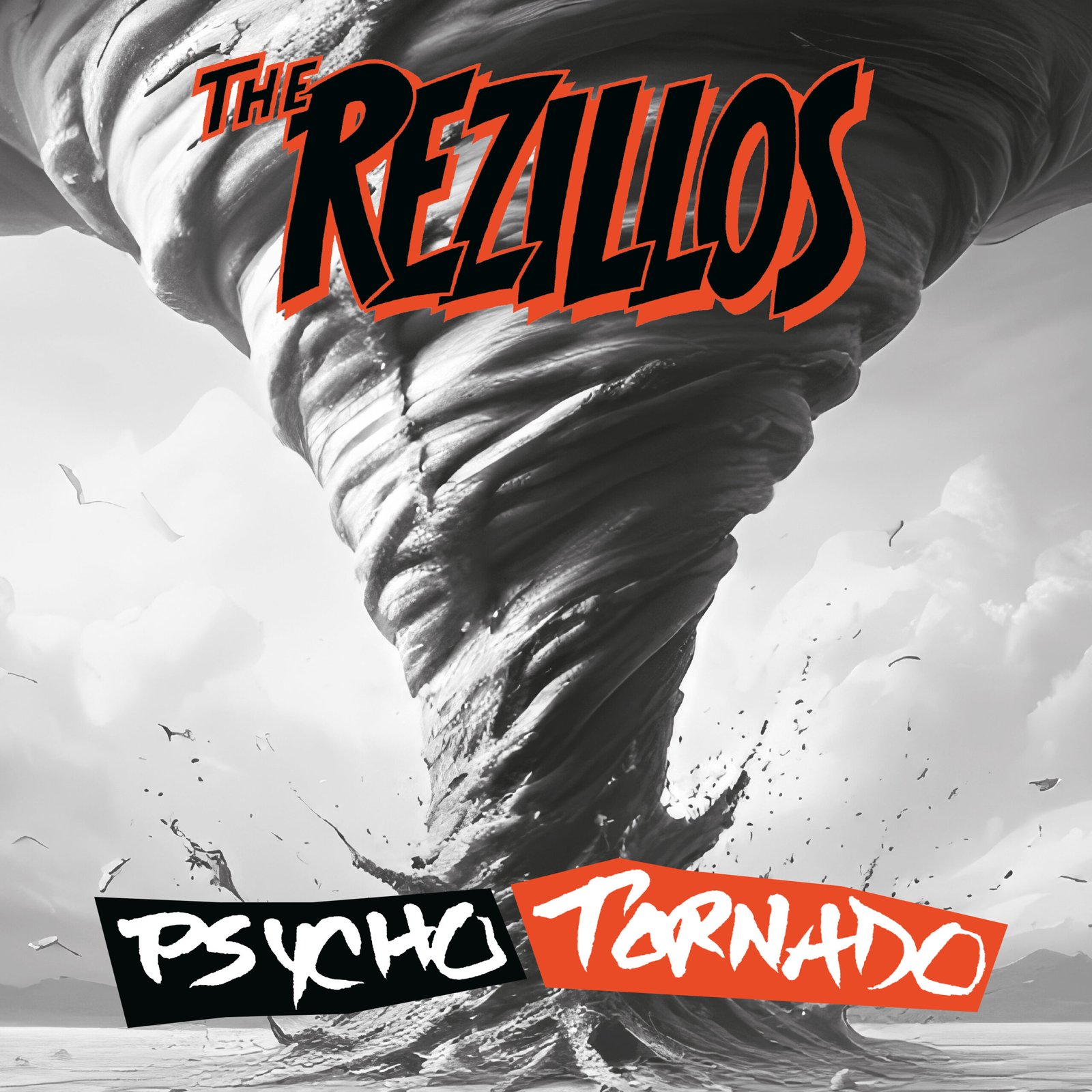 F: Well, there’s a wee bonus track on the album as an instrumental, and first of all, that was called ‘Psycho Tornado’, and then we thought that’d be a really good name for the album, which was…
‘Explotando’?
F: It’s ‘Explodanto’, yeah.
I know because that sounds like a hurricane whipping something up.
F: Yeah, yeah! I guess we were looking for a name for the album, and Eugene said he thought it had a double meaning because it does relate to what’s going on in the world. So that’s how we would comment on things, but it’s also to do with how you might feel inside yourself, so it’s personal. It could be a psycho tornado inside yourself, but it’s also how we see things happening in the world, and I thought the double meaning was very good, and so we went for it.
Yeah I can see there’s a lot of double meaning, so it’s working on a bigger level, but also a personal one. If I can just go through a few songs…‘Sugar Punk Fairy’ – I thought it was like a dual personality character you were talking about.
F: Well, Eugene wrote the lyrics to that. I suppose it’s us really congratulating the trans community. But it’s also because punk in the early days was about shaking up and looking different. I think if you’re a trans person and a punk, then you really are looking different. You know what I mean? And really celebrating that.
E: It was more about identity confusion, as far as I’m concerned, and also being able to express yourself without being attacked or judged. The words, maybe they make sense to to us, but whether they make sense to someone else…”Show your magic to the people”, which is about being yourself in front of other people; it’s all pretty straightforward, like you see some people who use their clothes to express who they are, and you see that in punk rock a lot – people find their identities there. So it’s really about showing who you are, and not being forced into having to be or look like someone because other people want you to look like that.
There’s so much transphobia. That’s probably the most punk thing you can do because those people are the most attacked at the moment out of all marginalised groups.
F: Yeah, I know. It’s a darn shame. So it’s celebrating that difference and then it’s a cross between having a slightly macho attitude, but then looking any way you want to, like the most decorative ballet festooned person or somebody in a ballet dress but at the same time, really having this punk attitude as well.
And then Fay, you sang on ‘You’ll Be a Gangster Soon’. Is that one you wrote?
F: Yes, all the songs – myself, Eugene, and Martin – we all collaborated, but certain songs were the inception from individual people. ‘Sugar Punk Fairy’ was more the inception from Eugene, and you’re right: ‘You’ll Be a Gangster Soon’ was from me. That was really an interesting song; it came together very quickly. There were other verses that didn’t get into it because we decided to make it really short and punchy, but in a way I would have quite liked the other verses. We maybe made it slightly more explanatory, but I actually wrote it about somebody that I saw in the shop round the corner from me; the local scene round about me in Abbey Hill.
There is a certain amount of predation going on in the overall thought process. I’ve seen people say anything to get laid, and I always thought, “God, you just say anything.” But then, when you see what governments or heads of governments say that are blatant lies, and that everything they say is a denial of the truth or reversal of the truth dressed up, to me, it just draws parallels.
There’s a lot of gangster activity going on. If you get your ears on the go, you hear the most bizarre conversations. And when I was in the corner shop, it was this most beautiful young woman with long blonde hair; so glamorous, really tall, with hot pants on, legs to the ceiling and all the rest of it. And she was doing a big drug deal, which was, “Oh yeah, 20k, 30k, yeah, yeah, no, no, 20k, 20k, 30k, yeah, yeah, yeah,” and I saw the poetry in that. That’s all. And I also thought, there’s a lot of developmental trajectories you can get on, but having a developmental trajectory that ends up with you being a drug dealer is not really a brilliant one. There are lots of songs that are developmental songs like [the lyrics] “Girl, you’ll be a woman soon” are about developmental sequences of young women or young men. So that’s what that’s about: it’s not the best career choice, but it’s also a choice.
‘Down to Earth’ is one of my favourites. It’s so simple: it’s an explosion of energy, and the drums, especially on that, I loved. It sounds like Rats Scabies.
E: Does it?
Yeah. I just like the energy behind that one. Is there anything you’d say about the lyrics at all? It’s a double meaning, I think.
E: Yeah, yeah. There is a double meaning in it. Initially, I was thinking about the war by Russia [in Ukraine] – “Careful where you point that rocket.” There were other lines that I didn’t put in that would have been more explicit about that, but I think the feeling was not to go too much into that particular area. It’s more about watching your back, looking ahead, what can be coming from somewhere else and the enemy’s inside. You don’t know what’s coming from where really.
“Say anything to get laid,” – I love that. It sounded like a predatory man or something.
E: It is. There is a certain amount of predation going on in the overall thought process. I’ve seen people say anything to get laid, and I always thought, “God, you just say anything.” But then, when you see what governments or heads of governments say that are blatant lies, and that everything they say is a denial of the truth or reversal of the truth dressed up, to me, it just draws parallels.
‘Peppermint Lounge’ – there was a link there to New York City and glam. You guys played at CBGBs and also met the Ramones. The underground glam New York scene – is there anything in that song?
 F: Oh yeah, it’s definitely in that song. The Rezillos were in New York early on and we played in CBGBs. But unofficially, which is a shame, because we’ve never gone down in the annals, but we recorded our first album there. So I think going to New York was a big thing for us because the sort of aesthetics of New York really fitted with the Rezillos, so that was like an amazing thing. But then later on, the Revillos went back and played a lot in New York, and we played places like the Peppermint Lounge and other really groovy places; there were some real scenes going on there of inherent grooviness. So I wanted to capture that, what it was like being in those scenes, but also, in particular, what it was like to be a young woman in those scenes and the sense of freedom it gave you, but maybe only a limited freedom. There was a certain something about the freedom, so that comes in “dancing on the Brooklyn Bridge,” but also you’ve got to fight to say what you mean.
Yeah, because there’s a reference to ‘she can knock someone out’?
F: Yeah, yeah. But she knocks them out with her amazing coolness and dancing.
How do you balance up doing both types of vocals, your more mellifluous vs shouty ones?
F: Well, be quite honest, you are putting your voice at risk. But I did have a nickname as Foghorn Fife; I do have a natural Foghorn, and so that comes very handy. I really love singing and it would be really limited to just shout all the time. So sometimes you need to give it “Ya! Hey!” But you have to need to do other things as well. It probably is a bit challenging technically, but I’m still surviving.
How did you scar your vocal cords back in the day when you were playing with the Undertones tour? Was it because of that?
F: No, no, no. I think it was much, much worse then because sound systems were so poor, and Jo Callis used to just keep his guitar up really loud all the time. Well, what can I say? You’re battling with an acoustic instrument against a very loud electric instrument, amplified. But people are not like that now; I don’t work with people like that. I also work with people that are quite tuned in to what it’s like to work with vocalists. But a lot of the reason back then was really bloody awful sound systems, and but there was also a lot of psychological stress, and I felt that the Rezillos were in a very, very bad period at that time, and I’m not surprised we all broke up, and that goes right to your voice. I’ve never experienced anything that’s so connected to your emotional state as your voice. So if you’re stressed, that’ll go from my voice. Along with the terrible sound system, I basically lost my voice for a year.
E: And it also came from that period of time. The sort of guitar sound that people wanted to get needed something like a Marshall 4 x 12″ stack, and the only way that’s going to sound good is cranked way up, way louder than you can possibly sing against it. And the other thing is, if you’ve got some songs that are written in a particular key for the guitar, and the guitarist wants to play in that key, even if it’s too high for your own voice, you can’t reach the notes. And if you struggle to reach the notes, you blow your voice out. That’s also contributed to that. And what the Rezillos have done since when we came back again [is] ‘How do we get round some of these songs where the same thing may happen again?’ So we detune all the guitars a tone, so all our songs are actually a tone down from concert pitch. You don’t notice it, but they are. And if we put them back to a concert pitch, we could do some of them, and some of them we blow our voices away again. But it also adds a certain earthiness to the way the guitar sounds when you detune it. But that’s about the limit. If you go much more than that, the strings are just flapping around like confetti.
F: But with experience, as you grow older, everybody realises, or at least they should realise, a human voice is an instrument – you’ve got to treat it with respect. You can’t treat it as though it’s something crude and basic: it’s got to be nurtured and looked after, and being able to do that just comes with a bit of experience.
On ‘Cranium’, I like the sci-fi side to both your vocals as well as the lyrical content of the song.
E: Well, maybe you hear it better than I do.
The way you distort your vocals slightly, unless it’s a studio effect.
 E: I think my voice does distort and rasp in a certain register. There’s other bits where I can sing quite softly and I can sing fairly high. But is there any sci-fi element to that song? No, there’s very little sci-fi element in any of the songs on this album. Fay mentions the bit about the “flying saucer survivor”. Fay thinks there’s more sci-fi elements in it than I actually see…
F: And maybe you’re getting that affirmation.
E: Initially it was about someone who, everything they did felt like a spike in your brain…you think, “Oh no, not again! What are they doing? What are they saying that for? What are they doing that for?” And so that was where it’s like, “She really stuck it in my cranium.” It’s like a pickaxe to the brain, and I hooked in with whatever happened to these people whose skulls you find in caves that have a hole in them, and they say this person didn’t meet a very good end. That’s what it’s about.
That’s a single, right? And it sticks in your head.
E: The record company were talking about doing four singles off the album. I can’t even tell you which ones they would be. Could you tell us which ones they would be?
‘Sugar Punk Fairy’, ‘Down to Earth’…they’re catchy, they stay in your head. Even ‘Curse of the Pretty Man’…a lot of them. Oh ‘Edge of Delight’, definitely. That one was probably the third single. That’s really catchy.
F: Yeah, we’ve had two singles out…the second one was ‘Peppermint Lounge’.
But that’s good because it’s slightly different to a punky sound. I wanted to talk about some of the other sounds on the album. So, ‘Edge of Delight’ sounds like it could be about [Donald] Trump.
E: It’s about frustration, really. Do you think so? This is a great thing. If people hear something different, I actually prefer that than having to literally say what was going through my head at the time.
It just sounds like someone who does whatever they want. It’s sarcastic, isn’t it?
E: There’s an element of it, yeah. Sometimes I don’t even analyse what I write. I just see if it hangs together as threads, and if it causes thought process in someone else, I’m always interested to see what their thought and interpretation was in something because it’s like, ‘Oh I didn’t hear it like that.” Sometimes that’s more important than what you wrote.
The lyric about ‘leaving the building’?
E: “You’re taking me to the edge of reason’ – I’m out of here. It’s maybe going back to what I was saying about [how] we like to get things out there that provoke people to think. So for example, to me, ‘Sugar Punk Fairy’ is about trans people, but it’s maybe one aspect of what it’s about. But there’s lots. You might say, I see it as free expression. So it’s like I’m bringing my own self to it. And the fact that in ‘Cranium’ you’re seeing these outer spacey type things, I see that as well because the word cranium reminds you of an outer space type sci-fi image. And so I’m getting that as well. But I think we’re more trying to provoke thought rather than give a definite thing, so you maybe know the songs better than I do.
‘3-man Junkie Riot’…that was a completely different song for the feel of the album.
F: ‘3-man Junkie Riot is a particularly strange thing in that I wrote the lyrics during Covid: I went down to the Co-Op and there was some fracas going on in the street, and I was accosted by these three gentlemen who clearly had addiction issues and they did ask me some strange questions. I think one of them said, “Are you the daughter or are you the sister or are you the brother of…?” They were asking me these strange questions, and then there was something going on where they were desperate to get into the shop, and they couldn’t get into it: there was a fence keeping them back and it was such a weird scene. It was a strange poem. I thought it’s too over the top to make into a song, but it was made into a song. It’s more like a story. And before it had lots more verses, but it’s also written as though it’s a piece of epic poetry, like ‘The Odyssey’ or something like that. We’re going on this great journey, and we’re meeting these gods and goddesses, and we’re going to form our own religion, but actually, it’s these guys who are really experiencing a terrible thing stuck outside a shop where they really intended to go in and probably steal a bit of cheese to sell.
The first time I heard the B-52s was when we were in New York recording ‘Can’t Stand the Rezillos’. So what does that tell you? Someone in the Cramps said, “Oh, I’m glad you’ve come to see our show instead of going to see the B-52s.”
At the B-52s show you had the sci-fi backdrop screen. I liked that because it was all these old B-movies.
E: I thought there were some similarities in [the B-52s’] backdrop. It’s not that we even know them, or we’ve ever met them, and never even met them at shows. But I saw elements of our backdrop screen [in theirs].
Yours was better.
E: Thank you, thank you.
I loved that show generally, though. Devo were amazing. I didn’t think they would play again, but that was a scam. They did continue to tour. The only thing I’d say is the B-52s didn’t mention you guys: they called out to all the bands that played, but they didn’t mention you.
F: I actually thought that was terrible.
E: Yeah I thought that was a deliberate move. Well I always think that shows how much of a threat you might be to them.
Right, but are they an inspiration on you guys at all? Because people keep saying that.
E: No, they’re not.
F: The Rezillos grew up in the fevered, strange minds of ourselves, miles away from any of that, and without any influence whatsoever.
E: I would also say the first time I heard the B-52s was when we were in New York recording ‘Can’t Stand the Rezillos’. So what does that tell you? Someone [in the Cramps] said, “Oh, I’m glad you’ve come to see our show instead of going to see the B-52s.”
F: But that’s the first time we had ever heard of them, and even then we didn’t hear their music. We just heard about them.
You played a Revillos song on support for them, ‘Motorbike Beat’…are you ever going to do anything with that again, or reform it?
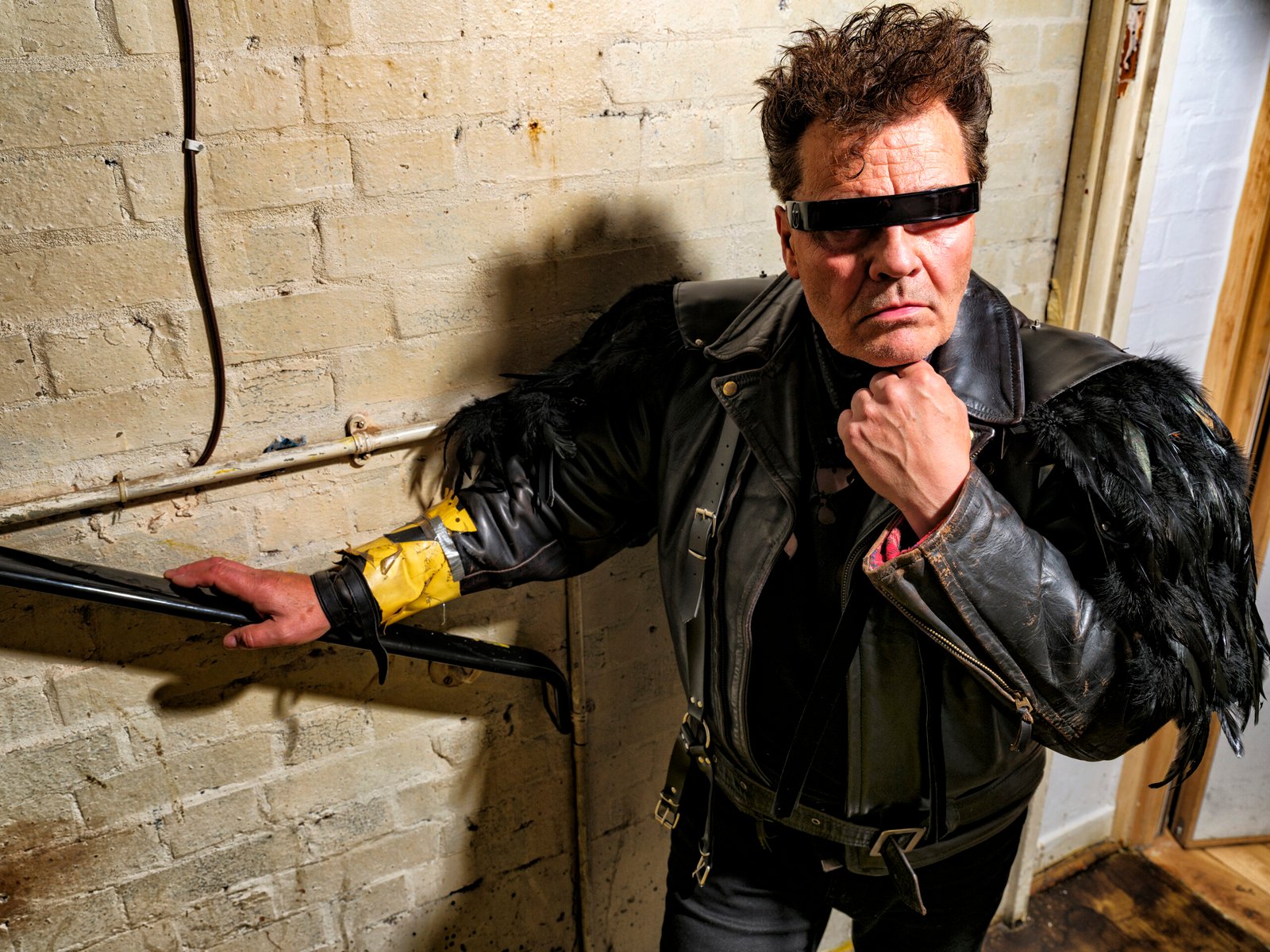 E: Fay would like to [but] I don’t want to do it. I ended up being Jack of all trades in the Revillos: singing, playing the guitar, the keyboard, the saxophone…To me, my first love is the Rezillos, and I wanted the Rezillos to continue after the first breakup as the Rezillos, but we were told legally we couldn’t; actually looking into it now we could’ve done. So since we did a letter change, we decided we might as well come up with a whole load of new songs. It’s a funny sort of time when the Rezillos broke up, soon after punk was integrated and there New Romantic/electronic stuff and actually I don’t think you really could give that music away for a some years until the internet came along in the mid-90s. So as far as the Revillos are concerned, I’m not interested in doing anything.
There’s a vast range of musical influences in your music (glam, garage, psychedelia); that’s always been a running feature of it. It’s not just been punk music. Earlier than that. Is there any particular artist from whatever period that you’ve been influenced by?
E: I would say Little Richard. I used to love his voice and just the way some of those rock ‘n’ roll singers, somehow their voices just opened up into all these different areas, and Little Richard had a perfect exponent for that. Not Chuck Berry, not Jerry Lee Lewis but Elvis Presley…and I think, isn’t everybody influenced by what’s gone before? It’s just a matter of how they take it in and distill it.
What about the Beatles? Because your first single, wasn’t the B-side the cover of ‘I Wanna Be Your Man’?
F: Yeah, although it was a Rolling Stones’ song.
E: Yeah. Although I think it was penned by [John] Lennon. It’s all a big melting pot to me. There’s nothing [that] stands out as saying that or that and that are the be all and end all. If someone says, “What’s your favourite band?”, I don’t have a favourite band I just have favourite songs that I hear.
F: You’ve always mention Little Richard, and that’s a key point because it’s like so earthy and raw. For me it’s girl group music and the Beach Boys – I’m not much of a Beatles fan actually – and just a lot of raw music. Other things that come into mind now, what’s been going through my head the last few days is ‘Trash’ by the New York Dolls. Funnily enough, that’s all really relevant to ‘Peppermint Lounge’. And so that’s been coming into my mind for some reason. Lots of R ‘n’ B and soul. It’s just so much has gone into it. But I think if you were going to get it down to the real nitty-gritty, it’s got to be girl group music.
You can’t be pinned down to a specific sound, but what would you guys call yourselves if you had to say genre?
E: I always end up thinking in pictorial terms and describing things visually when I’m talking about sound, and also the relevance of pop art and Dadaism in our music, my favourite period of 20th century art. Not all of it: I can’t stand Salvador Dali – that’s absolute rubbish. But some of the other Dadaists I can identify with.
F: I think we do both have an appreciation for the artistic ridiculous, and it’s not like a comedy thing…it’s just being able to pick out things and see a slant on it, like an example is ‘3-Man Junkie [Riot]’. But it’s also rooted in reality and gritty; it’s also making something artistic about it.
The last question I really had was about Martin. So we mentioned him earlier. He co-produced it the album with you. What has he brought to this? I know he’s played guitar, but just generally with the creative and production process.
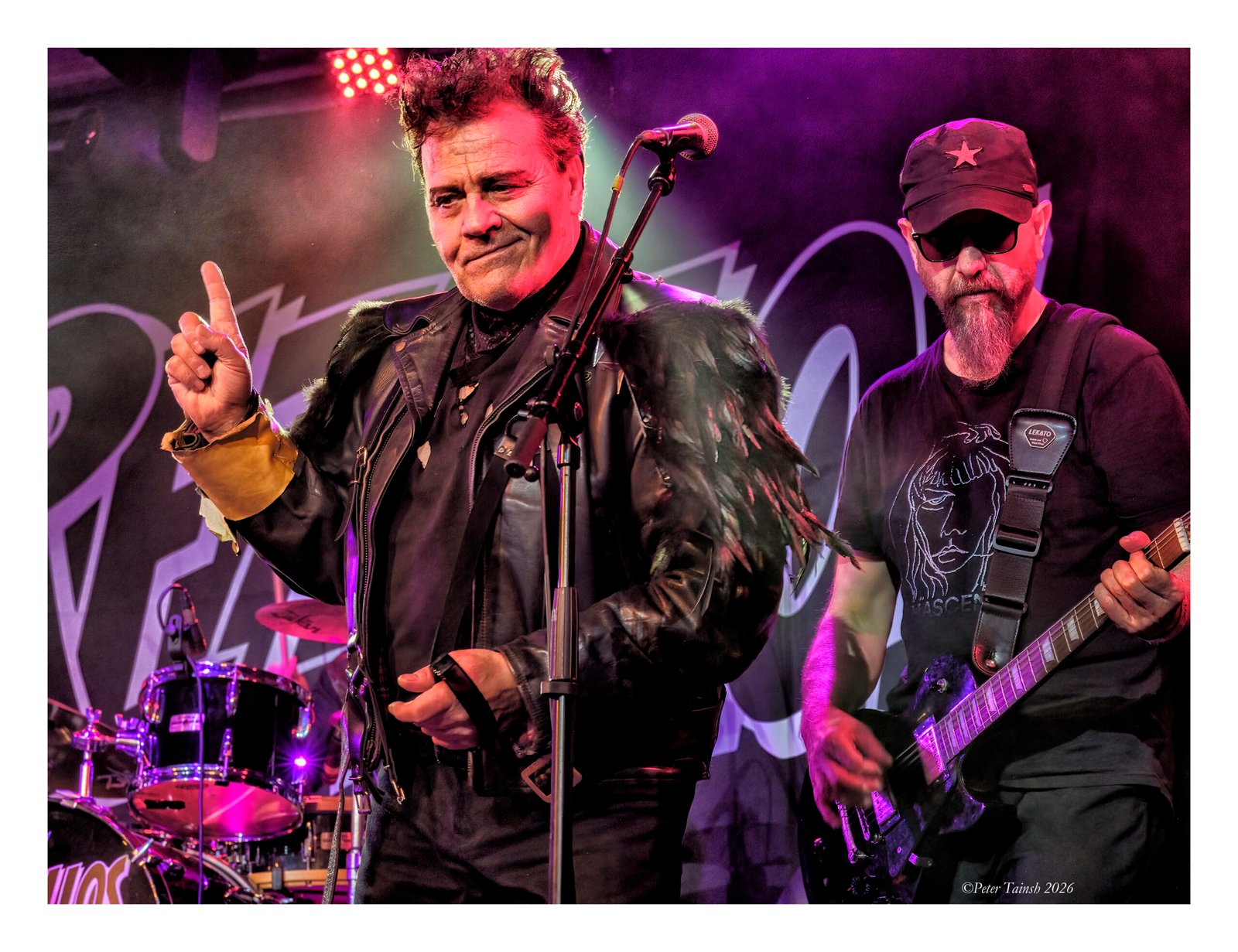 E: It’s interesting because from a creative process, a third person was introduced into that mix creatively specifically to give different ways to bounce, and just giving Martin some lyrics and saying, “What are you going to do with that?” or giving him some some musical pieces and say, “What do you think about the lyrics on that?” Although the lyrics really, they’re pretty much 100% from us, aren’t they?
F: Yeah, yeah. And I found that quite interesting because you came up with things you wouldn’t have thought of. Then you distill whether some of the ideas you come up with you feel are appropriate to go on the album. There were other songs we started we didn’t finish that we didn’t quite all see eye to eye on. It wasn’t really happening. So we ended up with some songs that seemed to work amongst all of us. When you work with someone you didn’t work with before, it’s either going to work or it’s not going to work. But with Martin, it did work, and I think it all fitted together very well for us. I would say I’ve been working with Martin for quite a long time before I got involved in the Rezillos, but I knew that he was very talented, and that I thought it would work well because I think what he brings is things that we are not, really. He’s got other skills compared to what Eugene has or what I have, and I knew that we could write well together and make a record, and he’s very good to work with. I also think it’s really important not to get stuck in and actually bring people in that are talented and give a different perspective – I think that’s a strength.
Photos (except album artwork) © Peter Tainsh.
© Ayisha Khan.