THE AU PAIRS – LESLEY WOODS: A DIFFERENT SEX
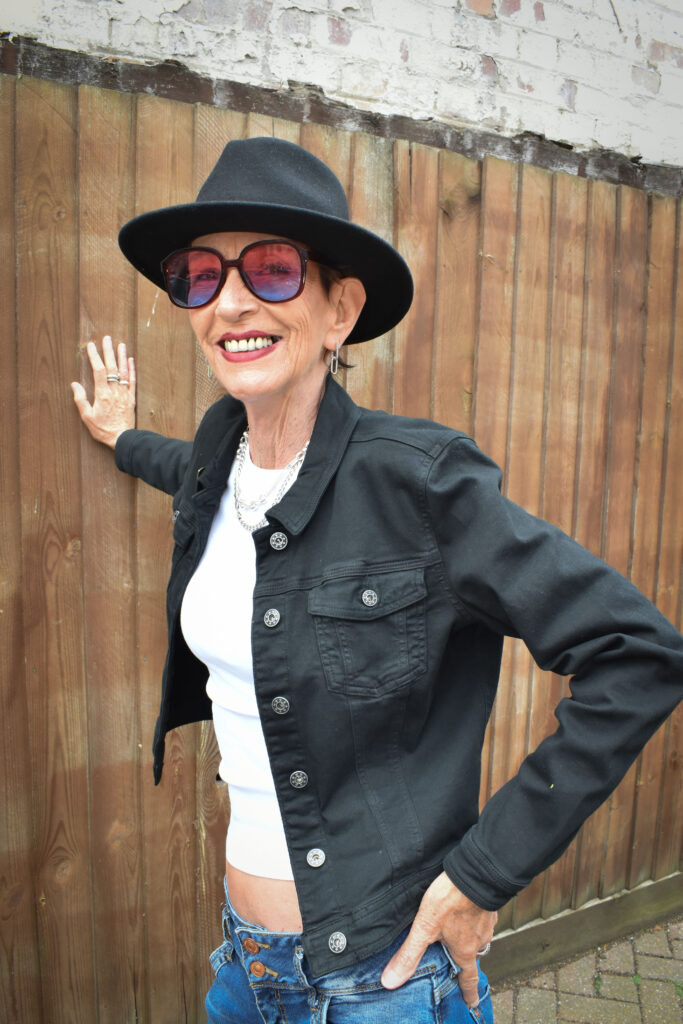
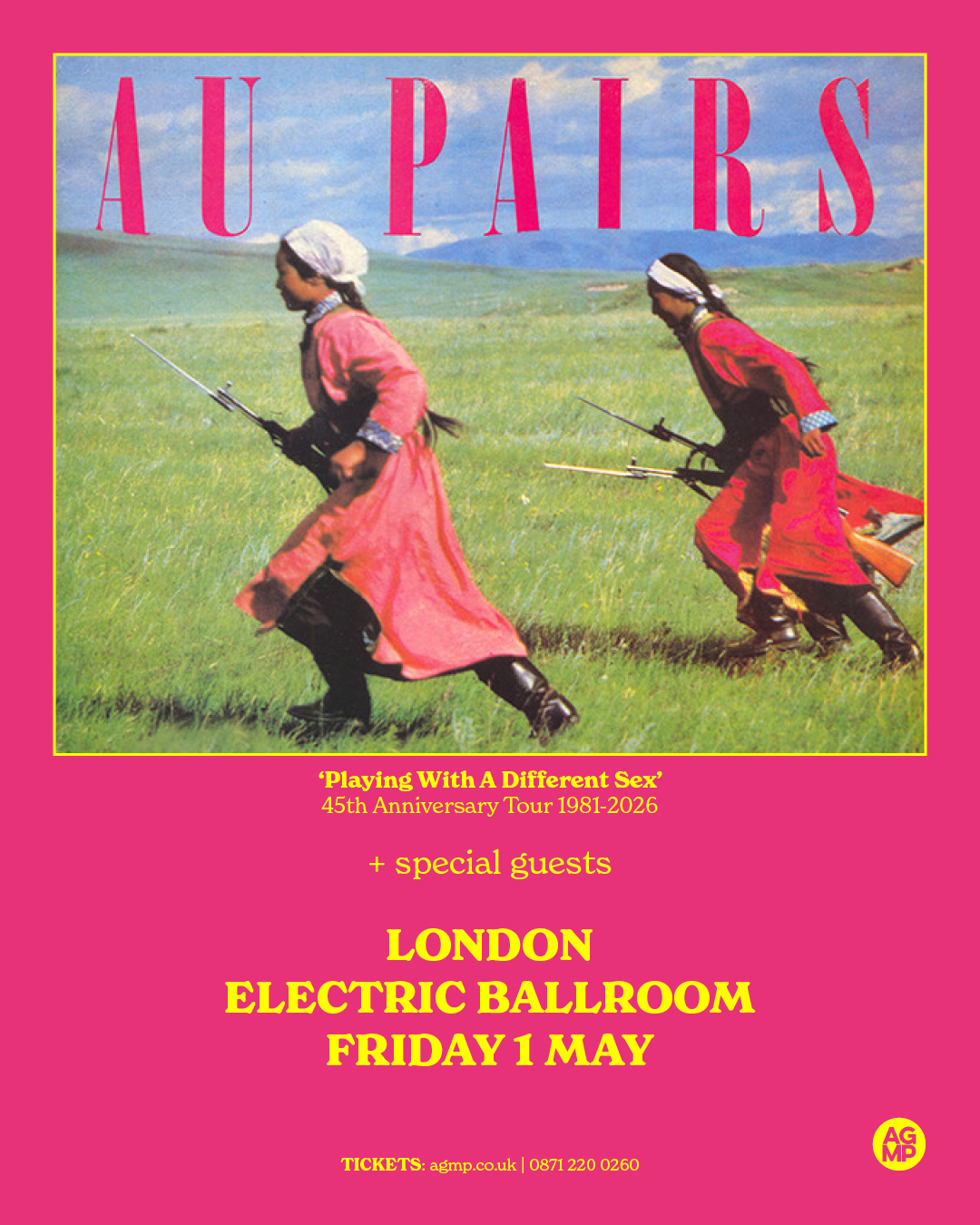
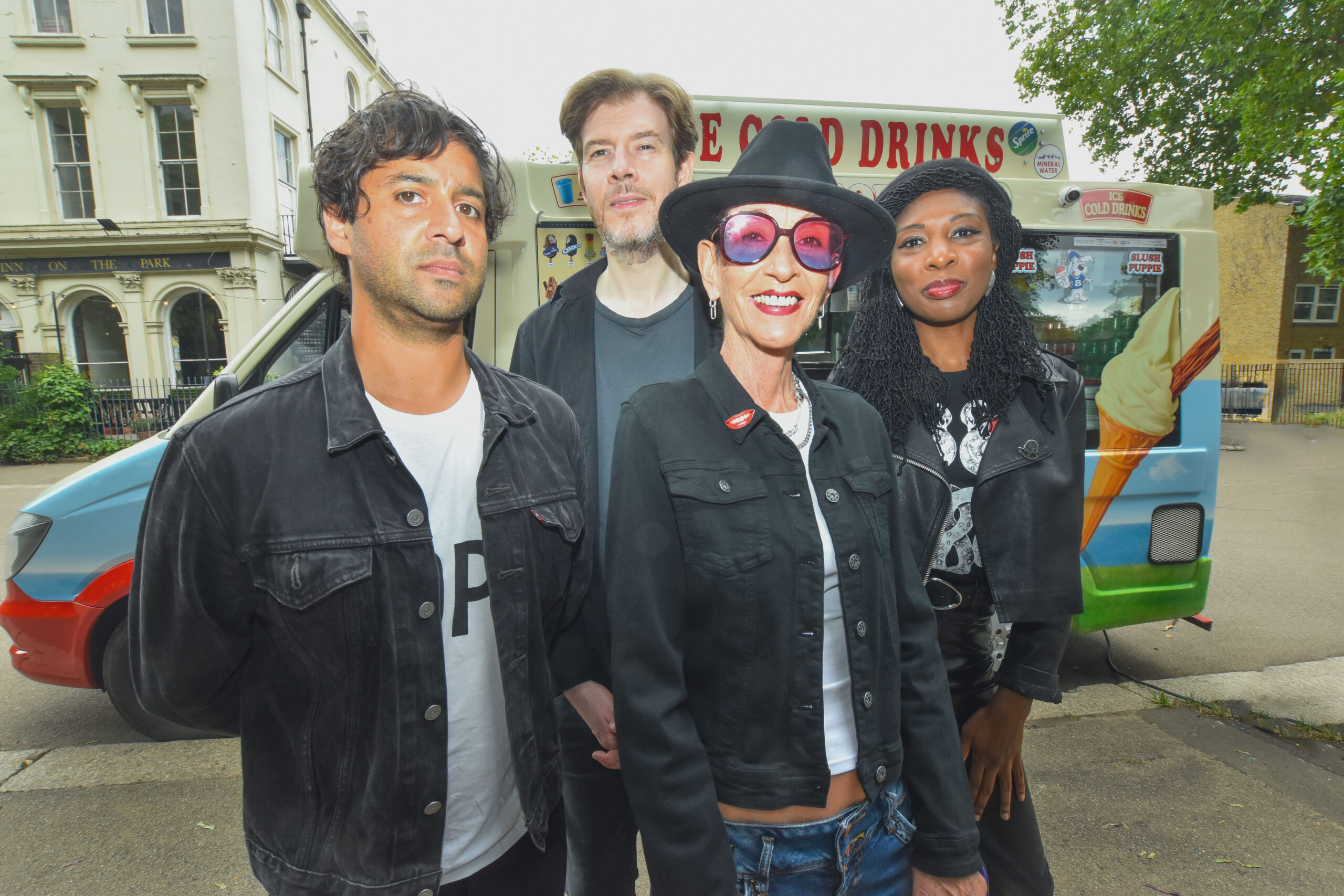
Forty-five years after the release of their debut album ‘Playing with a Different Sex’, the Au Pairs have reformed for their first live shows in over four decades, headed by founding member, frontwoman and songwriter, Lesley Woods, who now has a fresh, young band in tow. Being one of the prominent punk/post-punk feminists of her time, she has no qualms about standing up for her right to continue the band’s legacy and bring it to audiences across the world, despite the original members being somewhat unsupportive of her actions. I spoke to her during her busy touring schedule about reviving the old material after so long, the ex-members’ dispute, her feminist origins and looking back on taboo topics that still have relevance today.
How are you?
I’m a little bit tired: I just got back from more great gigs in Cardiff and Liverpool this weekend. It was fun but lotsa driving….
You’re three-quarters the way now through your 45th anniversary tour. How has it gone?
Well, I’m really surprised. I wasn’t sure what sort of response we’d get, but it’s a shit-hot band and the feedback has been all positive. It’s just been really amazing. 100% positive feedback – it’s been really great.
So when you say feedback, what about the audience reaction?
The audience has been totally responsive. I’ve gone out to the merch desk after most of the gigs and people have come up to me and been full of praise and have lovely things to say and and all the comments on social media have been positive. It’s great reviews and great feedback from the audience. I’m really happy with how it’s gone – it’s been a total success.
We’ve got Bearded Theory Festival on 24th May. Then we’ve got a bit of a break. We’re hoping to go over to Europe in November and then we’ll do some more dates over in the EU early next year, and we’ll do another UK tour in the second half of next year. But in the gap that we have between this tour and next year, we were hoping to be able to record an album, so I’m busy writing. We did have a studio set up for three days in June but we’ve had to postpone it to August…we’re hoping to lay down a few tracks to use as leverage to get an album deal. I’m busy writing new material, then we’ll need to rehearse it, then we’ll go and record it, but hopefully we’ll get an album deal. Fingers crossed.
What does working with new band members bring to a nostalgia tour?
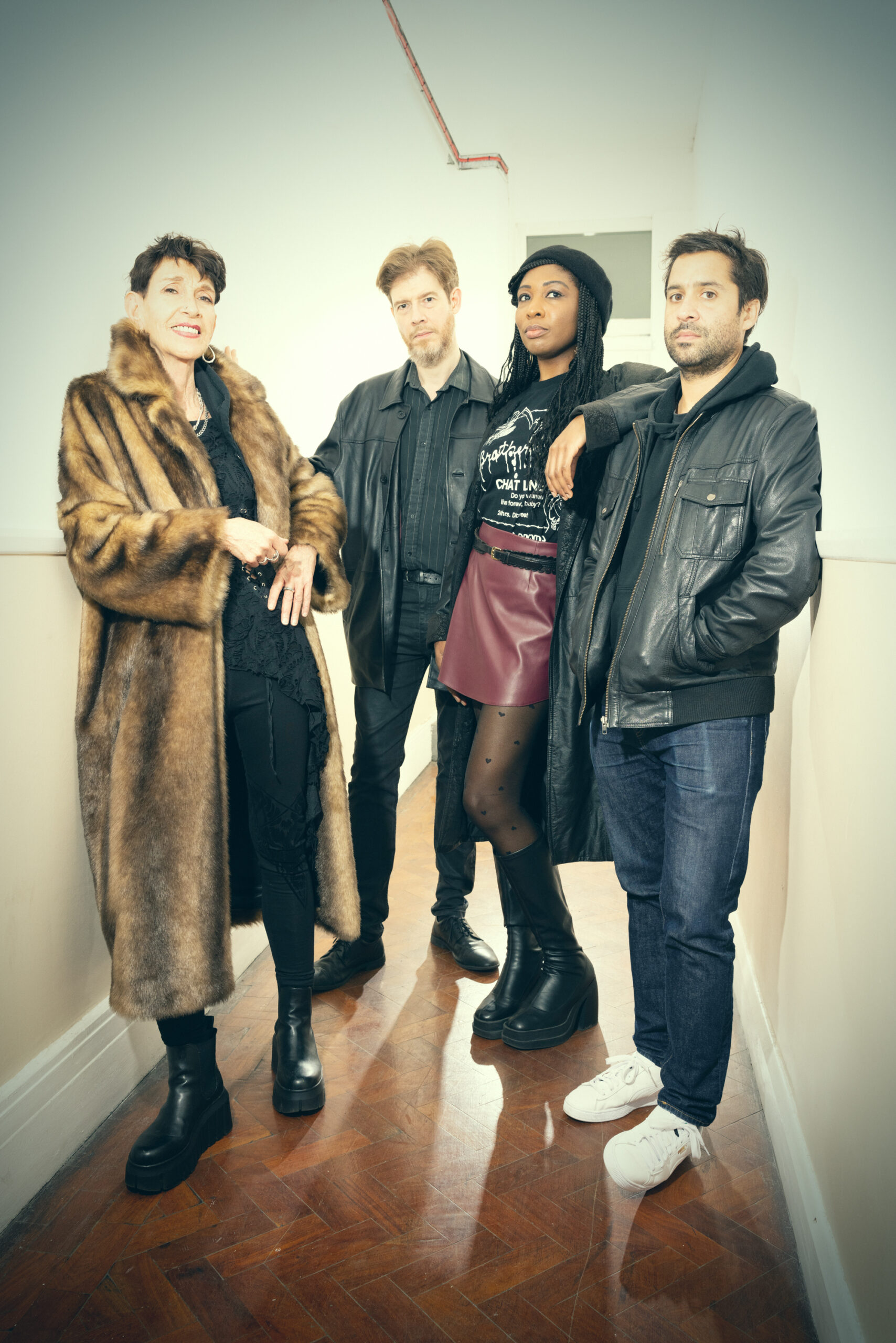 Well it’s not just them that had to revisit the material – I did as well. I haven’t played that material for over 40 years. So in that way we were all in the same boat. I had to relearn everything I did on that album; we all had to learn the material. But the guys I’m playing with – Estella Adeyeri from Big Joanie, she’s a great bass player; Alex Ward, he’s worked with Thurston Moore and Pere Ubu, an absolutely brilliant musician and Jem [Doulton] also from the Thurston Moore Group, he’s a great drummer – are very professional, experienced musicians and so it didn’t take too long for us to nail the set. They picked it up very quickly and they’ve got great work ethics. I got together with them for the first time, I set up a rehearsal space and said learn three tracks and they all racked up and had them nailed.
They’re not complete replicas of what’s on the album: they’ve obviously put in their own interpretation, but it’s pretty close to the songs I wrote so they haven’t changed. The song structures, the words and the way that I sing them might have changed slightly, but they stayed pretty close to what’s on the album with a little bit of artistic licence. As you would expect from really good musicians, they do their own thing. Like, for example, in ‘It’s Obvious’: the guitar, there’s an instrumental break. I just let the guitarist do what he feels like doing. It goes into this great, beautiful guitar solo. But it’s not like a Jeff Beck or Eric Clapton-type solo. It’s just him, and it’s really nice. And the audience love it. You can see they really get into it.
As a younger person, I want to hear fresh stuff. Like you said, your band members are putting their own print on it, which is good to revise the material. But I know there’s people that like nostalgia and they want to see the original lineup – I know you did try to get that together and they refused to do it. Is there anything else you wanted to say about that? What people’s attitudes have been…not just old band members, but generally there’s been gossip going around saying that you shouldn’t really be doing this.
Yes, I am sure there are people saying that but none of them can really explain why I should not be doing this. There are more people applauding what I am doing and the ex-members are benefitting from it financially and we are bringing the music to newcomers so it is sad that they cannot be happy about it and say ‘Good on ya Les’ which would be more in line with original Au Pairs’ ethos. The new members I’ve got are brilliant musicians and really great people. Their politics are sound. They are quite a lot younger than me and they bring a fresh lease of life and fresh blood into it. As you quite rightly point out, I asked the ex-members if they were interested in reforming and they said, “No”. I’ve asked them before in the last 40 years at various times if they were interested in reforming and again, they rejected the suggestion. The former bass player hasn’t played bass for over 45 years; she’s completely turned her back on being a musician of any kind, so she was a no-no. That left the other two, but they said they weren’t interested in reforming. The promoter asked me if I would reform the Au Pairs – I said that I didn’t think the others would be interested and he proposed that I do it with new members.
I haven’t seen the original members of the Au Pairs for over 45 years and we spent maybe 3, 4, 5 years in each other’s company. That’s nothing really out of a lifetime – we’re strangers to each other. But I’m aware that they haven’t bothered to try and hide the fact that they don’t approve of what I’m doing – it’s a simple case of they don’t want to do it and they don’t want me to do it either. The thing is, I’ve been offered an opportunity to do it; I wanted to get back into music. I’ve thought about reforming the Au Pairs when I did my [solo] EP; I thought I could do it with new people and I really don’t see why I should turn down the opportunity to do it just because they don’t want me to. We are bringing the Au Pairs’ music to people who have never seen nor ever heard it before. I still have things to say, perhaps more so now than ever, and I wanna do another Au Pairs’ album. I can see no valid reason whatsoever as to why I should not do what I am currently doing and to date no one has given me any….
Are they a bit bitter about the fact you trademarked the name at all?
 Irrationally they are. I trademarked the name so far as recording and performing as ‘the Au Pairs’ is concerned. I think that was very sensible because there’s a band, for example, on Facebook called the Dirty Au Pairs; nothing to do with the original Au Pairs nor the new Au Pairs. I don’t think you have to be Einstein to figure out what would have happened had I not protected the name in this way. I trademarked the name so far as recording and performing is concerned and because the original members had expressed no interest in doing either of those two things as the Au Pairs with me or with anyone else or with each other for over 45 years whereas these are things I want to do and can do. It is a shame that they cannot be happy for me and wish me well nor see the benefits that accrue to them and which arise from rekindled and new interest.
I don’t think it’s a problem, but people like to create problems when, in fact, there are none. It’s a storm in a teacup. If they want to record and perform as the Au Pairs, then we can talk about it and work something out. To date that has not occurred and they said they weren’t interested in reforming. Had they expressed such interest we could have explored that. For the last 45 years, they’ve shown no interest in doing it with me or with anyone else. So that’s the way it is.
Can you comment briefly on the rights dispute?
Again, it’s like people keep wanting to make a storm in a teacup. Since around 1993 there has been no change in the way those rights have been split. I can only add that I believe that it is totally shameful and reprehensible for a musician to deny and/or take credit for a colleague’s creative input and misuse the concept of “equality” to facilitate doing that.
I think you are the band. When I listen to the music, I feel that one of the things that cannot be replaced are your vocals and songwriting. So it does work with other members. I don’t mean disrespect to the older members, but in terms of reincarnating it, I don’t understand this idea that you can’t reform a band with one original member. Gang of Four did it. They had two original members and they even dropped down to one.
The Damned have done it, the Selecter have done it, the Stranglers and Skids have done it. Yeah it’s not unusual. I also played guitar and created the structures and many of the underlying riffs/chord sequences…I think you’ve hit the nail on the head when you point out that it’s not that unusual for band members to reform with just one original member.
When I’m listening as a music journalist, I feel the creative force behind it is you. So those other members I don’t feel as integral to it, but I don’t mean any disrespect to them.
No I don’t mean any disrespect to them either. I think they contributed a brilliant guitar part, a brilliant bass part and a brilliant drum part. I can’t fault it; I have no criticism of it whatsoever. And for a very brief period in the story of the world, we had a marvellous, fantastic relationship, but it was for an extremely brief period and it didn’t carry on, which is really sad, but that’s life.
“People like to create problems when, in fact, there are none. If they want to record and perform as the Au Pairs, then we can talk about it. To date that has not occurred and they said they weren’t interested in reforming. Had they expressed such interest we could have explored that. For the last 45 years, they’ve shown no interest in doing it with me or with anyone else. So that’s the way it is.”
What made you a feminist? Can you talk about how you got influenced into the feminist way of thinking?
Absolutely, yeah. You have to remember that, when the original Au Pairs formed, it was just before the 1980s and at that point, sexism, racism and homophobia were rife. A lot of the legislation that we now have, like the Equal Pay Act, the Sex Discrimination Act, all the anti-discrimination laws [didn’t exist], when husbands raping their wives was totally lawful…so feminism had a lot to say about the fact that women were second-class citizens in Western society; the way they were discriminated against and the way that, in some cases, they were actually persecuted just because they were women. That didn’t just affect women, it affected black people or racial minorities or gay people – the law against allowing homosexuality didn’t change ’til 1967, which only permitted gay men to have sex with each other in private. There was a lot of discrimination going on. For example, people could be sacked from their jobs for being gay and there was no legal redress. Obviously, since then things have changed substantially, although we seem to be again on the back-foot: a lot of the rights that we managed to secure are now under threat. For example, abortion rights, not so much in this country at the moment, but certainly in America. So yeah, there was a lot to be angry about and a lot to challenge, and music was a good, immediate way of doing that.
But I actually got involved in feminism when I went to university at Keele which was a hotbed of left-wing feminist politics. I got my consciousness raised: I got introduced to left-wing politics and to feminism, and feminism gave me a voice for a lot of the things I felt angry about that I couldn’t really articulate, like the constant, relentless sexism that you’d be subjected to. For example, you walked up the road having crude remarks made about you, like you’ve got a fat ass or “show us your tits” or horrible things like that. And so I got introduced to feminism at Keele University and then I met others when I came back to Birmingham. I spent a year in Keele; I met other people who were very left-wing and got involved with things like Rock Against Racism, Rock Against Sexism and things like that. I met lots of people who shared the same values and had the same politics – that inspired my songwriting. I wanted to make a social commentary in my songwriting about gender politics and injustice or put the other side of the story which was hidden in mainstream culture and by mainstream media.
I guess you must have seen some bands in the punk era that influenced you as well, including women-only bands? I don’t know if you saw the Sex Pistols…
Yeah, I saw quite a few punk bands. I don’t think I actually ever got to see the Sex Pistols themselves, but I saw the Damned, Joy Division, Talking Heads, the Ramones, Crass, Iggy Pop several times….who else did I see? Oh, God. I saw a lot of the ska and reggae bands. But in terms of women who were doing it during the punk/post-punk era: Patti Smith, Poly Styrene, the Slits, the Raincoats, the Selecter, the Modettes…we played on the same bill as both the Slits, Modettes and the Raincoats. I never got to play on the same bill as Poly Styrene, sadly. But I was very aware of her, especially when she got on Top of the Pops.
I can hear tiny bits of her voice sometimes in your voice. I think you should cover one of her songs, that would be pretty cool.
Yeah, yeah, it would actually. I heard a song by Poly Styrene the other day, and it did occur to me that it was one of her lesser well-known songs. I knew the song; it is probably quite well-known, but it’s not as well-known as ‘Germ Free Adolescents’. It was great at that time that women could come out of the closet and get up there on stage and do it on their own terms, because until that actual moment, the only women artists you saw were groups like the Three Degrees. I quite like the Three Degrees or Kim Wilde, Sandy Shore or Dusty Springfield. They’re great; I love them, but Dusty Springfield was a gay woman – she couldn’t come out. She had to present herself as a kind of object of desire or stereotypical feminine looking woman by wearing lots of makeup, hair and flouncy frocks. People couldn’t be out. They had to hide their sexuality if they were gay, because it would lose them their fanbase and they wouldn’t sell any records, and their record companies would drop them, a bit like what’s going on now if you speak out about Palestine…like Hollywood stars who are speaking out about Palestine not getting any work, like Susan Sarandon. It’s very worrying that the same kind of censorship now is being applied and all our progress is seriously under threat.
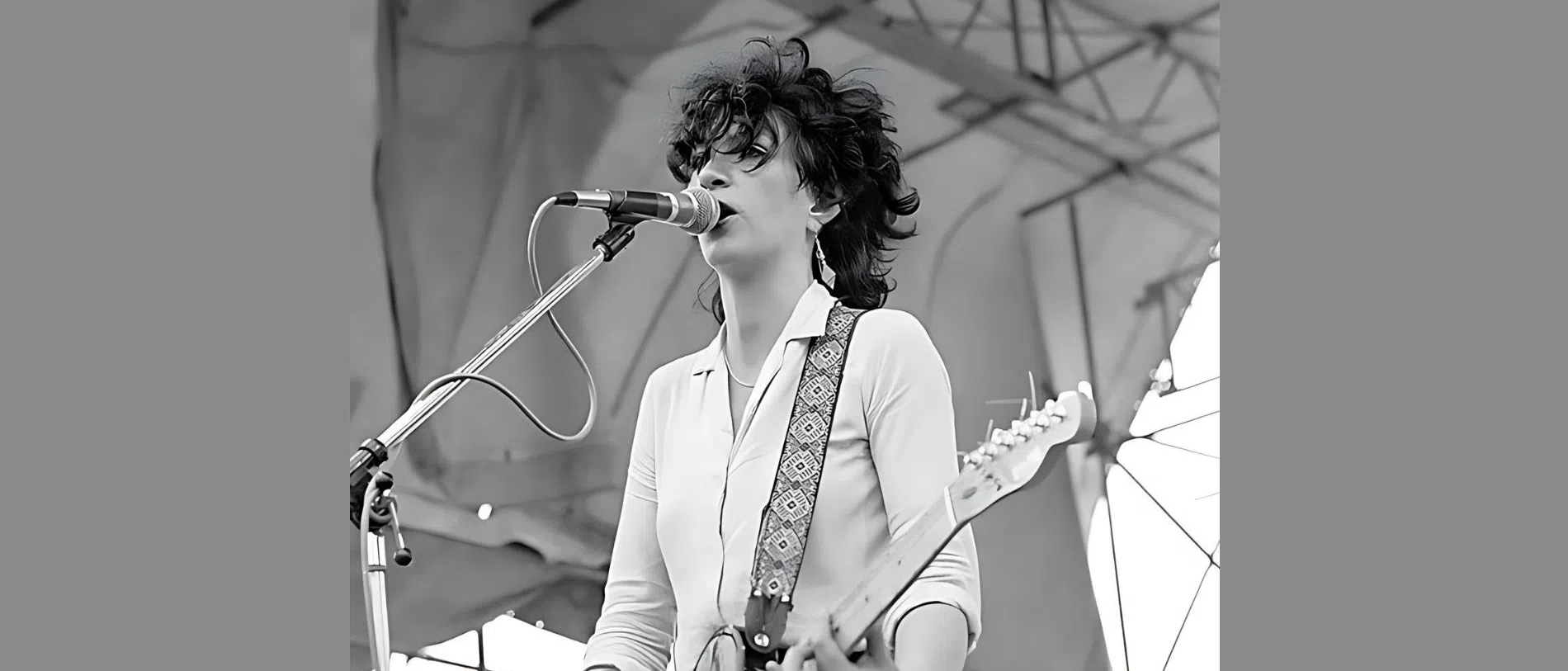
What punk did was it provided a platform for women without having to look feminine, attractive, pretty and appealing to men: they could actually look just how they want, how they did look and how they wanted to look like for themselves and on their own terms. Patti Smith, Poly Styrene – totally uncompromising. All the women I performed on stage with on bills at that time, we all had that in common: they were very uncompromising about the way they looked, and in fact, they took the piss out of this idea that they had to be sexy and reveal parts of their bodies. For example, the Slits were great at wearing very short skirts. I remember being at a Slits’ gig where they were wearing short skirts and one of them – I think it might have been Viv Albertine – bent down to fiddle with her amplifier. When she bent down to turn the knobs on her amplifier, all the boys in the audience wolf whistled and she just turned around and yawned at them, as if she was really bored. It was very funny.
You sing about LGBTQIA and sexuality and gender roles. Was it only in punk that it was acceptable to talk about those things? How common was it that people were writing songs about this? A lot of your songs are written about those themes, and they’re, even now, themes that people don’t want to talk about.
Back then when I wrote the songs I did not think about whether it would get played on the radio or get on the television or are people going to be so shocked to the extent that it’s going to get banned in places. I just did not think about that and punk with its irreverence provided a platform for total freedom of expression.
I think having done it then, I’ve made it easier for myself to do it now, to be just as or equally explicit in what I write, not mince my words and say what I mean, because I already have the experience of having done that. It hasn’t been a dastardly experience in the sense that I’ve never been able to make or sell a record because it was just a bit too over-the-top. But then when you look at and listen to a lot of records that were made, for example, like the Doors or Lou Reed, a lot of their lyrics are very explicit. I think perhaps people didn’t get what they were singing about because the words that they used were only used in certain circles and not in mainstream culture.
‘Come Again’ got banned on the BBC. That did happen to a lot of bands.
Yes, it did, exactly – it happened to Gang of Four, Lou Reed…
“What punk did was it provided a platform for women without having to look feminine, attractive, pretty and appealing to men: they could actually look just how they want, how they did look and how they wanted to look for themselves. Patti Smith, Poly Styrene – totally uncompromising. All the women I performed on stage with had that in common: they were very uncompromising about the way they looked and took the piss out of this idea that they had to be sexy.”
Can I ask about a couple of other songs? Your debut single, ‘You’, what was that about?
‘You’ was inspired by the fact that prostitutes were trying to get unionised and that the state was keeping records and files on them and trying to regulate them, and just about the discrimination that operated against prostitutes. For example, the Yorkshire Ripper who went on a killing-spree targeted prostitutes…the media coverage was disgraceful. It was basically cast along the lines that, because they were prostitutes, it was okay to murder them, and it was only when it was a nurse he murdered, the headlines – I think in the Daily Mail – were ‘this one was innocent.’ People got really upset because this was a woman who was a nurse and wasn’t a prostitute, and that certainly wasn’t okay. Prostitutes had a very bad time; it was a very dangerous job. A lot of women go into prostitution because they need money to support themselves and their children. They don’t go into it because they want to, it’s just the only way to get some money. But it’s very dangerous and they would be murdered – there was no protection forthcoming from the police or from the state. Also they had pimps who would murder them if they didn’t do what they wanted them to do. So I was very conscious of the plight of prostitutes and how unfair it was for them. Now that that whole stigma that’s been attributed to prostitutes has dissipated, they’re called ‘sex workers’. I don’t know if you’ve seen that film [‘Good Luck to You, Leo Grande’] with Emma Thompson where she plays an older woman? She hires a male escort. The whole film is set in a hotel room and it’s about the sex they’re having. She’s a woman who’s been married for many years, maybe in her fifties/sixties and she’s never had an orgasm, so she hires this male escort, well, prostitute/sex worker. It’s quite funny, so it just goes to show!
I was gonna ask about ‘Pretty Boys’ as well, because I thought that was maybe about bisexuality?
Yeah that’s about my bisexuality – being attracted to boys and girls. I just wish with ‘Pretty Boys’ I’d written some more words to it. I feel like the song is a bit incomplete; I should have written another verse. But I like that song and I like what it’s singing about.
And ‘We’re so Cool’ seems to be about open relationships?
Yeah, that was inspired by a friend of mine who had an open relationship with her partner and I thought that was very risqué and interesting; it inspired me to write a song.
‘Armagh’ and ‘It’s Obvious’, how do they still apply to today?
I think the spirit of ‘Armagh’, and the whole thing “We don’t torture” resounds with what’s going on today in terms of the atrocities that have been committed like in Palestine and torture being a very extreme form of atrocity against humanity; also the fact that torture is used by probably most countries in the world and that most engage in horrendous human rights breaches of which torture is one of the worst. And so it resonates still today in that way and also because it’s an extremely angry song and moves people because it’s providing an expression of that anger, where people are really often almost defeated by their feelings of powerlessness to be able to do anything to stop the horrible atrocities that are relentless and constantly going on. I think why people appreciate it as much today is because, as I said at the outset, these are dangerous times. We are living in a time where even democratic countries are losing the plot. I think what we’re able to see now, which we maybe couldn’t do 45 years ago, is how many people are opposing the regimes and the tyrants who are in our midst. Like half a million people came out in protest against the far-right…six million people all throughout America demonstrating against Trump. It’s gives hope when you know such a massive proportion of the world’s populations are on the same side and are opposing the same things.
‘It’s Obvious’ is covering all denominations of society: LGBTQIA, transsexuals, people who are disabled, people of different races, political opinions….well, perhaps not political opinions; one wouldn’t want to say that fascists are equal because fascism is an ideology which is the antithesis of freedom and equality: it’s espousing an ideology which propagates the idea of persecuting another because they are different. It’s just a song that’s a very simple message; the message is driven home – you’re equal, but different. “It’s obvious”, basically saying it’s bloody common sense, isn’t it? The ‘Me Too’ movement is a case in point and I think that sexism is still very prevalent. It’s very latent and it can be insidious, but it’s very ingrained. A lot of people, including women, don’t even know when it’s going on and don’t see it for what it is.
© Ayisha Khan.