COLIN BLUNSTONE (THE ZOMBIES): BELIEVE IN MIRACLES
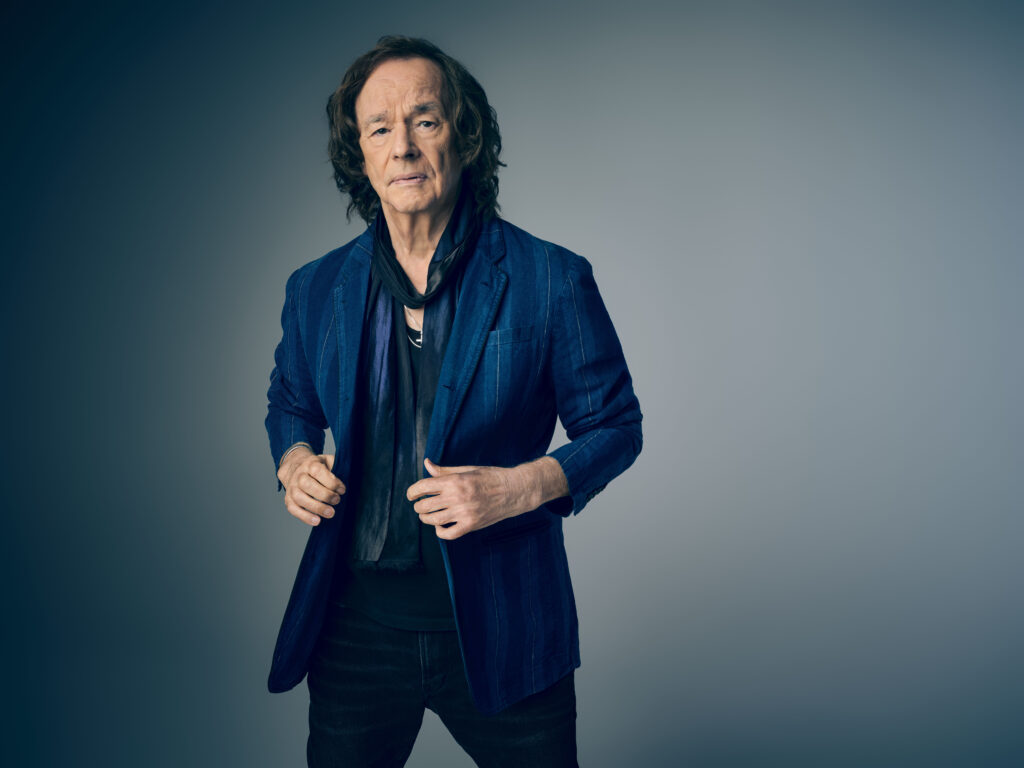
Since the Zombies disbanded in 2024 due to co-founder Rod Argent’s health, Colin Blunstone has focused more on his extensive solo career, which spans ten studio albums, and still continues to sing Zombies’ material to keep their legacy alive following the semi-retirement of his bandmate. Coming after his successful ‘One Year’ tour in 2024 where he performed from his debut album alongside covers and collaborations, he now embarks on a second solo outing, again backed by fellow Zombies’ band members and a string quartet. The Zombies have also released the next instalment of their remastered in mono series with their debut studio album, ‘Begin Here’. I spoke to Colin ahead of his tour about what we can expect this time round, his varied singing styles, his memories of making the Zombies’ debut album and why they should have focused more on bringing their music to other parts of the world.
What will be different about this tour compared to your ‘One Year’ tour in 2024?
Well, I’m going to play a lot more Zombie tracks: that’s something for the [foreseeable] future, to play more Zombie tracks, because Rod Argent had a stroke and he’s wisely decided not to tour anymore, so it opens a way for me. Also, I feel that the Zombies repertoire deserves to be heard by people and I’m not sure who else will play it if I don’t play it, so I really want to play more Zombies tunes. That will be one of the main differences this year when we tour.
What songs are you playing, without giving any spoilers away?
I’ll play all the hits that I’ve recorded. This is from the solo side of things, and I usually play something from the Alan Parsons Project, because I sang on the Alan Parsons Project. And at three of the concerts – the Stables in Milton Keynes, the Tivoli Theatre in Wimborne and Union Chapel – we’re going to be joined by a wonderful string quartet called Q Strings, who played last year when we performed ‘One Year’. We’re going to play some of [those] tracks just at those three concerts, but also we’re going to play some other songs that I’ve never played with strings before, so those three will be particularly exciting because there are things that I’ve never done.
How is Rod? How’s he doing? He looked really good in the last videos I saw.
I’m actually going to Rod’s [house] today, because he’s written a new song and he wants to rehearse it with me. He’s good: he’s pretty much back to where he was, really. He does get a bit tired but otherwise he’s made a remarkable recovery, and he’s writing, but as I said before, he’s decided that he’s not going to tour anymore, and there we are, so that puts the ball in my court with regard to singing Zombie songs, as I said.
Hopefully you guys keep this going on as long as you can. I’ve seen you several times over the last few years but it was sad to see you do that last show at the Barbican. It was quite emotional.
It was nice to end on because it was a really, really enjoyable show. But that is the end. I’ve always said I’ll keep touring for as long as I’m physically able to do it, but I’ve got to be realistic – I’m 81 in June. From my point of view, I never thought I would be doing this at this time; I enjoy it so I’ll keep going as long as I can, but I know I haven’t got forever.
How do you prepare for a tour?
When we’re on the road, I do these vocal exercises – I do half-an-hour before soundcheck and half-an-hour before the show. So before the show, I’ve sung for an hour, and I think it helps make my voice stronger and more accurate to do these specific exercises. When we’re not on the road, I probably do them two or three times a week; some weeks, I might not do them at all. It’s a bit more lax when we’re not on the road, but when we’re on the road, I have to do that, otherwise there’s a danger you could lose your voice after two or three nights. It happens to people so I try and avoid that. The other two or three things: I try to get as much sleep as I can; I try to eat sensibly; I don’t drink alcohol – [I’m a ] very dull boy on the road. And the last but most important thing is to stay hydrated: you have to drink an adequate amount of water. That’s the honest truth; it’s not so important when you’re young, but as you become a more mature artist, you have to look after yourself.
We were a keyboard based band…no other bands were doing that. We were quite different and that lost us work…but we never followed trends: we wrote the best songs and recorded them to the best of our ability. The Zombies were completely enamoured with the Beatles…it created a problem for us because when ‘She’s Not There’ was a hit, Decca immediately asked for an album, and we’d been playing a lot of Beatles’ songs. We just love them so much, and we couldn’t really do covers of Beatles’ songs on a Zombies’ album – it made it quite challenging for us to find the material for ‘Begin Here’.
On ‘Begin Here’, there’s quite a variation in your vocal style. How does that affect your vocals? It’s not just notes, it’s also the singing styles; the genres you’re singing. You do jazz and rhythm and blues, but also garage rock vocals. They’re so punk rock actually…
I’m wondering if we weren’t the forerunners of punk! ‘It’s Alright with Me’ is the track I’m thinking about, which is fairly frantic, but I can sing those songs because they’re really natural to me: I worked on them when I recorded them. So I’m fortunate that I’ve kept my range, because a lot of them are quite rangy, but then I work at it as well so I can sing those different styles. Rod and I have got an expression that we use – ‘finding a way to make it work.’ You record a song and you have to find a way to make it work in the studio. Then often it can be slightly different when you take it onto the road, because you haven’t got all the sophistication of the studio and you just have to find a way to make it work.
When you were recording ‘Begin Here’, what particular artists were influencing you? I was thinking Little Richard?
It was rock ‘n’ roll: Elvis Presley, Little Richard and Chuck Berry. Later on, I liked Buddy Holly and in particular, Ricky Nelson. There’s five rock ‘n’ roll influences for me, but I think one of the things that made the Zombies different was that we took our influences from such a wide spectrum of music. So if you listen to the tracks, there’s classical music on there, jazz, the blues, rhythm and blues, rock ‘n’ roll and pop music – I hate that expression, ‘pop music’ – and it’s all there. And I think it was great because it made the Zombies’ music, whether you like it or not – I think it’s unique. There was no one else playing like that, so that was to our advantage. Then sometimes it could be to our disadvantage, because people always like to classify you as playing a certain genre of music; it was very difficult to classify the Zombies, because they took their influences from all these different kinds of music. So it was a very positive thing for us and sometimes it could be a bit of a disadvantage.
Right from the beginning, we were always a keyboard based band. Everything is based around Rod really: it’s a keyboard based band that features three-part harmony. When we started, no other bands that I’m aware of were doing that: most bands were three guitars, like the Shadows. And so again, we were different, and that lost us work probably, especially locally, because people wanted bands like the Shadows. But we never followed trends: we – in the end it was all Rod and Chris [White] really – wrote the best songs we could and recorded them to the best of our ability. That’s what we did just before we recorded ‘She’s Not There’. I should hasten to add another influence was the Beatles, because their first hit record was probably ’63, and the Zombies were completely enamoured with the Beatles’ stuff. I just thought they were fantastic and it created a problem for us because when ‘She’s Not There’ was a hit, Decca immediately asked for an album, and at that point, we’d been playing a lot of Beatles’ songs. We just love them so much, and we couldn’t really do covers of Beatles’ songs on a Zombies’ album; it made it quite challenging for us to find the material for [‘Begin Here’].
Have you done any Beatles’ covers?
I think they’re the best band ever. But no, we’ve never done a cover of theirs.
You were part of ‘the British invasion’ in the US that was coming off from the Beatles.
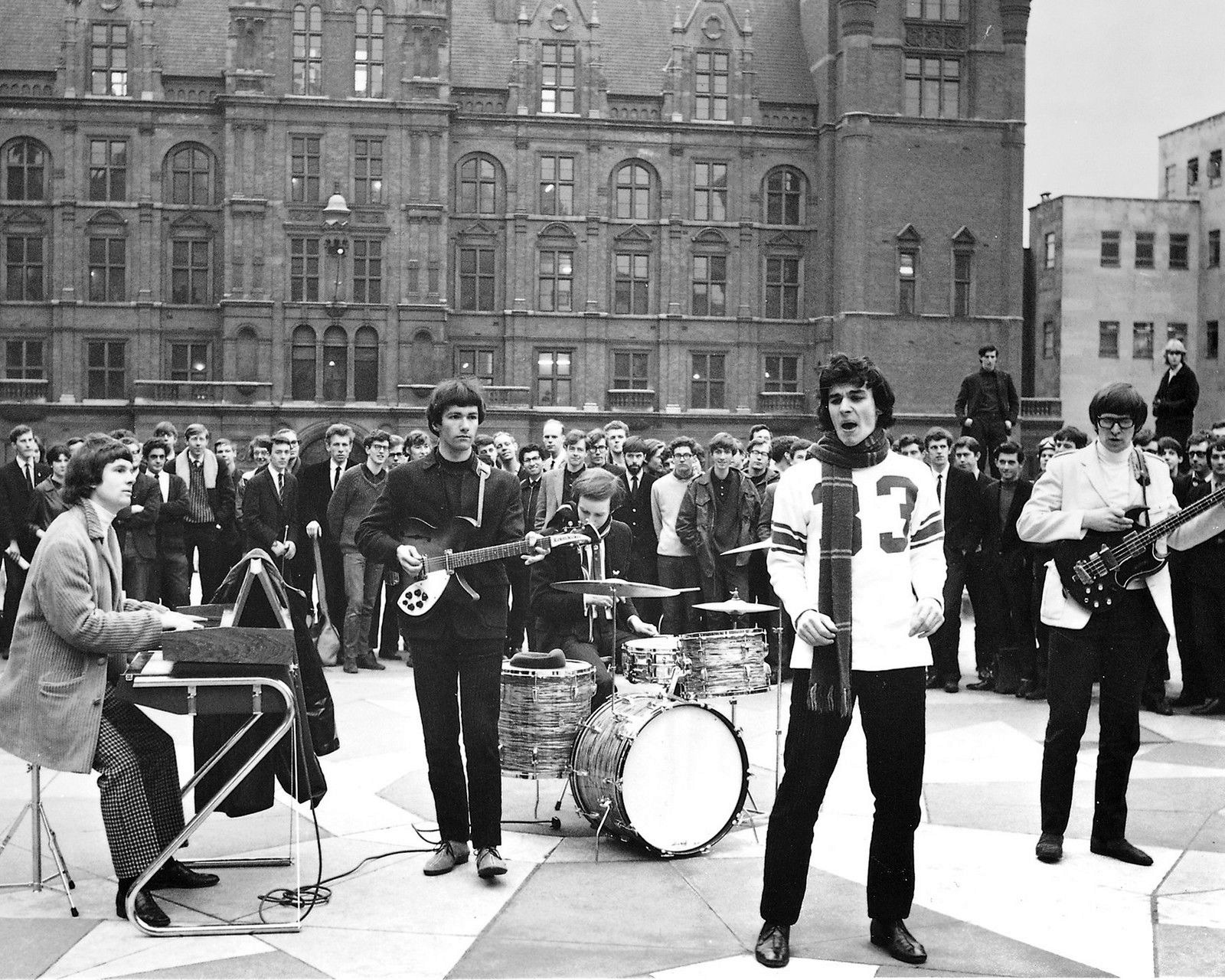 Well, when I talk to people in America, they always talk about the first wave of ‘the British invasion’ and include the Zombies in that, and they would probably only talk about six or seven bands. The Beatles changed everything for everybody and suddenly there’s a huge demand for British bands, which there wasn’t before. I don’t think British bands travelled that much before the Beatles, and then, of course, after the Beatles, they played all over the world, as the Zombies did from ’64 to ’67 when we were together. It’s interesting because it was quite unusual for people to go to America. This is difficult to understand now because people just go on holidays to the States, but it was a big deal going to America in 1964. We travelled all over the world, including the Far East. We spent a while in the Philippines and toured there. That was quite unusual as well.
So when you mention America, there was a difference in the track list on ‘Begin Here’ where tracks were cut from the US version. There were also tracks that were not on that which were previously unreleased and then put out on the UK album.
Absolutely, this is my understanding: traditionally in the UK, artists and the direction for artists came from record companies. Artists didn’t decide this” record companies decided this on their albums. At that time, they didn’t put the hit songs on the album; I’m guessing that the record companies wanted people to buy the hit single and then buy the album, because they were two separate entities. Otherwise, I can’t tell you why they did that, but in America, they didn’t put the hit singles on the album, and took the risk that people wouldn’t just buy the album therefore not buying the single, because singles were still all important at this time. It was the singles charts that was everybody’s aim, to have a hit single. That stayed the same way for the whole time with the Zombies in the first incarnation, from ’64 to ’67; it was more towards the end of the ’60s, suddenly the album became all important and some bands wouldn’t release singles; they just recorded albums. But at this time it was the single that was all important. So this reissue has got 17 tracks on it, because it’s got all the tracks from the American version and all the tracks from the UK version.
It’s also got the EP from January 1965, which I think wasn’t as well received?
Yeah, tracks from that. Of course, there was no EP chart in those days, but this is my humble opinion: I think we accepted guidance from Decca Records on a lot of things and I don’t think it was good guidance. And one of the things was that EP left us short of tracks, so that when ‘She’s Not There’ was a hit, Decca again, put the pressure on at the same time for an album and a follow-up single. They wanted a single within six weeks and some of these tracks – this is my memory of it – were tied up in this EP, although, as you said, it came out earlier in the year. I can’t really explain that, but it seemed as though those tracks weren’t considered for a single. Perhaps they didn’t think there was a single on the EP tracks, and so there was only one other song they could have. Rod and Chris had only just started writing: they didn’t have a back catalogue of songs that we could choose from. They were just finding their feet as writers and there was Rod, who didn’t have anything. Chris had ‘Leave Me Be’. None of us thought it was an A-side and none of us thought it was a hit. We were right: it wasn’t a hit, but Decca insisted on releasing it in America. in America they skipped that and the second single was ‘Tell Her No’, which was number six in Billboard. It was a big hit in America. So I think that Decca really didn’t handle our early career all that well. But there’s so many changes going on in the music industry at that time. Not in any malicious way, they didn’t understand what was happening. Suddenly, the UK was the centre of the recording world and so many bands were recording; so many new markets were opening up. It was a little bit of a crazy time.
We concentrated too much on the UK and the States and should have tried to be more aware of what was going on in the rest of the world as we found out later on in the Far East. I don’t think we were ever aware enough of what was going on in other countries. After the band finished, we realised and we perceived ourselves as being unsuccessful in 1967: we’d always had hit records somewhere, but we’d concentrated on the UK and the US where it was easiest to get chart information. We might have done better if we’d have made more enquiries about other territories in the world.
Were you received better in America?
We were always received better in America and to some extent, that’s still true, although, as I said, the Zombies are not going to tour anymore. But you know, up until that time, it’s probably still true.
But how did that affect the two releases of the two different versions of the album? Were you focusing more on the US market at that time at all? Because ‘She’s Not There’ and ‘Tell Her No’ were charting higher in America than they were here.
In Cashbox, which was equally as important as Billboard in those days – Cashbox doesn’t exist anymore – ‘She’s Not There’ actually went to number one, as did ‘Time of the Season’; not quite the same in Billboard. Now, I wouldn’t say that we concentrated either in the UK or the States, but I’ve thought about it afterwards: I think we concentrated a bit too much on the UK and the States and should have tried to be more aware of what was going on in the rest of the world, particularly Europe, and, as we found out later on, in the Far East. Remember, there’s no internet at this point, and you would be amazed how long it takes you to find out what’s happening in different parts of the world, because especially then and even now, the music industry is governed so much by the charts. And if you’re in the charts in a country, there’s an opportunity to tour, but I don’t think we were ever aware enough of what was going on in other countries. After the band finished, we realised and we perceived ourselves as being unsuccessful in 1967: we’d always had hit records somewhere, but we’d concentrated on the UK and the US, and really that was where it was easiest to get chart information. I think that we might have done better if we’d have made more enquiries about other territories in the world. As I said, we always had a hit record somewhere.
There were five tracks on the American release that were unreleased in the UK until ‘Begin Here’ came out here, which were ‘You’ve Really Got a Hold on Me/Bring It on Home to Me’, ‘I Don’t Want to Know’, ‘Work ‘n’ Play’, ‘Can’t Nobody Love You’ and ‘I Got My Mojo Working’. So again, just about the chronology, I don’t know if that affected things with them being out in America first. Were you concentrating on the US market, getting things out there first?
That goes back to record companies again. I don’t want to give Decca too much of a bashing [but] I think all record companies were the same, particularly in those days; they were a law unto themselves. So different records were released. I can’t emphasise this enough: we were never consulted. I would find out what was on an album [by having] to go and buy it in a shop; I never knew. I think all record companies were the same. There’s a misconception that artists are involved. All their huge worldwide artists presumably are involved, but lower down the food chain, you’re not, certainly not [back] then you weren’t consulted about things. A lot of what happened was decided by other people. So I wasn’t personally involved in any of these release schedules.
Four of the Zombies’ albums are being remastered on mono. With your vocals, I feel that there’s more singularity and depth to them on mono because it’s coming out of one output. What was your viewpoint in terms of the stereo mixes that have come out over the years versus this final product now that you put out again?
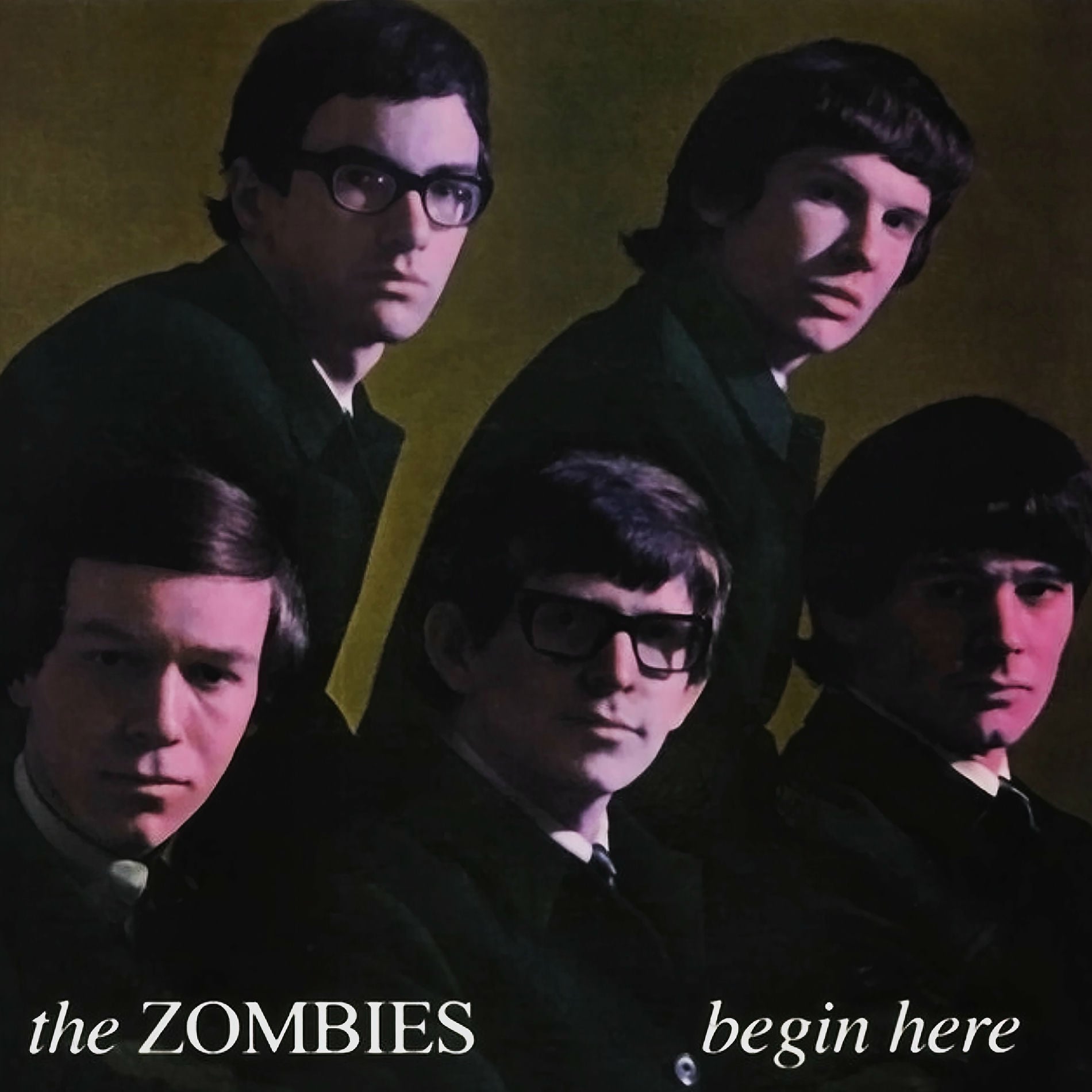 I think it’s great to hear the album as we heard it, as it was intended to be heard – that’s really great. I think some of the stereo mixes that have been done have not been all that successful, particularly ‘Begin Here’, because none of the band were involved in [them]. In fact, we weren’t involved in the mixes at all. From ’64 to ’67 we were produced by a lovely guy called Ken Jones, but he was emphatic that we should not be in the studio when the mixes were mixed. Presumably, you mix a mix when the mixes were recorded, and there were some very heated discussions about whether we should be in the studio or not, but he would never let us be there. So some of them, even original mixes, left a little bit to be desired, but they certainly lost something when, for instance, Decca staff producers were allowed to do some of these stereo mixes…but certainly the band wasn’t there. I’m not even sure that Ken Jones was there. It was just done, as far as Decca was concerned, as an exercise for the producers more than anything. Now we’re looking back and people will be reviewing it in mono. But in the past, they would have been reviewing the stereo mixes as a work of art, but the band weren’t involved in those. And I’ve heard some mixes where it really does leave a bit to be desired: they’re not very good; some are really bad.
I know you don’t like them, but have you heard of any fans that prefer the stereo mixes?
I’ve never discussed it with fans to be absolutely honest, but I have heard tracks where the stereo mix doesn’t portray the track in its best light at all. I’m not saying all of them – I can’t tell you offhand which ones– but it doesn’t sound good to me. I’m not even talking about technically: it just doesn’t sound right on some of the stereo mixes, but with the mono mixes, that’s how it was meant to be heard by Ken Jones.
So I had a question about Ken Jones’ ‘Work ‘n’ Play’. How was he involved?
He played piano on that; he wrote that track. It was an instrumental. Remember that Rod and I were 18 when we recorded ‘She’s Not There’; Paul Atkinson was 17. So when your producer says to you, ‘This album needs an instrumental track and I just happen to have a song that would work,’ [you say] ‘Oh, that’s great. Yeah, let’s do it.’ ‘It’s show business kid; it’s show business.’ He got a song on the album. Good luck to him.
I like the track.
Do you know, I don’t remember that track being recorded? I’m not sure I was actually there when that track was recorded, so I can’t tell you anything about it, but I like it too. Ken was a really good musician. He used to write and arrange for big orchestras and that was his background. He was an excellent musician and I like that song.
And ‘The Way I Feel Inside’, as you walk away, there’s a drop of a coin sound?
That’s a Ken Jones’ idea and we weren’t in the studio when that happened. I think it’s quite nice. Yeah, I quite like that; I really like that song – it’s lovely.
That wasn’t on the US version of the album. I thought that was a bit strange because I thought it should have been on there.
I think it’s one of the strongest tracks. But at the time, they were into 12-string guitars, the Merseysound and everything, and that was a little bit left field for them, but I think it’s one of the best songs on the album and we’ve often played that in concert. I’m not playing it in the next tour but it’s something that I may well bring back.
What was your experience of recording the album? Just looking back now, with the remastered in mono and then the original when you recorded it, what’s your memories of that?
We were recording in Decca studios in West Hampstead; it was our first time in a professional studio. It was incredibly exciting; very, very energised. We recorded – as was the tradition in those days – very fast. So from my memory, we would often do three or four takes – not always, sometimes it would be less – and then they would choose the best one. They weren’t taking bits from one take to another take: they would just choose the best take. It was an incredibly exciting and energised time. That’s how I remember it. It was five pals getting together in a studio, recording the music they loved. It was a wonderful time and I look back on it with great affection.
Rod said you did a lot of the tracks in one take. Was it quite difficult to do things in one take because you had only day and night time in the studio?
[We knew] the song well and were touring all the time; we were all match fit. So, no, I don’t think it’s particularly difficult to do it in one take. If you’re touring, you know your playing and your singing is up to speed and you know the material, I think it’s comparatively simple to do it in one take, but sometimes it’s good to do three or four takes just to make sure you’ve got the best out of the song.
So other than the remastered albums, is there anything else you’re working on at the moment?
I’m recording a new album at the moment: I’ve written nearly all of it. We’ve recorded eight tracks and I’ve written seven of those tracks. We know what the last two tracks are going to be and I’ve written them, and so I’m really pleased about that and recording with a producer called George Moore. He’s a wonderful musician; lovely bloke. I would hope that that we would finish it in the autumn…it depends on the availability of musicians, George Moore, the producer, and myself – I would hope it would be released early next year. I’m really excited about that. Meanwhile, there is a possible American tour at the end of the summer; it hasn’t been confirmed yet for the solo band. And there’s the ‘Begin Here’ festival on the weekend of the 30th/31st October and 1st November. It starts on Friday night in St Albans and then there’s a concert on Saturday night – everything Zombies. There’s lots of talks and concerts over a whole weekend in St Albans and tickets are available from the Zombies’ website [https://www.thezombiesmusic.com].
Colin Blunstone’s ‘Believe in Miracles’ solo tour continues at the following UK dates: https://www.colinblunstone.net/
© Ayisha Khan.