TOM BAILEY (THOMPSON TWINS): SISTERS OF MERCY
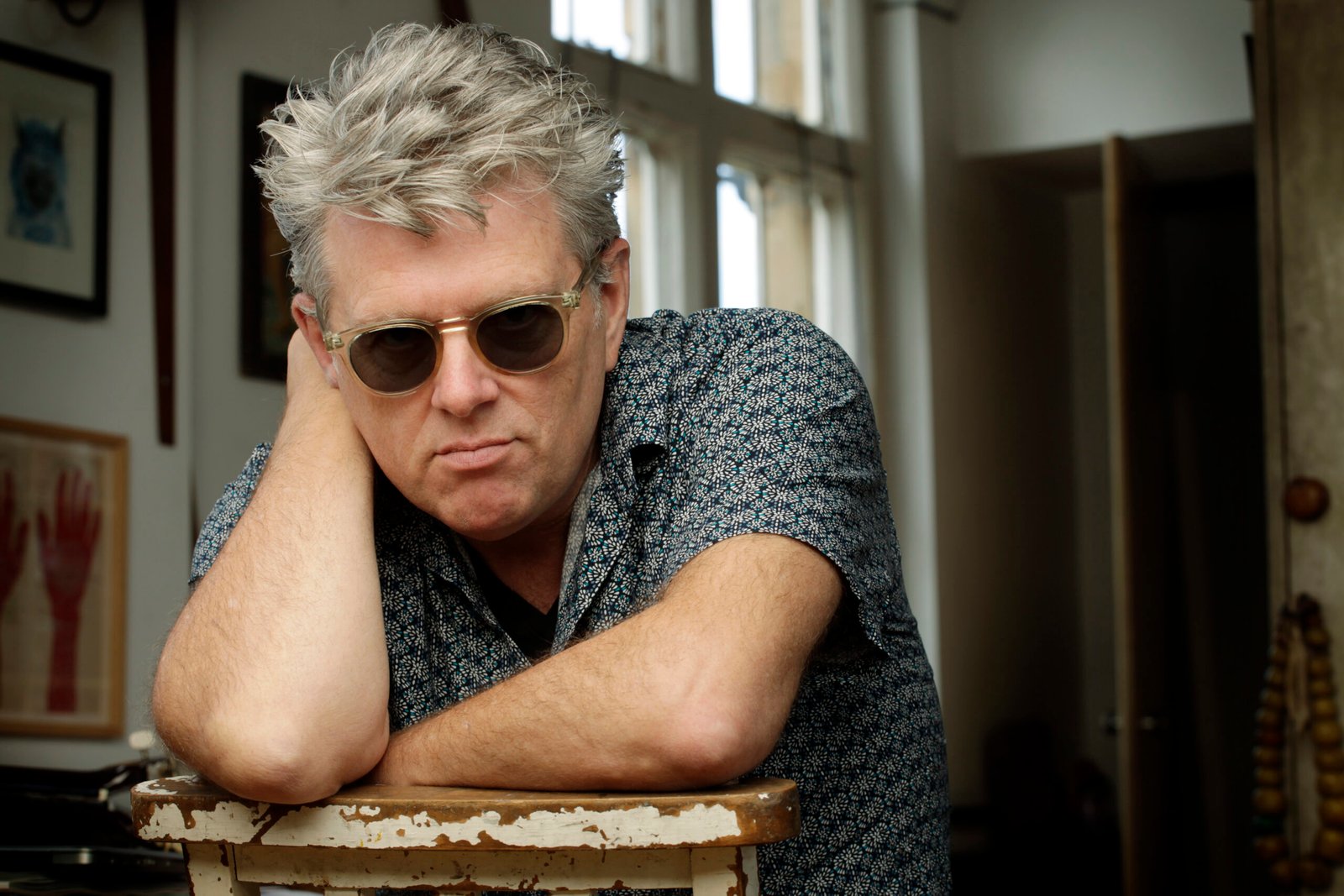
Due to embark on his Thompson Twins’ ‘Greatest Hits’ tour, founder and singer Tom Bailey revisits one of the most iconic groups of the ’80s. With their unconventional and percussionary fusion of tribal post-punk experimentalism and dance synth-pop, they were one of the few amongst their contemporaries to achieve commercial success with 9 top 20 singles, 6 top 10 singles and a number 1 studio album, ‘Into the Gap’. Together with his young, all-female band, dubbed the ‘Sisters of Mercy’ after the single of the same name, Bailey embarks on a 16-date UK tour, bringing the music of the Thompson Twins to old and new audiences alike. He took time out of his busy schedule to speak to me about the double edge of revisiting the nostalgia ‘trap’, adopting the world music genre, breaking America and the contrast in performing in front of millions at Live Aid (with Madonna) to small villages in India.
You’ve got the ‘Greatest Hits’ tour coming up in September. What can we expect from it in terms of bringing the legacy of the Thompson Twins to audiences? And are there any surprises in-store?
Well because it’s my own tour, I can play for a bit longer than festival sets. So I’ll be doing all the hits, but also digging a bit deeper into the repertoire, and there will be some surprises and even a couple of cover versions as well. So we’ll have fun.
My current band I’m going out on tour with is an incredibly talented, young female band. They’re all multi-instrumentalists. It’s a great pleasure and a privilege to play with them and, because they’re young, they don’t get trapped in the same nostalgia blackhole that some of us get sucked into. For them, it’s really about playing good music, and it keeps me fresh as well. So I’m full of gratitude; I’m very happy to be playing with these people.
How do you move away from doing too much nostalgia with these tours? You’ve got your new solo album material in the set list as well. Are you working on any new material at the moment?
Well, I’m always working on new things, and but mostly I’ve done new arrangements of older things for this tour. But the thing about nostalgia is, it can either be a syrupy trap that you get stuck in or it’s about a kind of balanced view of how where we are now didn’t just happen out of nowhere. There wasn’t a Big Bang musically yesterday that suddenly kicked everything off. There’s a process that leads you to this point, and I’ve been a part of that process for the last 50 years, so I can’t ignore it. And actually, in some respects, there are good things to remember about what we were doing 50 years ago that have, to some extent, tended to evaporate now in the music business. So, no, I think it’s good to have a wide kind of frame of reference, time-wise.
Talking about nostalgia, how did you get into the world music genre originally? So thinking about your musical influences specifically, maybe when you were squatting in London, how were you exposed to world music there?
Yes, there was a bit of that because I was squatting in an area where, if you walked past an open door, there’d be reggae or West African music playing, and so that was an influence. And also, I always had a taste for the influence of Indian classical music in pop music as well. So you just end up keeping your ears open for those things, and I think developing a taste is a weird thing. But not everyone wants to do that. There’s a tendency to copy what’s going on in your neighbourhood all the time, but I think it’s probably healthier to to look further afield and see the world of music rather than just the neighbourhood of music.
How much was it influencing the music scene at that time? Were you doing something similar to other people or was it different?
There was a little bit of an explosion of interest in what we were talking about. It’s interesting that that’s the time that things like WOMAD came along, and Peter Gabriel was starting to do those festivals, and he’d made a record that very specifically referenced South Africa at the time. And of course, the Beatles had always been dragging in the Indian influence where they could, thanks to George [Harrison].
Did you feel you were breaking down some barriers even at that time after punk?
 Yeah, and also come to think of it, there was the whole Latin thing that happened in America, where you go to certain American cities and play to, let’s say, a white audience, and then suddenly you realise that half the city is Hispanic and the white population is just ignoring that fact. So for me, it’s always been interesting what happens when cultures rub up against each other and start to exchange values of one sort to another. But the danger, though, is that you can easily just use it as kind of a gimmick, like a spice rack rather than the fundamental ingredient, and so you have to learn some things. I guess that’s the thing: you can’t just use it frivolously all the time; you have to do a little bit of study.
I found the first two albums were very vibrant, bold, and diverse, but still lacking production style, consistency and direction. I don’t know if that’s a critique that you’d accept, but can you talk about the studio production process with Dennis Bovell and Steve Lillywhite in those first albums?
The first album, we were still fundamental. Everyone was saying your live shows are so good. All you’ve got to do is record the live show, and it’ll be a great album, which I think was a terrible idea. But we were partly seduced into playing as a band in the studio, and then I think when we moved on to the second album with Steve Lillywhite, he was a very accomplished producer, but he was still working in the big drum and guitar area, so the album ended up sounding like that.
Even though we were dragging in these big percussive elements as well, getting away from drum kits and towards congas and other instruments, it wasn’t until after that when we became a three-piece that we really moved away from being a band. And I guess we didn’t realise it was an instinctive thing that we wanted to do, to design the whole experience rather than be a band playing and press record and you’ll capture [us]. We were making pop records and it gave space for us to be more experimental in some weird way. Suddenly we could make a song without any drum kit on it, if we wanted, and the backbeat instead of being a snare drum, in one case, it was a fire extinguisher being hit with a piece of wood. So those kind of things you don’t get from a band.
Being from Sheffield, did you get influenced by any of the industrial scene in terms of experimenting with DIY things, like everyday objects to make noise?
Well, you know, Sheffield’s definitely an industrial city, and it has that that vibe, that atmosphere. It’s not as if we were looking around Sheffield for ideas of what to hit to make a sound. It was just part of the culture, I guess. And some people avoided that, and some people embraced it.
How did you sign a contract with Arista?
You know, I’m not really sure. Just by that stage we’d moved to London. We were just playing every gig we could get in order to keep the thing rolling along. And at some stage, someone saw us play, and it was really our reputation as a live band, playing mostly to student audiences and going up and down the motorway in a transit van. It was that level of activity which got us [a contract].
You don’t remember signing your life away? It’s often a story for musicians doing the contract and not completely understanding what they were doing at the time.
Well, that’s certainly true. Yeah, we weren’t paying close attention and we weren’t informed in the realities. But what happened was that we we signed to a German label, Hansa [Records[, that had a new office in London, and then eventually that was taken over by Arista which became our record company at the time. As a result, we were kind of underpaid. I think because there was always an override payment to Hansa for having given arrears to us, and that persisted for years and years and years. The Thompson Twins should have been better rewarded for what they did at that stage.
 And so when you were cut down from a seven-piece to a three-piece, you spent some time abroad. You’ve mentioned about India, but can you talk about your time in Egypt? I was quite interested in some of the Oriental Middle Eastern sounds I hear in your band.
Here’s an embarrassing admission: I’ve never been to Egypt. It was a weird thing where I, for some reason, had an acronym that almost spelt Egypt and that’s what I called my home studio. I can’t remember. It was electronic blah blah blah. And when we became a three-piece and everyone was saying, “What’s happened? Why is the band over?” Blah blah blah blah blah. Our manager said they’ve gone to Egypt, which was our studio. And he didn’t correct people when they picked up on the wrong idea.
But there is Middle East influence, like in ‘Lies’.
Yeah of course, because I love that music as well, and the connection between the Middle East roots of music and the Indian roots of music as well. I can’t say that I’m in any way expert in understanding Middle Eastern music, but I’m always attracted to it, and I like those sounds.
And so moving forward a bit, when you became an – I suppose – overnight sensation with ‘In the Name of Love’, how did it feel being propelled into the spotlight like that? That was the beginning of your commercial success and with ‘Love On Your Side’ a year later.
There’s a well rehearsed story here that ‘In the Name of Love’ was meant to be a filler track for the middle of side two on the second album and we didn’t have enough material. And I just got my hands on a synthesiser and drum machine, so I said to the band, “Don’t worry, I’ll do something. It’ll fill that space.”’And slightly to everyone’s embarrassment, it became the hit; a big dance record in America and so that had the effect of making me realise that that’s a direction I should follow – I couldn’t just see it as a meaningless fluke hit. It was something I wanted to pursue and so that helped us to make the decision about our change in direction.
At the same time, I didn’t feel like you were compromising your image. It’s not like you were fitting into what the market wanted. I feel like you presented yourself to it instead, and that you didn’t really lose any of that experimentation. I also thought some of the singles, the later singles as well, are all very unpretentious.
The thing about the Thompson Twins at that point, when we became the three-piece, we’d broken the mould in terms of what a lot of people thought a pop group should be, and still to this day, a lot of people think it doesn’t count unless it’s four white guys with guitars. I have to say that because it was not an intention in a way. It just happened to be male, female, black, white, and on top of that, we weren’t playing guitars anymore. We were using percussion and synthesisers, and so we were breaking down some kind of pre-concept. Whether that stops it being pretentious, because there’s always an experimental edge as a result, it was fun to do, and it was certain. Don’t know really what the word is, but it wasn’t overconfident. We were still finding out what the right thing to do for us was, and the answer is nearly always that one thing leads to another; you try and pick the good bits and reject the bad bits.
And also, I think it’s always a question of timing as well. So at that time, ‘84-85, can you describe what it was like, the music scene at that time, or the music market even, and how you guys maybe were timed very well to fit into that, to become commercially successful? Often you see bands who’ve done it too early or too late, and they’ve missed that golden period.
Yeah, we were lucky that, first of all, Alannah Currie and the band took responsibility and developed great skills in making the visual image of the band punch pretty hard, and then by chance, along comes things like MTV. So suddenly, how you looked and performed on a screen started to compete with how you sounded in terms of its importance. We didn’t plan that; it just happened that way, and we were, as you say, kind of lucky.
What was the difference between your commercial success in the US and in the UK? I understand from speaking to artists that it was a big deal to break America. Is there anything you can say about the two different worlds there and also how the different audiences received you?
Well, of course, a lot of this is management and record company driven in the sense that they know the market in the US was five times the size of the market in the UK. And although it’s a much bigger place, some of these American cities have enormous concentrations of music fans. They heard something fresh in our sound, and so we were welcomed over there big time, and ended up being successful in America. And as you say, that doesn’t happen to everybody. So I think we were encouraged, certainly by the management, and the record company were rubbing their hands with glee to have American sales on top of UK sales. That’s how it works, and of course, there’s also a kind of personal dimension that when you’re in a band having fun making music, and it also becomes an international adventure, you’re flying to California and things like that. Then why not? It adds this whole extra level of fun and adventure.
Then you recorded in Compass Point Studios in the Bahamas. You also met Grace Jones. What are your memories of that?
Well, we went over there to work with Alex, and I remember naively we would end up in a tropical country [wearing] jeans and leather jackets, completely inappropriately, and we settled in. And it just so happened that Grace was there working on her album – ‘Living Your Life’. So Alex, our producer, knew her: he’d worked on her record as well. So we did a swap: we did some work on her album and she did some on ours. And Alannah and Grace became friends; it was a very easy thing. You were in a remote place in a recording studio. There’s nothing else to do but socialise with each other.
Did it help? It was a more relaxing environment, does that help with coming up with ideas? I always hear bands record somewhere kind of rural, and it helps them, like by seeing sheep in a field.
There’s an element of that for sure – there’s the local influence. I think the main reason for going to places like that is to get away from other influences and other distractions. Certainly, when we record in London, people don’t turn up because there’s a party or a club, or they’re going around to dinner at some friends. If we go away, we’ve only got ourselves – and therefore only ourselves to blame if things go wrong – and therefore more work gets done. But you’re right: we would go for Compass Point in the Bahamas. We would go for a swim in the ocean every morning and see strange animals in the sea and then we want to go and write songs about stingrays.
‘Into the Gap’ – what are your memories of touring that album?
That was the peak of our success in a way because we’d really tested out the principle of writing pure synth pop on the previous album, ‘Quick Setting Psychic’, and so I thought our songwriting abilities came to a maturity in ‘Into the Gap’. I also widened the palette musically and brought pianos and guitars back into the sound. So it was at that point we did feel confident that we were doing something good. However, we raised the bar for ourselves and said, there’s no point in even going into a studio now until we know we’ve got a handful of hit songs and when you’re sure of that, when you think, yeah you’ve got four or five songs that are going to point themselves into the charts, then it gives you the excuse to be more experimental in other areas as well, because you’ve covered that problem; now you can have fun.
How quickly did you write those hit singles?
It varied. Some of them were long, hard, ploughing the furrow endlessly to see what we could find. Others came very easily. Famously, ‘Hold Me Now’ came out of a big argument I had with Alannah and we made friends. And immediately afterwards, in about 10 minutes, got the essential part of ‘Hold Me Now’ down.
Any places that you remember distinctly about the world tour that you did?
Well, we toured all over. All of these memories of shows that you play are many and varied, and we’ve done all sorts of things. Everything from Live Aid, where you’re playing to half a billion people on the TV at the same time. At the other end of the spectrum, I’ve done concerts in little Indian villages where people had never heard amplified music before, and so it’s those things that stick in your mind. They can be extremes.
I quite like ‘Sister of Mercy’ because of the topic it was about – domestic violence. Why do you refer to the band now as the Sisters of Mercy? Just wondering, because obviously there’s a band called the Sisters of Mercy.
Well, I don’t know. I think it’s something that was crept up. I think I was referring to them as the Sisters, and someone said the Sisters of Mercy because of the song title, so it’s just something that the fans latched onto, and yeah, it is weird that there is another band called the Sisters of Mercy. And I’ve even heard that some nun in a convent preached a sermon saying how badly we had abused the name by writing a song about domestic violence and calling it Sister of Mercy.
You played Aylesbury Waterside Theatre in 2022. I was there – that was a brilliant gig. Why was that show so momentous and also that particular venue?
Well, two reasons. First of all, it was the first time we played the whole of the ‘Into the Gap’ album as a live show. We were testing that principle; it was a good thing to do and it worked out well. The other thing is that I’ve got two managers, and my elder manager lives in Aylesbury – David Stobson – and he’s run the Friars Club in Aylesbury for so long. So I’d never played a gig for him as a promoter, even though he’s my manager, and we decided to do that. And so it had a kind of special homecoming feel for him, and therefore for us as a team of people.
He introduced the show.
I think he always does that when he puts on a gig. He tends to want to introduce people, but yeah, it was a very emotional moment. I think you know it’ll all come back to playing there.
What’s with the red ball?
Oh yeah, the balloon. I throw a balloon into the audience pretty much every gig, and it’s for the song ‘You Take Me Up’, it seems appropriate and a bit of fun, and it breaks the ice to have the audience biffing the thing around. We want it to be popped before too long otherwise it’s a big distraction if it keeps going.
It’s a bit of a cliché, but what is the pinnacle of the Thompson Twins’ career, looking back, or generally your career as a musician? Don’t say Live Aid…
There’s been so many high points, but I don’t really think what’s the one that stands out above all. It’s not like that. There’s a continuum of experience, and one thing, as I say, leads to another. And that’s the way I like to look at. I think it’s important not to take too much credit for having achieved it. It just rolls along nicely with a bit of guidance and good luck.
Tom Bailey’s Thompson Twins ‘Greatest Hits UK Tour’ starts next month at the following dates:
7 September EXMOUTH Exmouth, Pavillion
8 September BIRMINGHAM Birmingham Town Hall
10 September AYLESBURY Friars Aylesbury at the Waterside Theatre
11 September BATH The Forum
12 September BOURNEMOUTH Pavillion Theatre
13 September MANCHESTER Bridgwater Hall
15 September WHITLEY BAY Playhouse
16 September GLASGOW Pavillion Theatre
18 September BIRMINGHAM Town Hall
19 September LONDON Indigo at the O2
20 September BRIGHTON Chalk
21 September GUILDFORD G Live
23 September CAMBRIDGE Junction
24 September BUXTON Opera House
25 September NOTTINGHAM ROCK CITY
26 September YORK Barbican
Tickets on sale now: https://www.alttickets.com/thompson-twins-tom-bailey-tickets
Photos (main and second down) © James Cumpsty.
Photo (middle) © Roasline Shahnavaz.
Photo (bottom) © Nick Caro.
© Ayisha Khan.