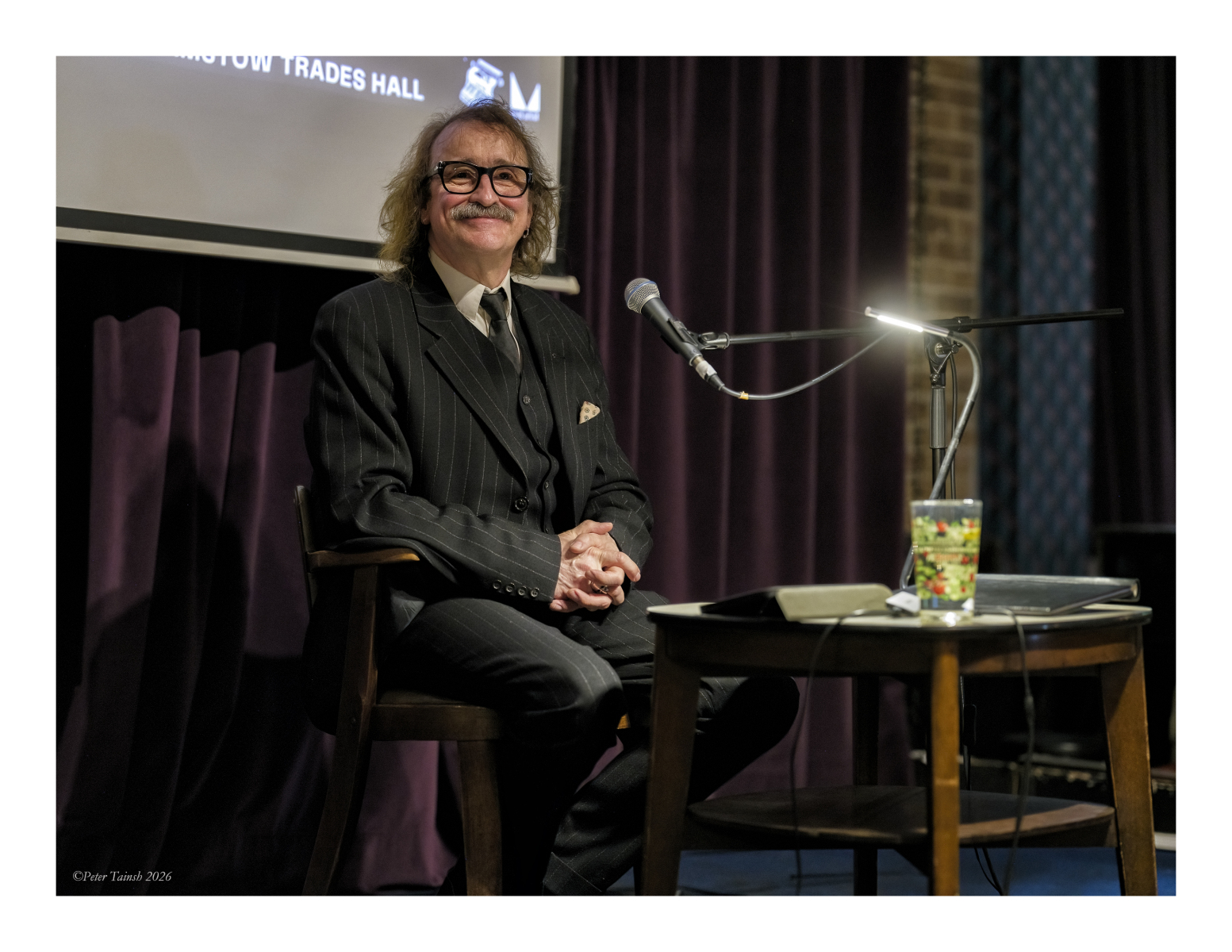
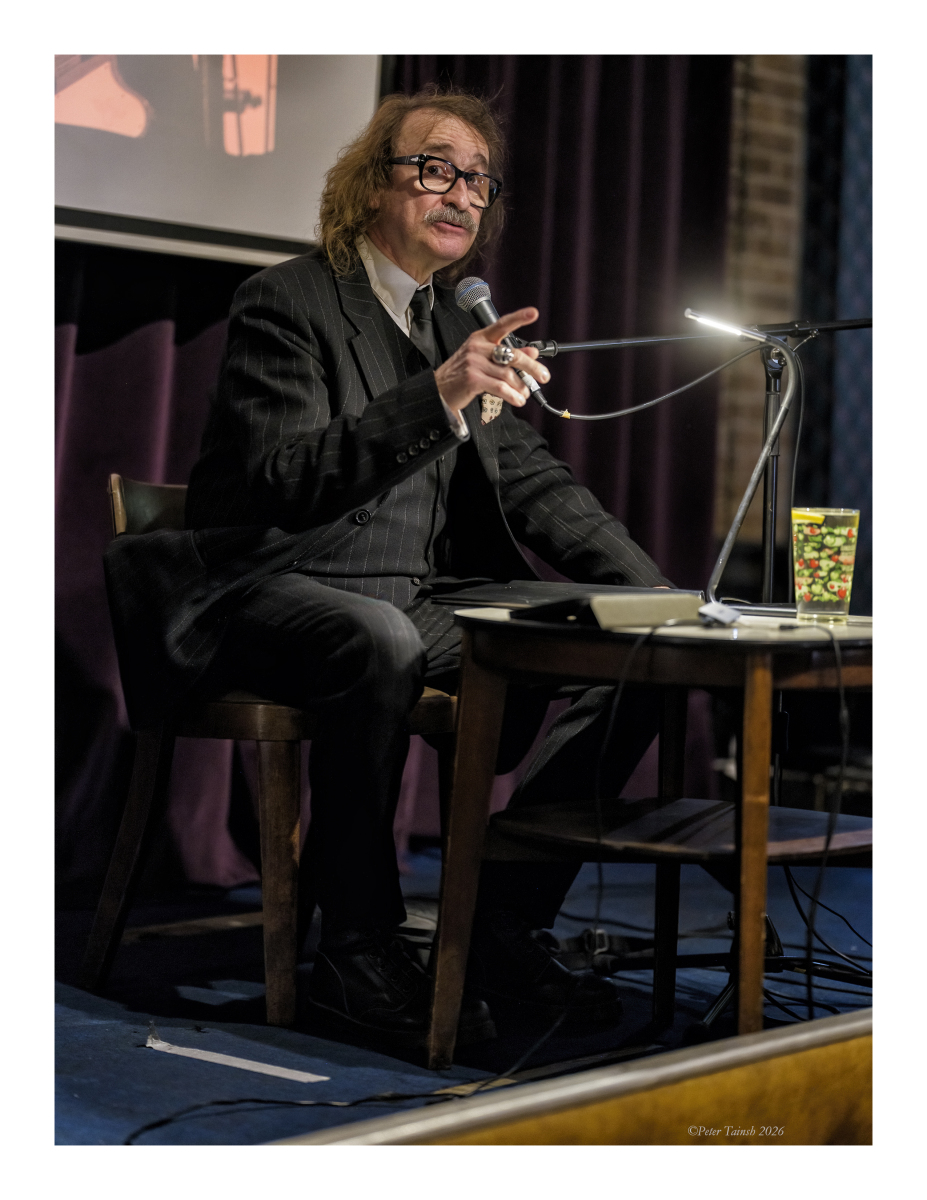
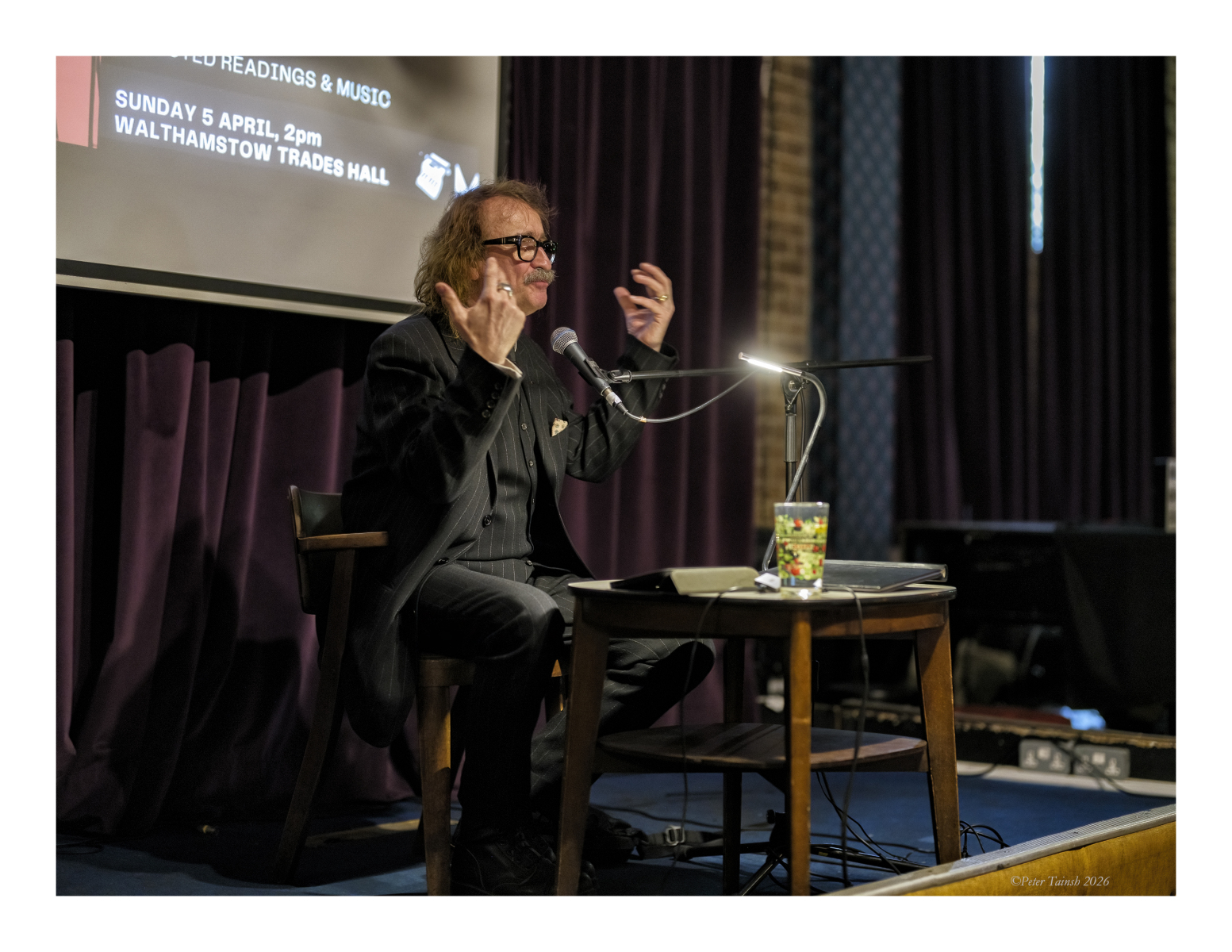
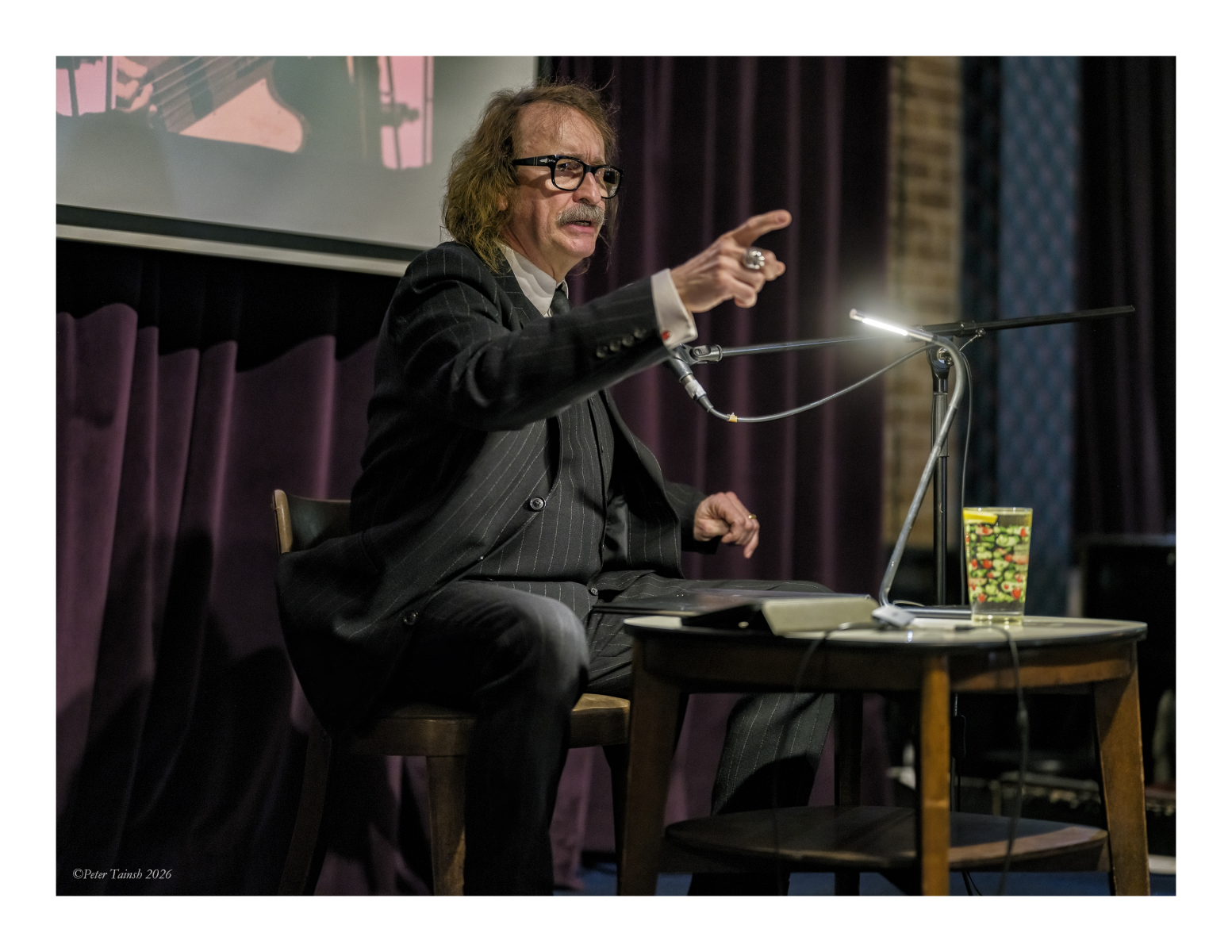
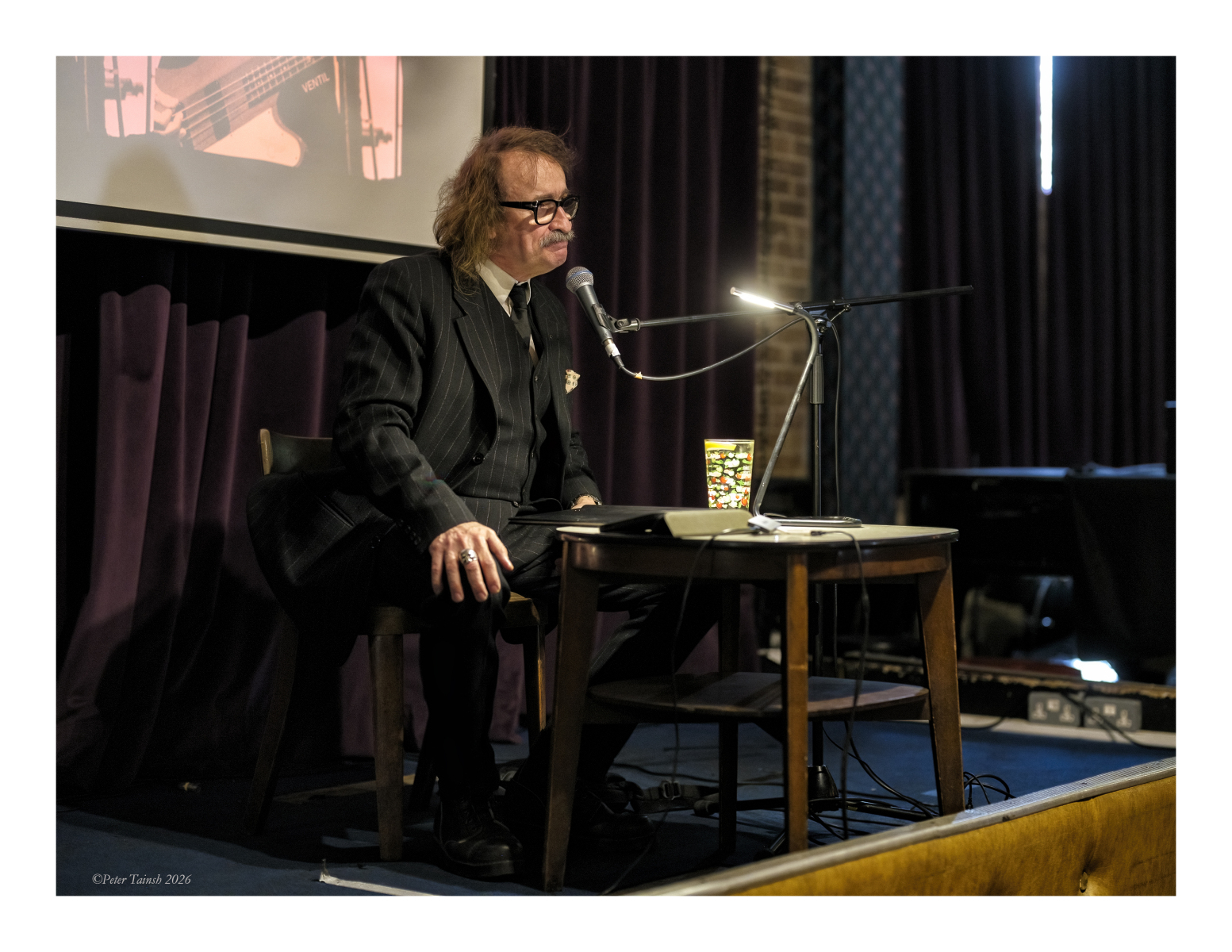
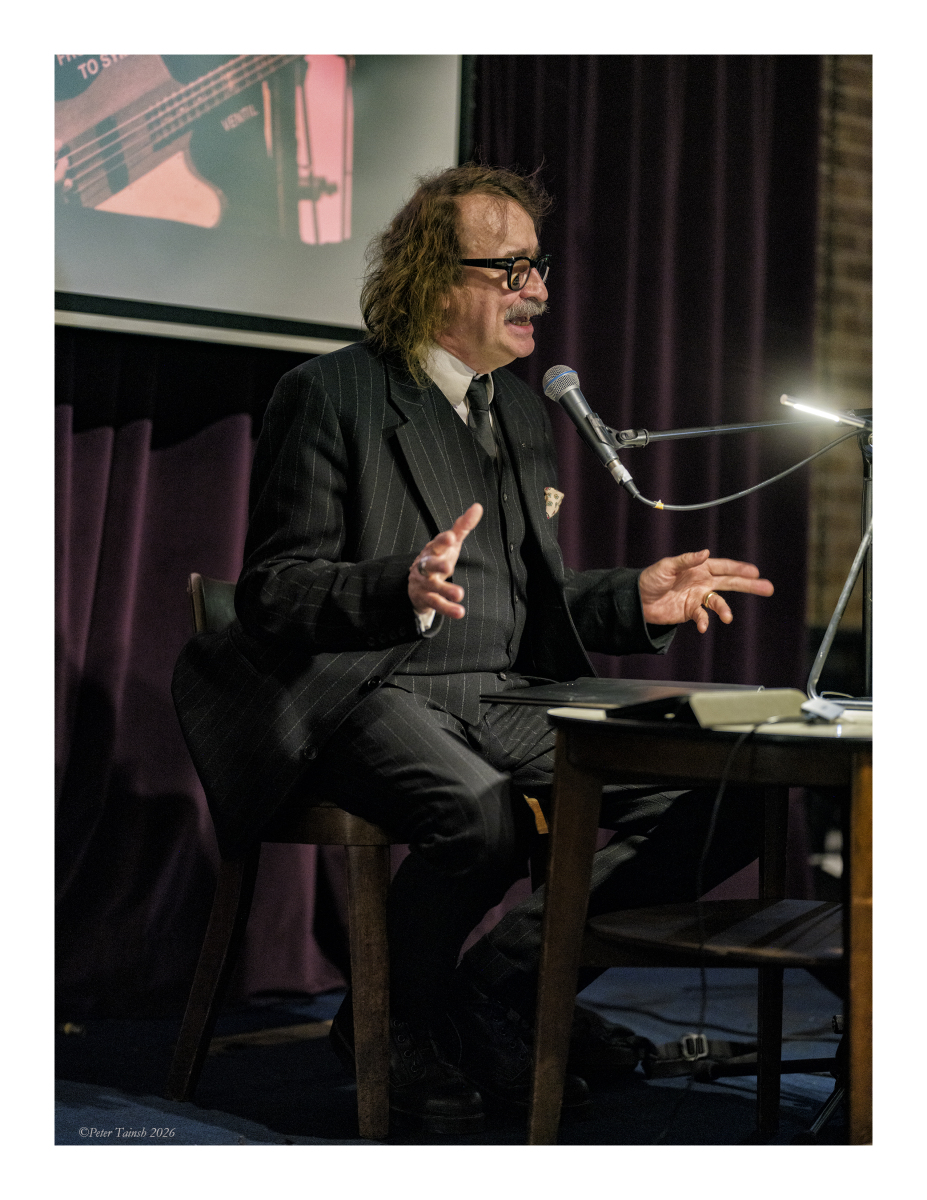
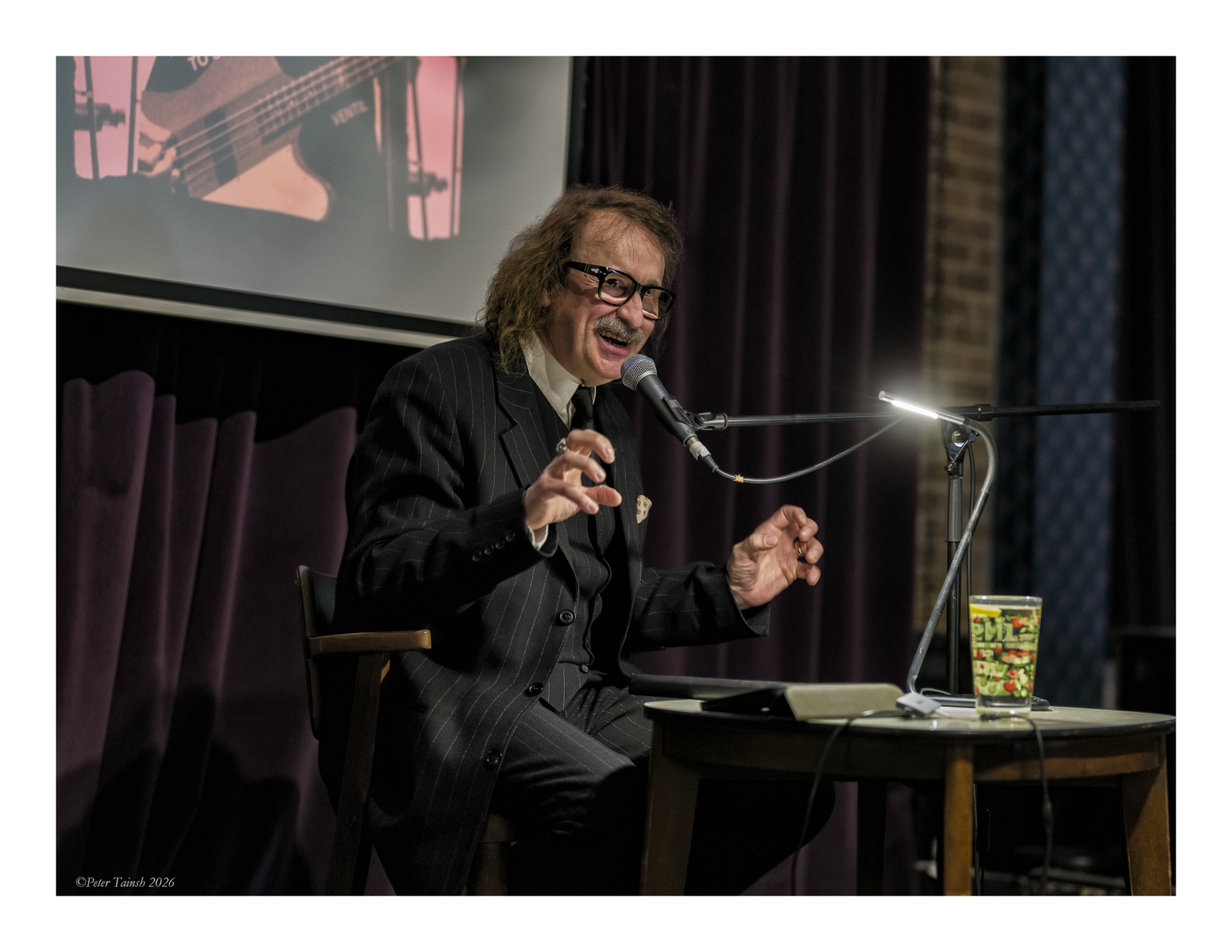
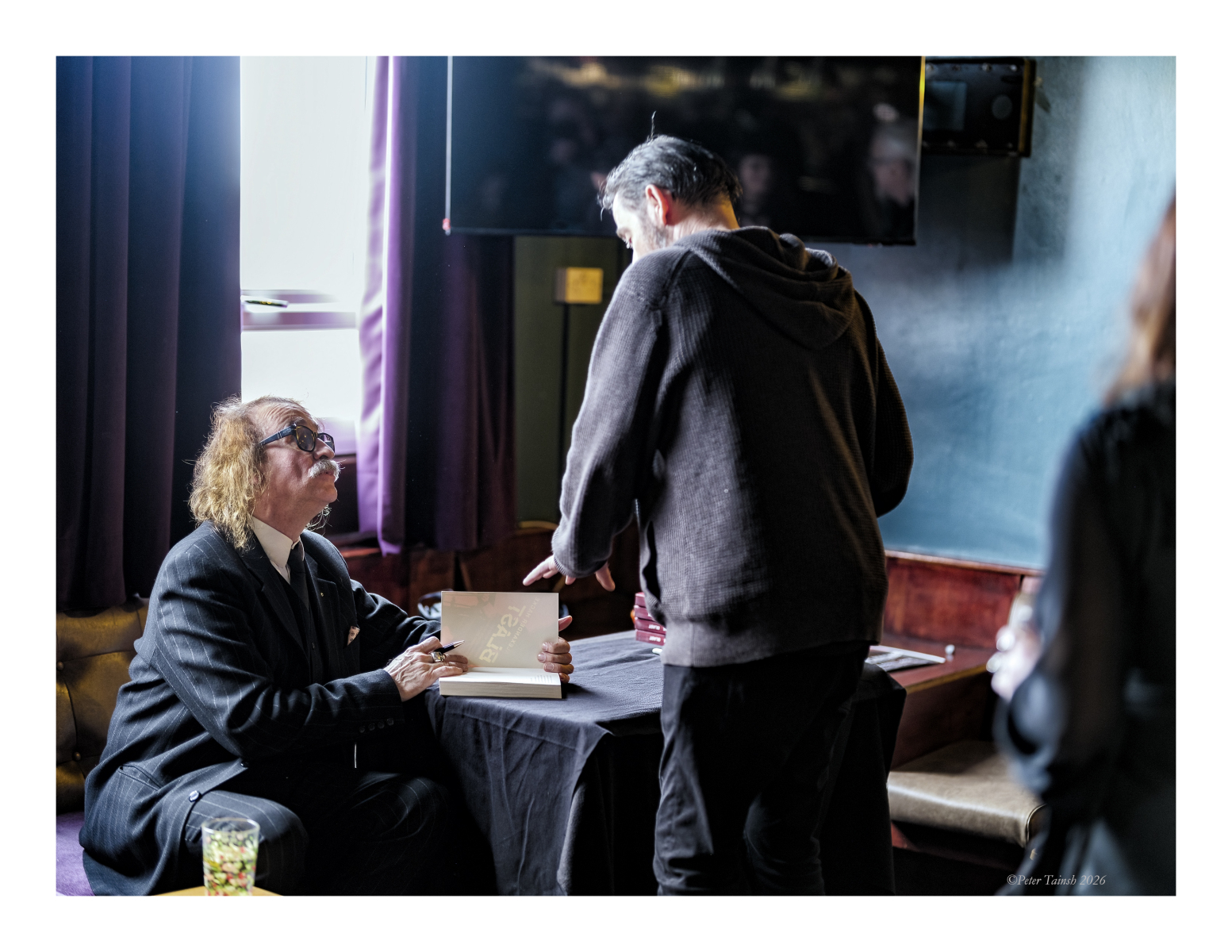
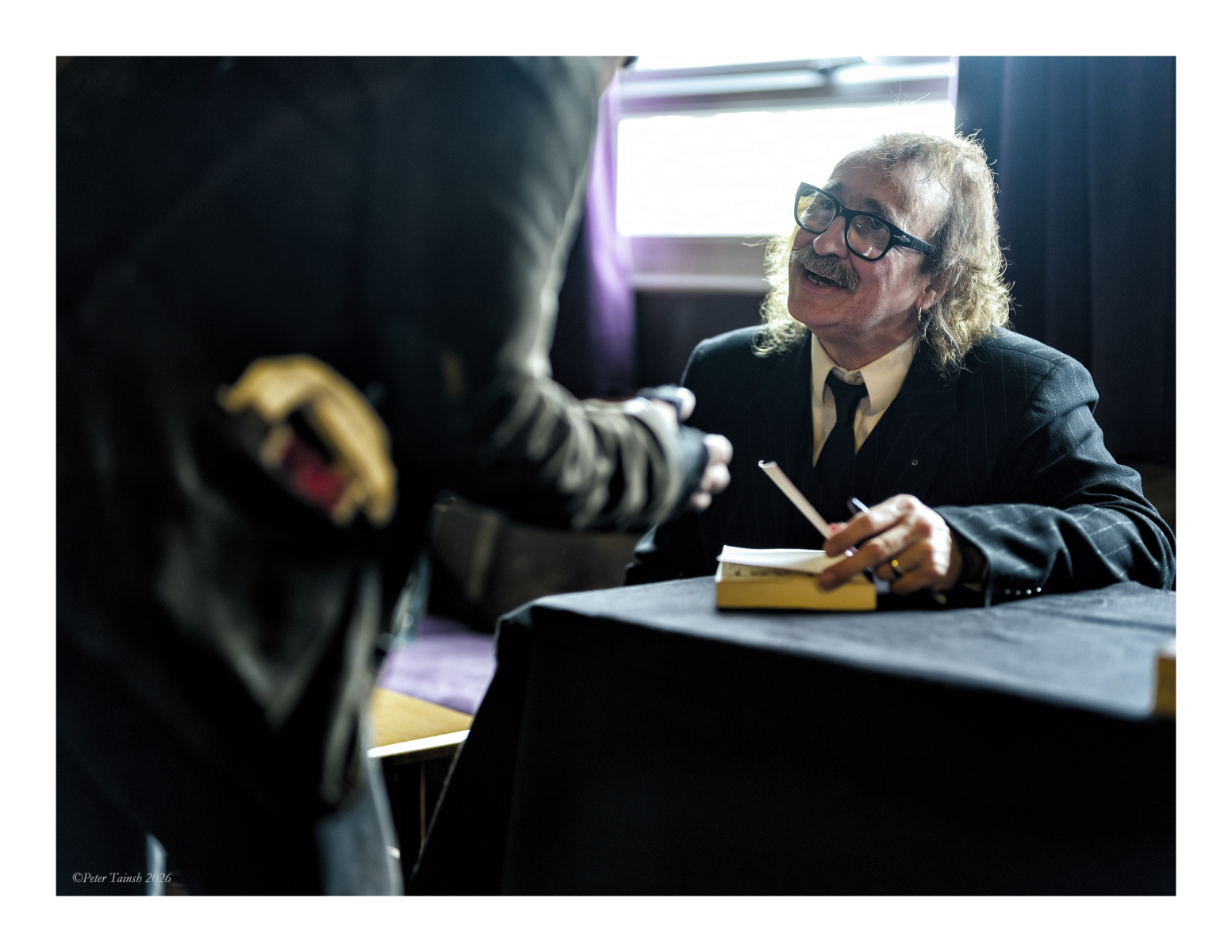
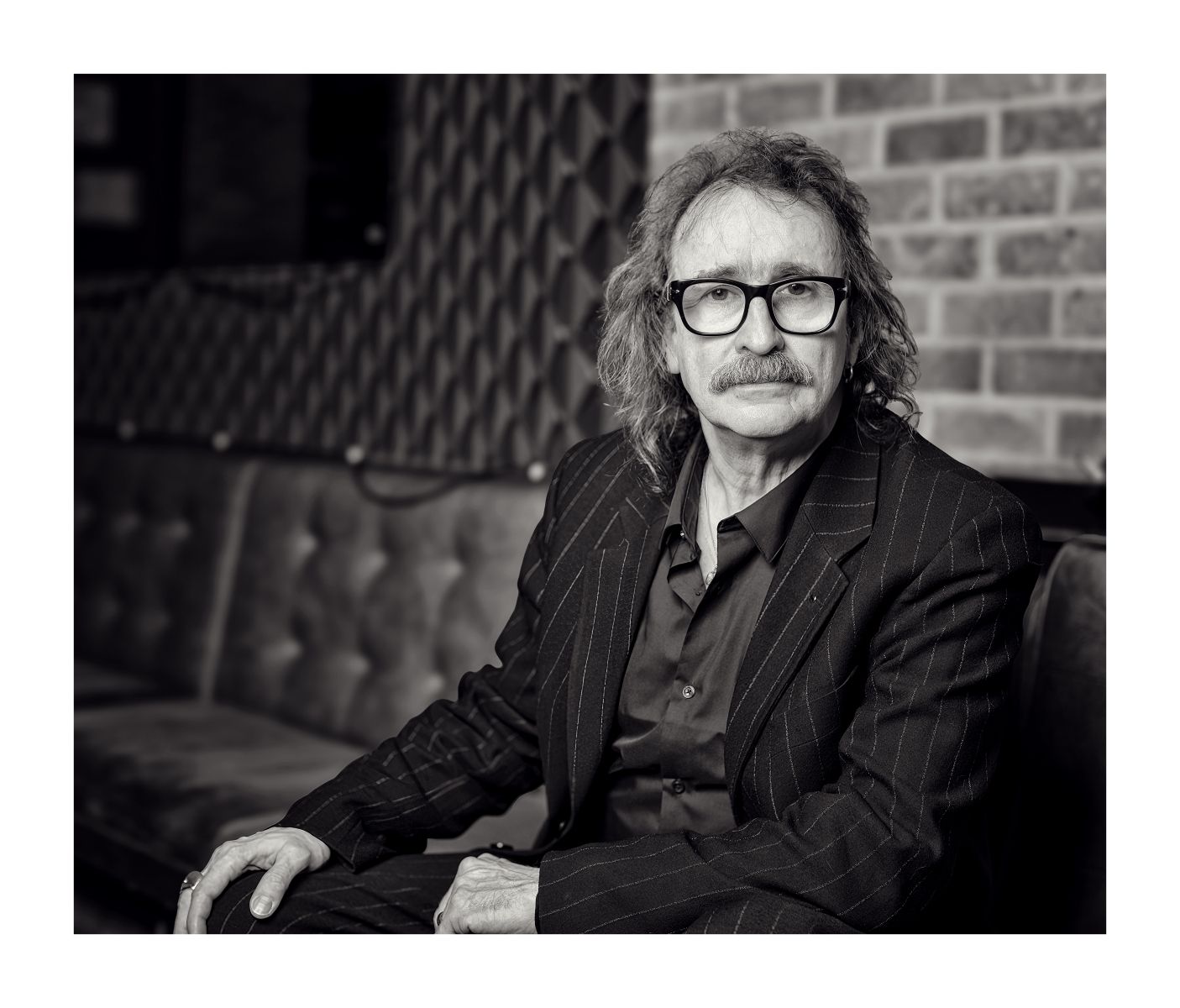
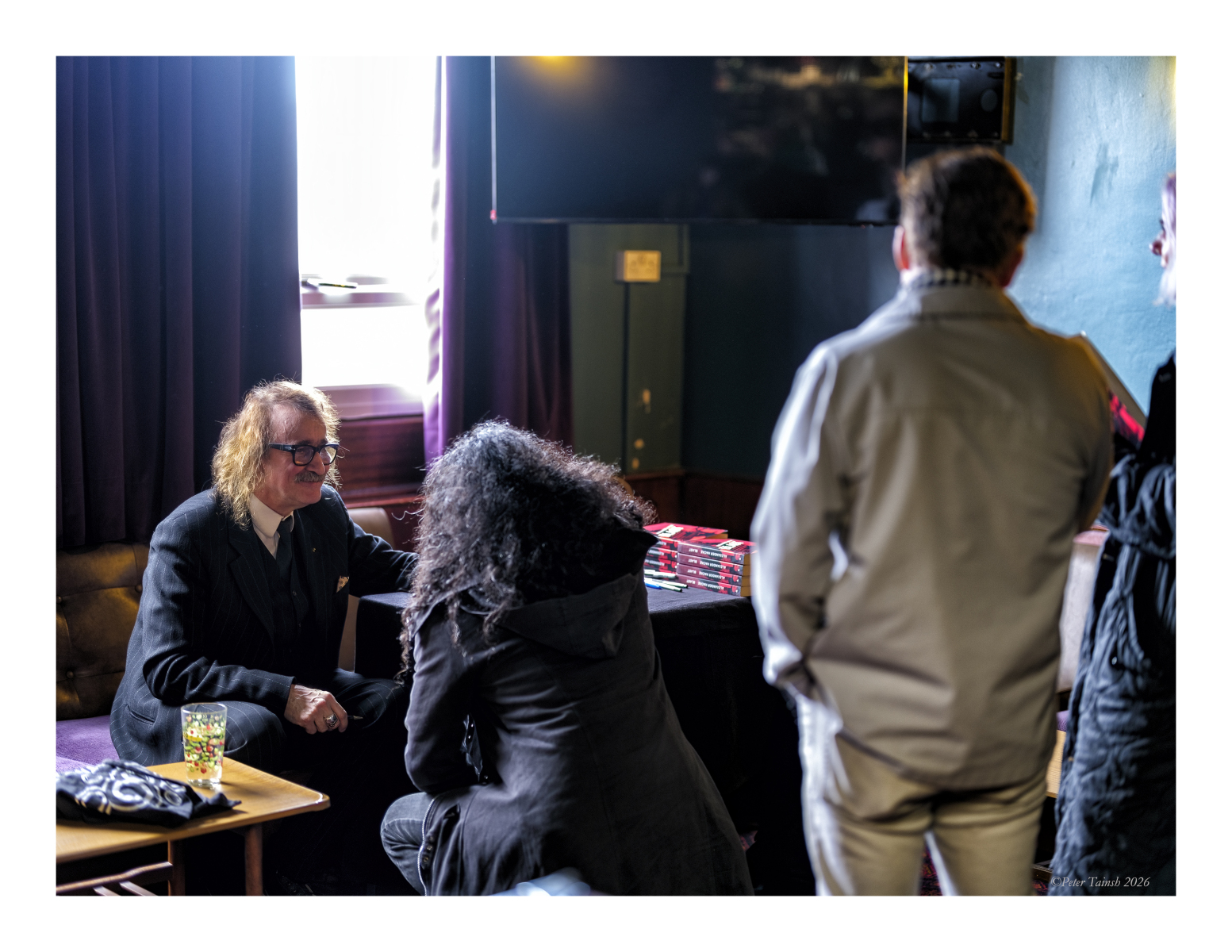
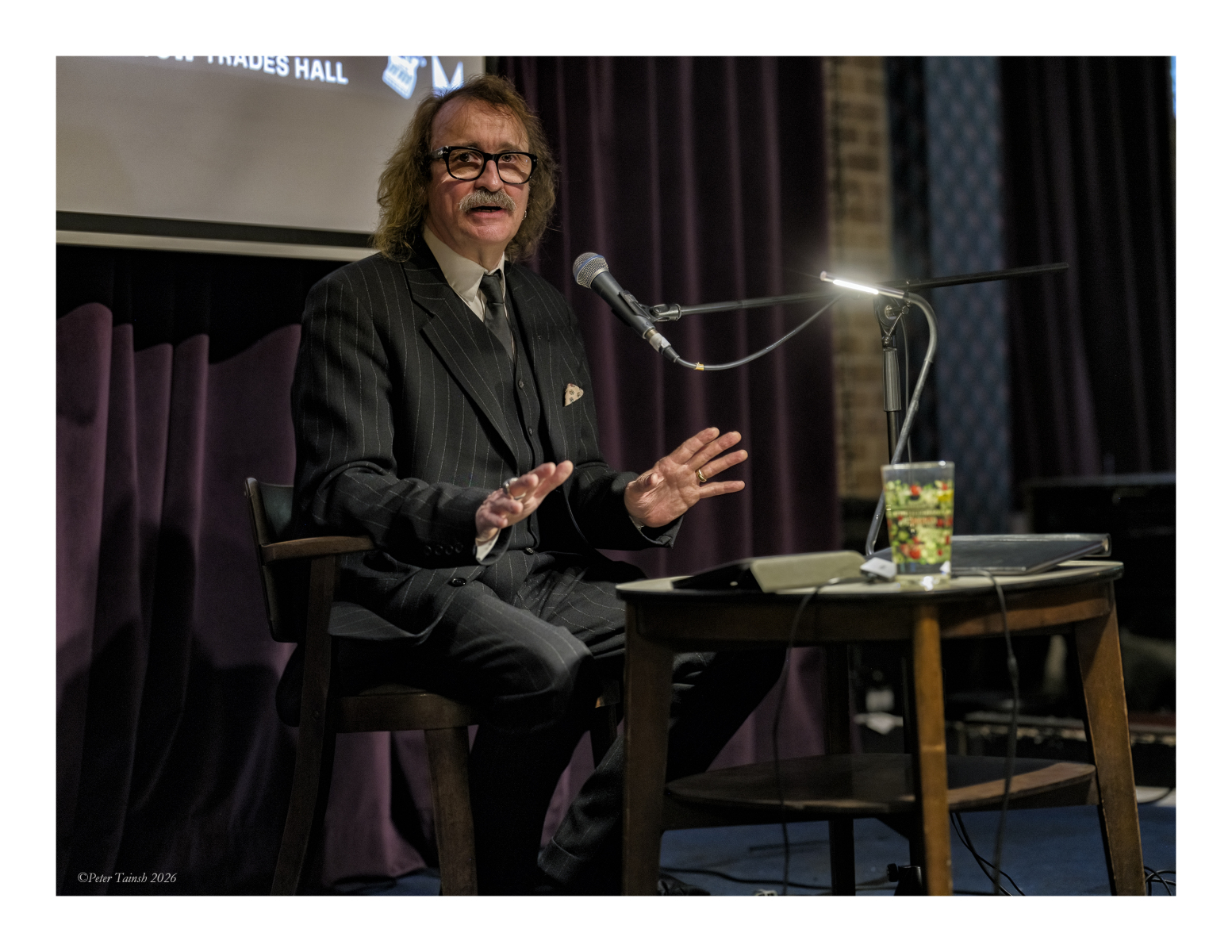
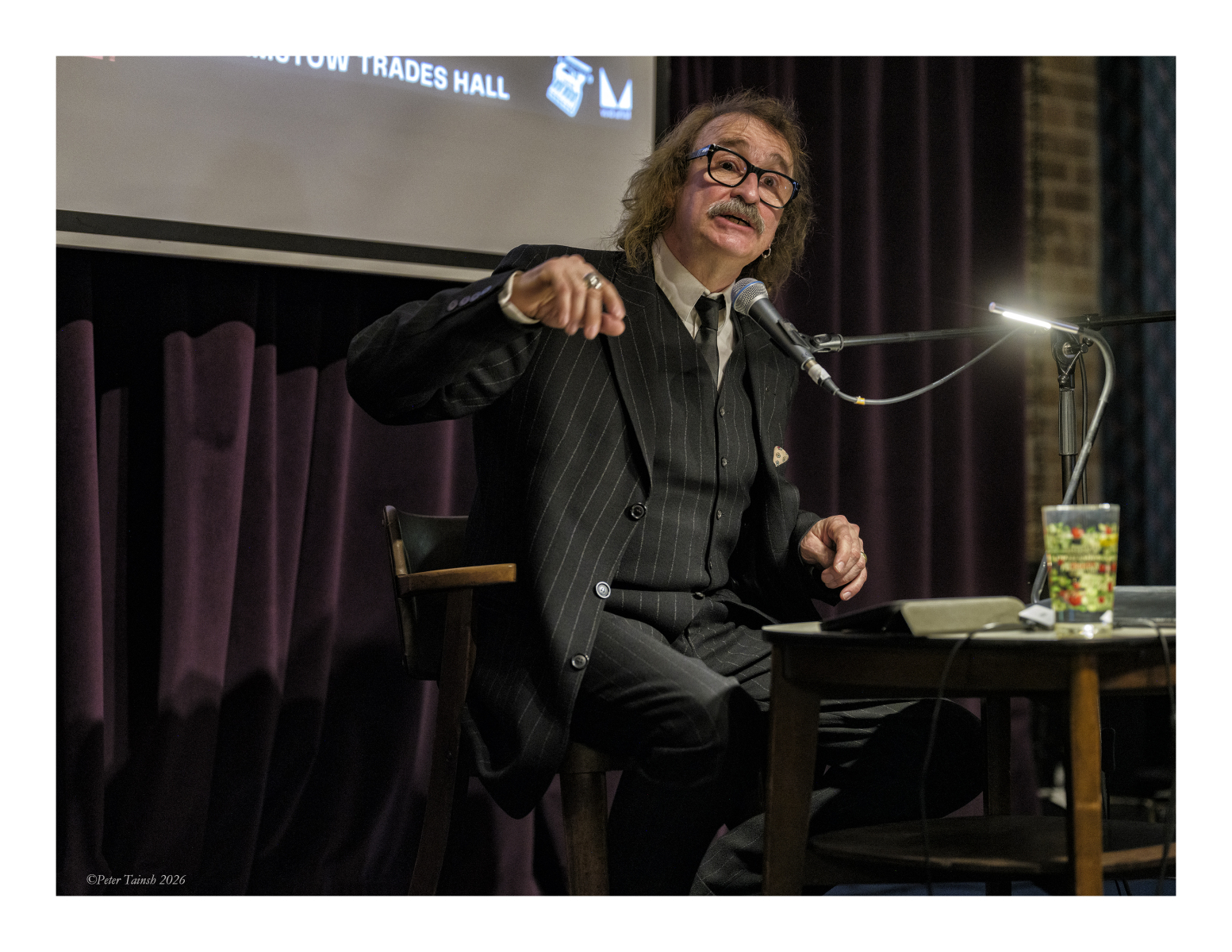
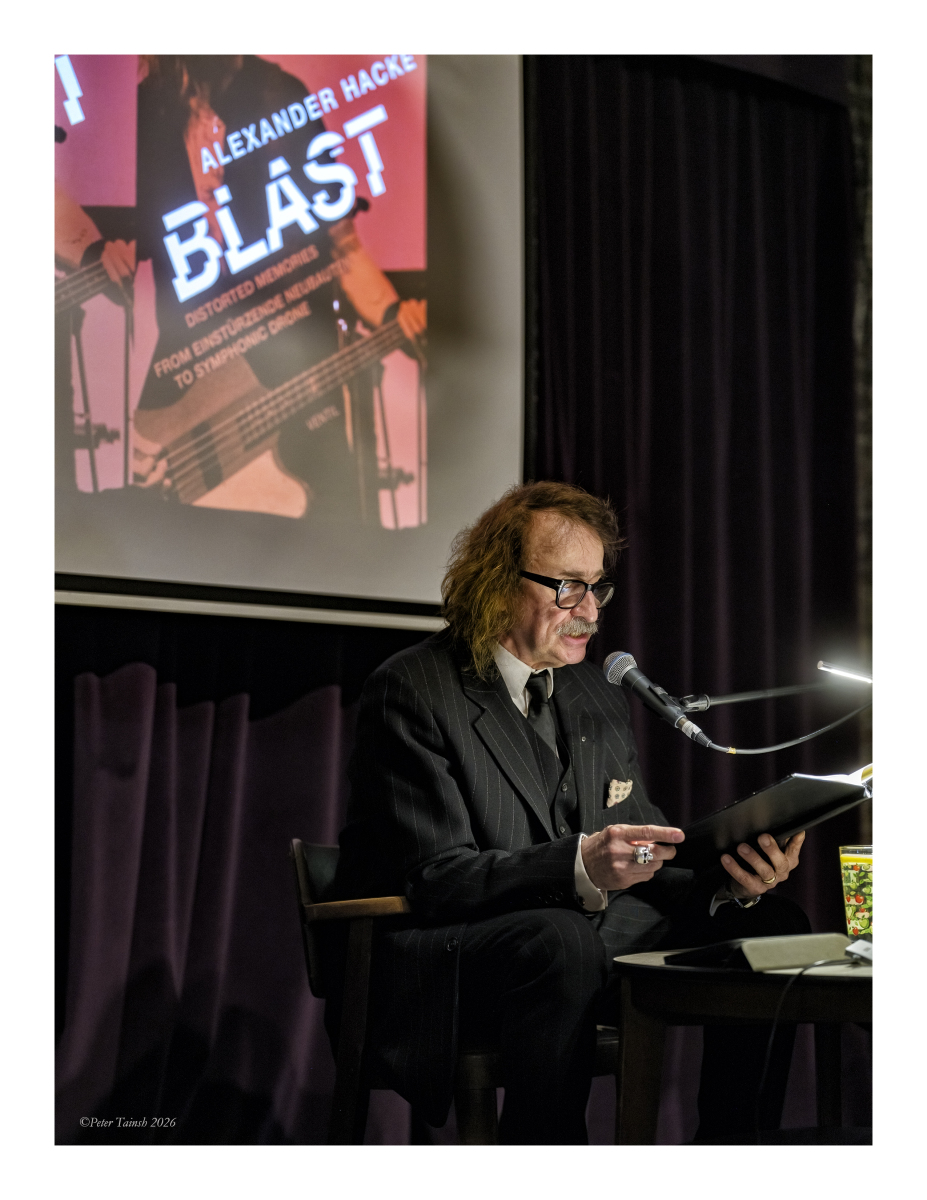
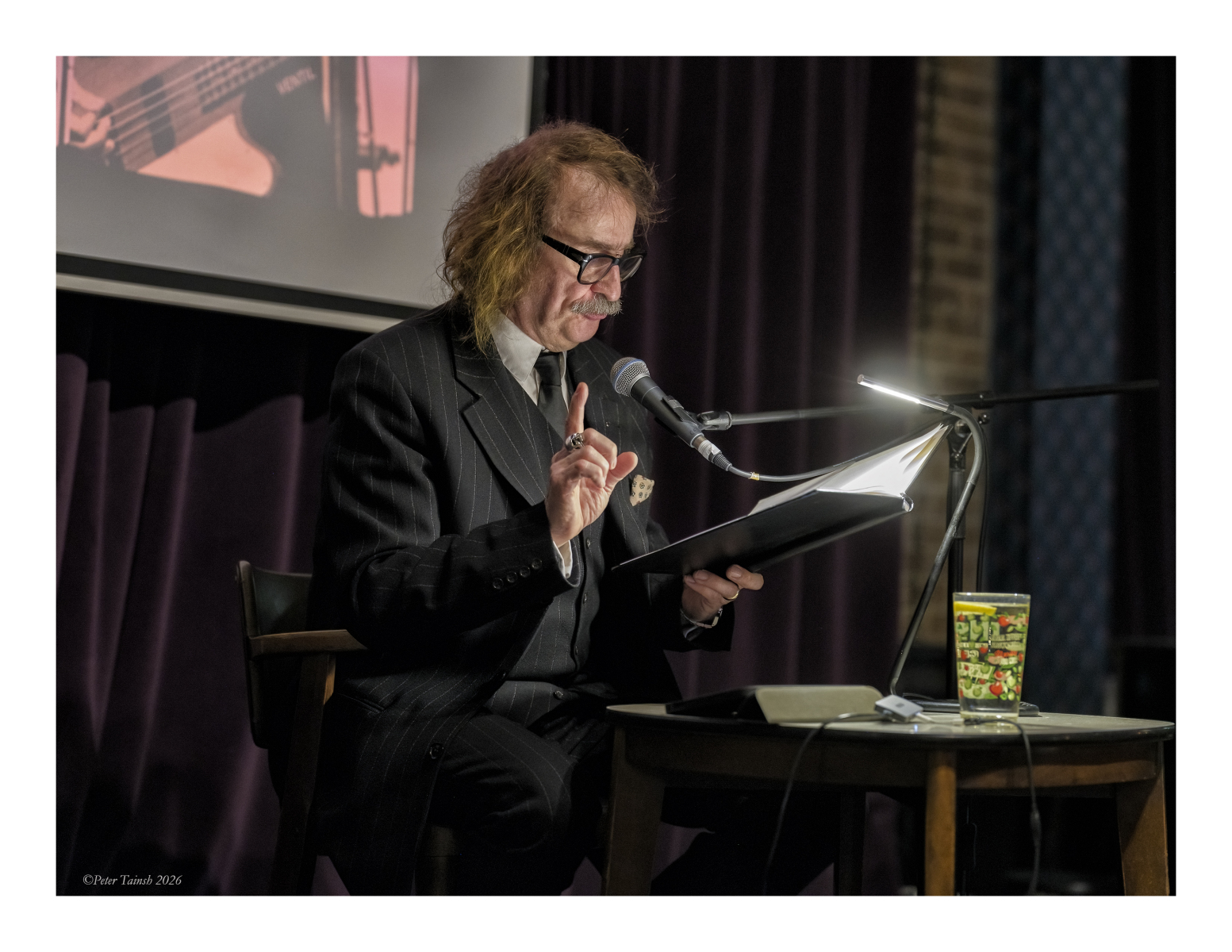
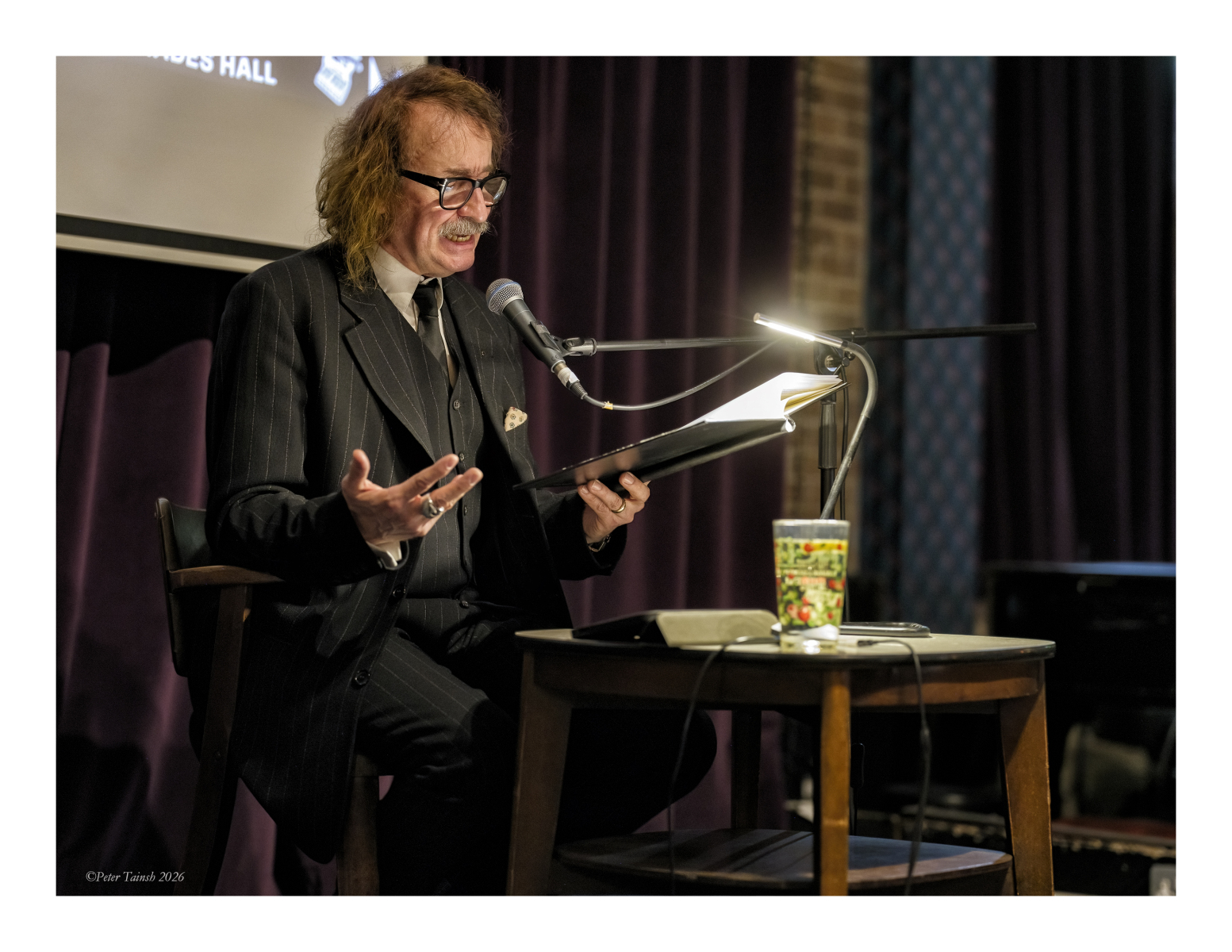
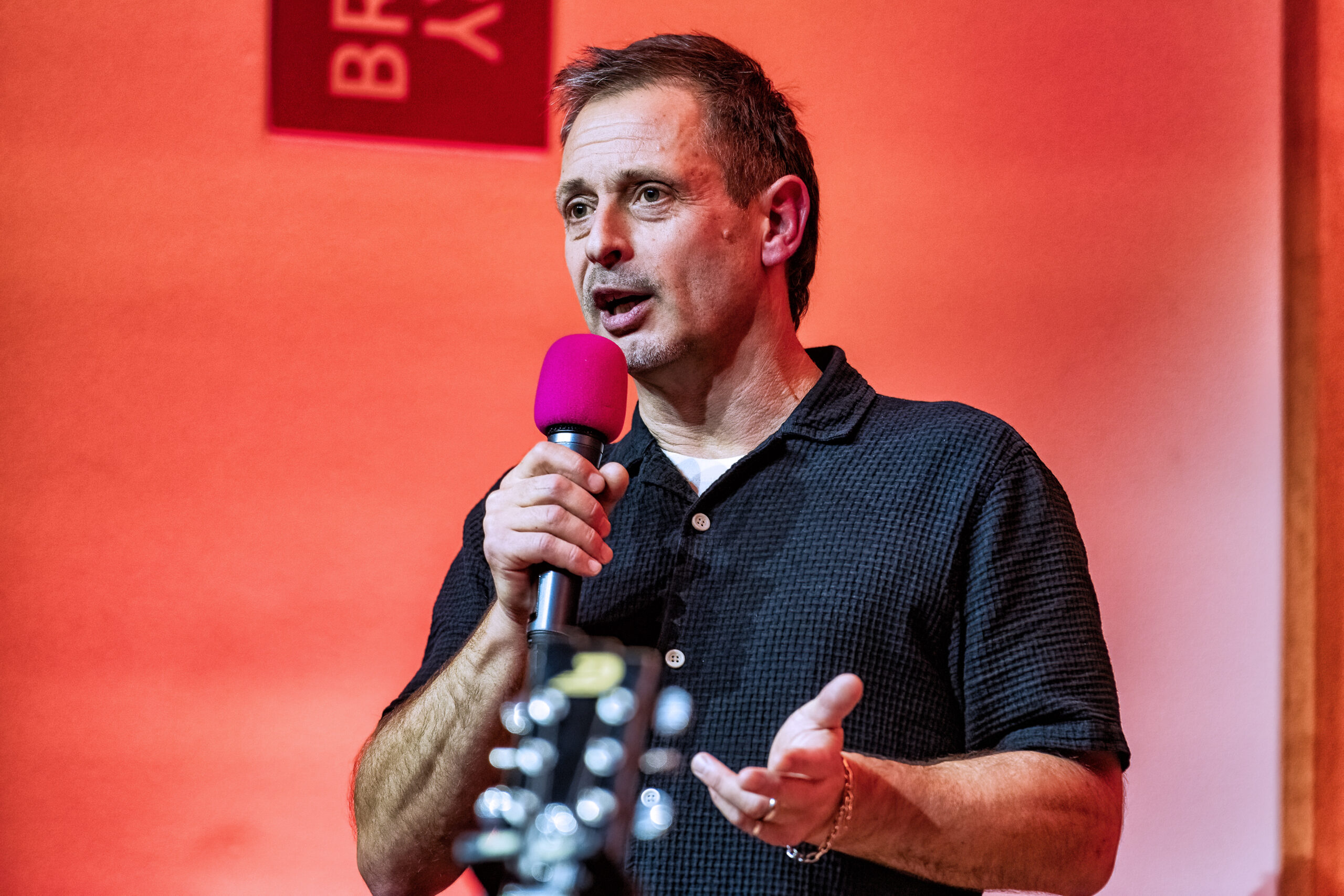
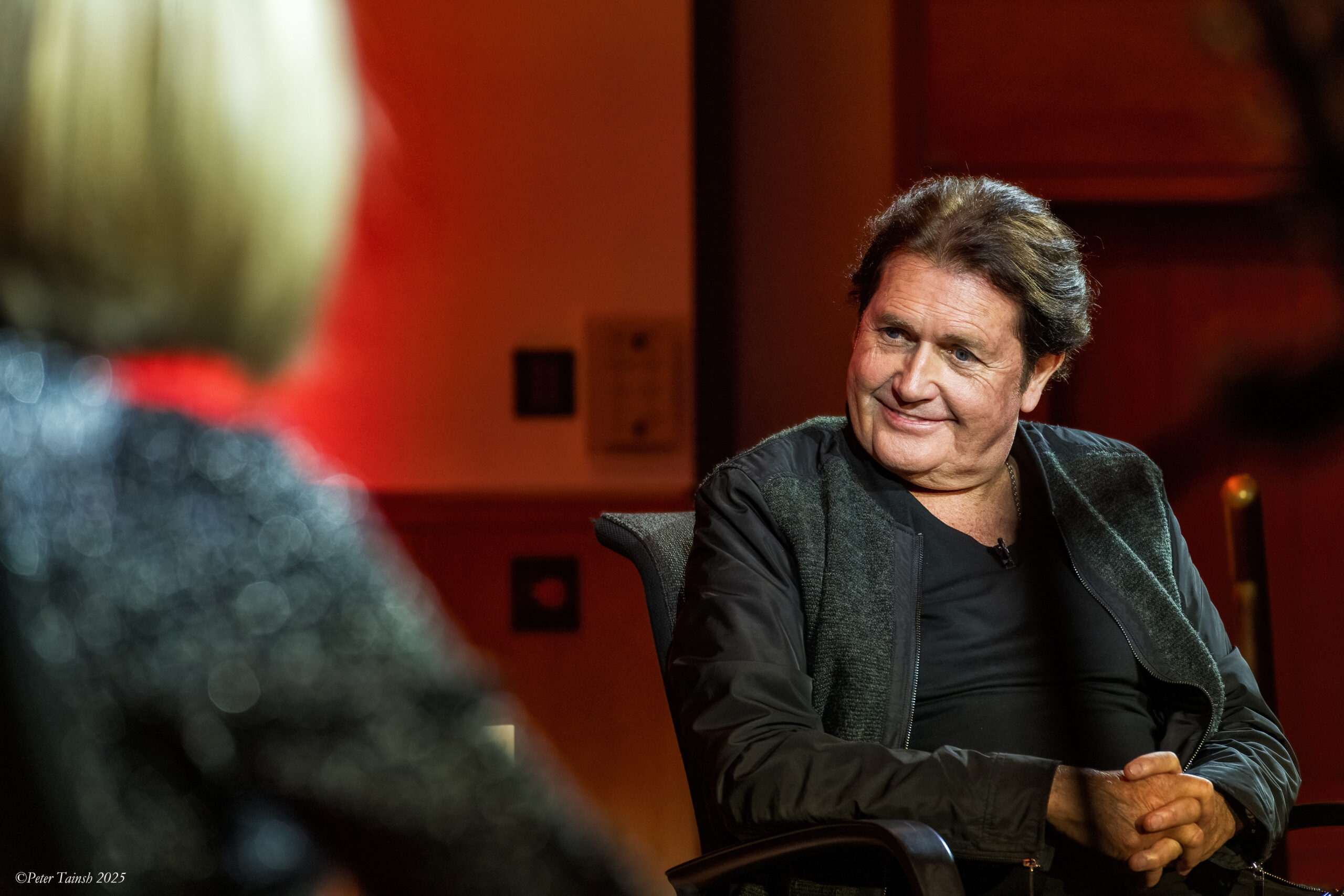
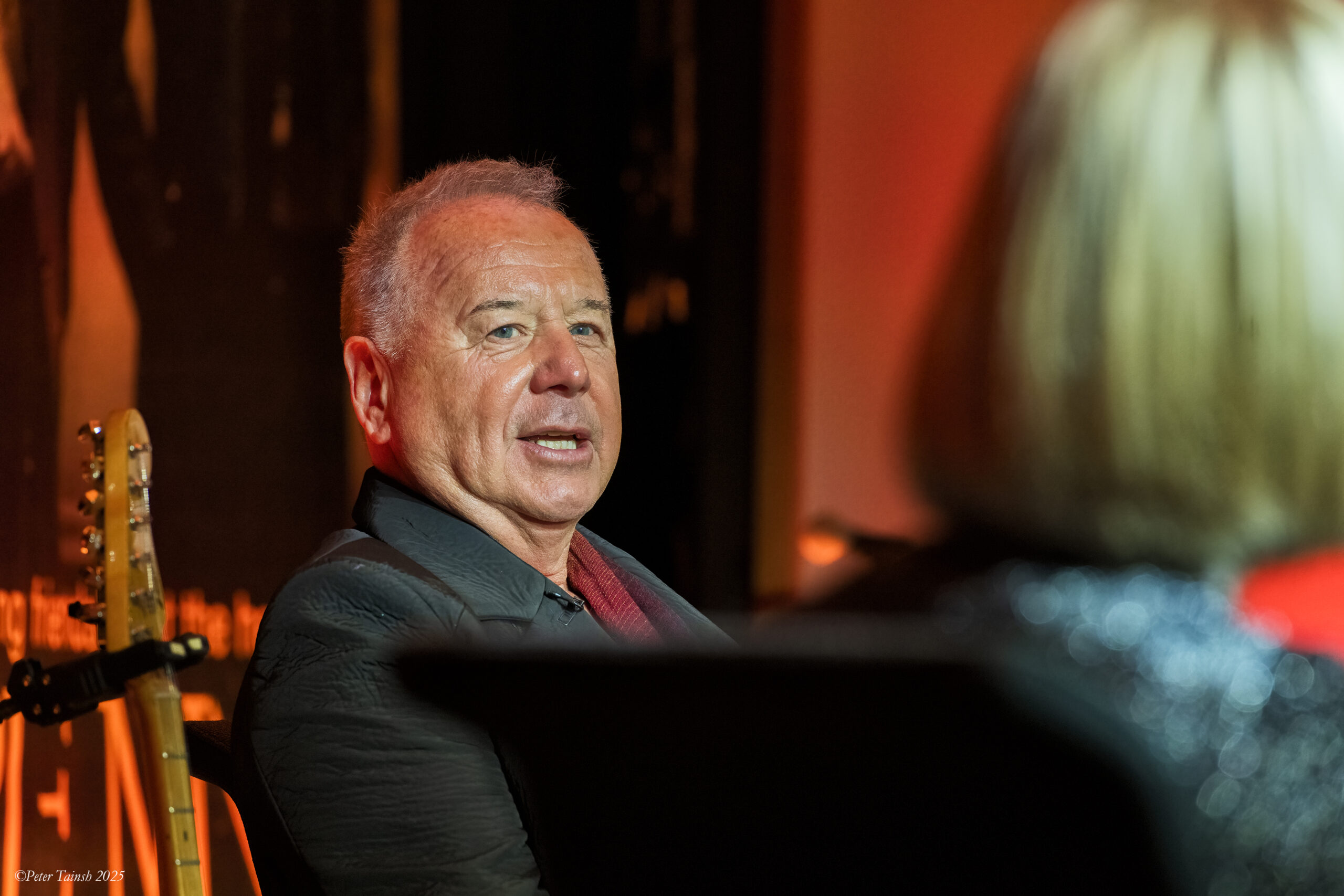
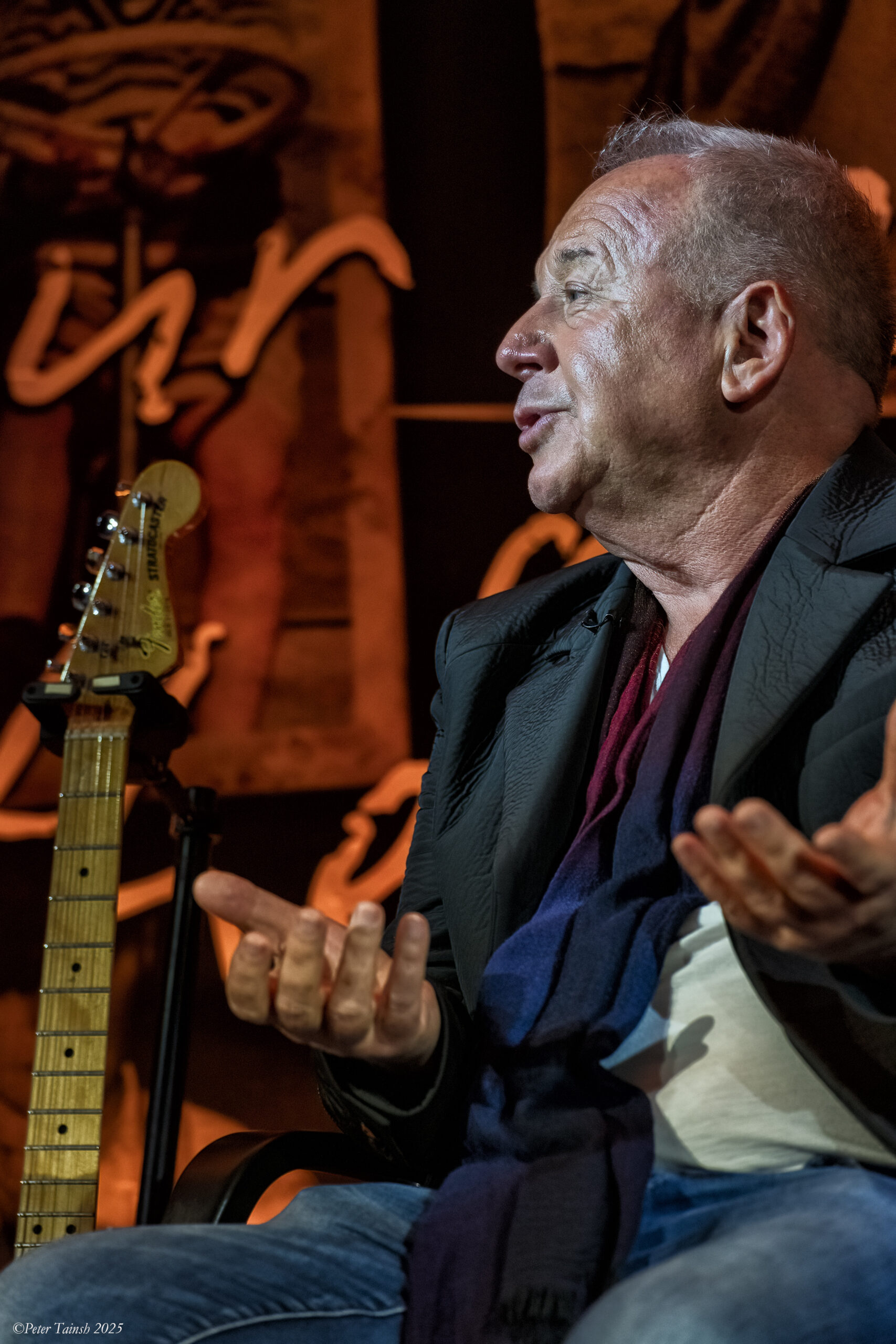
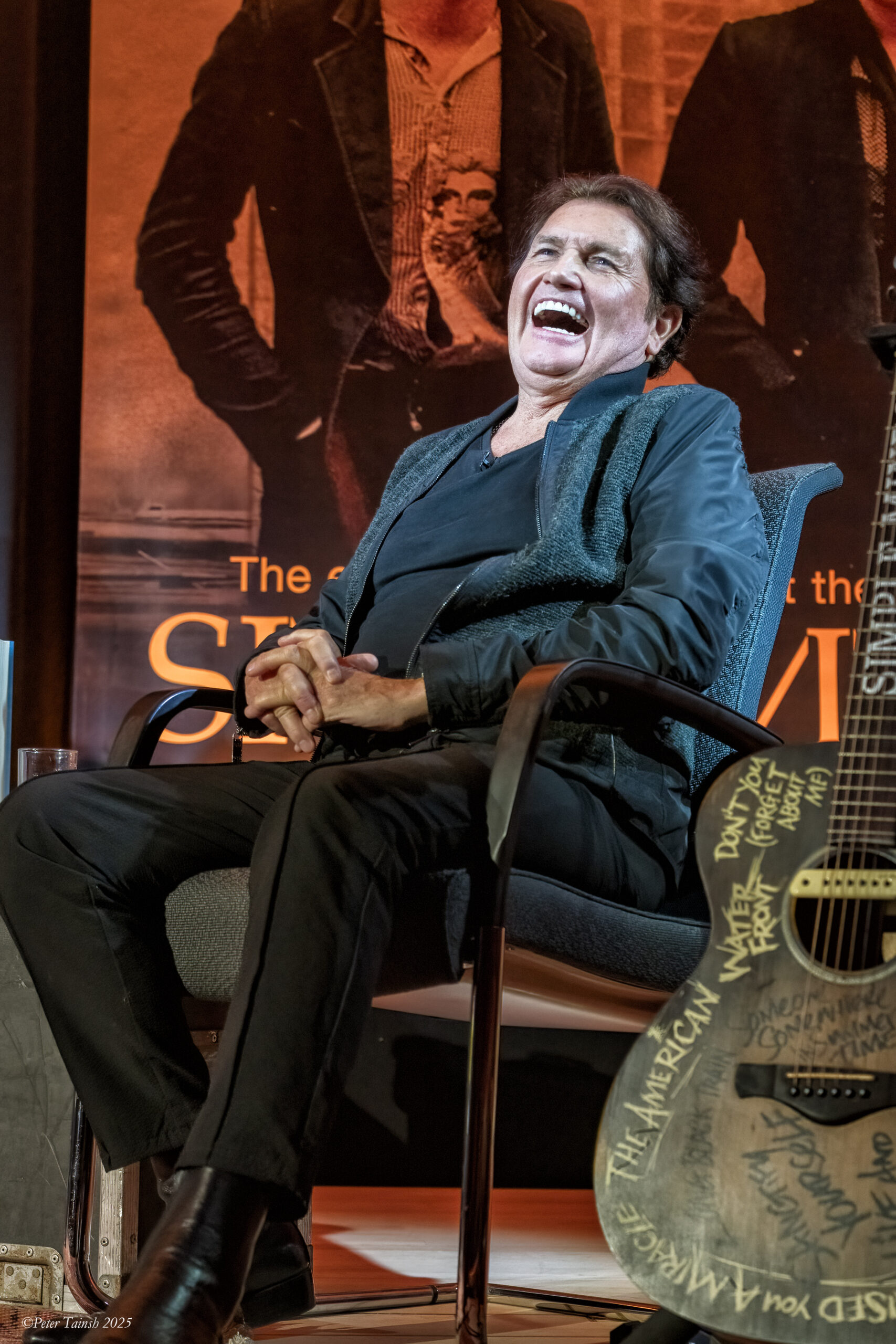
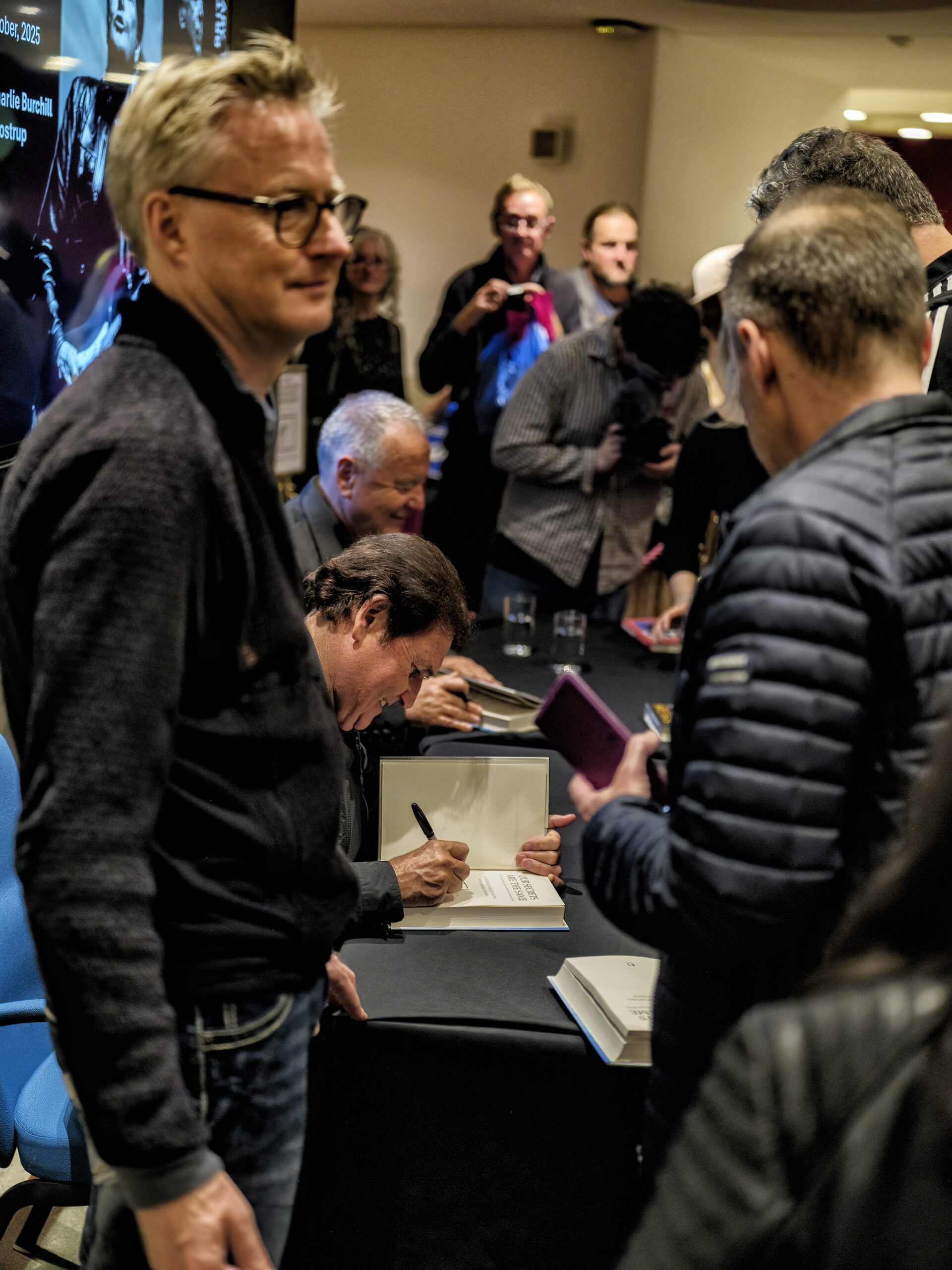
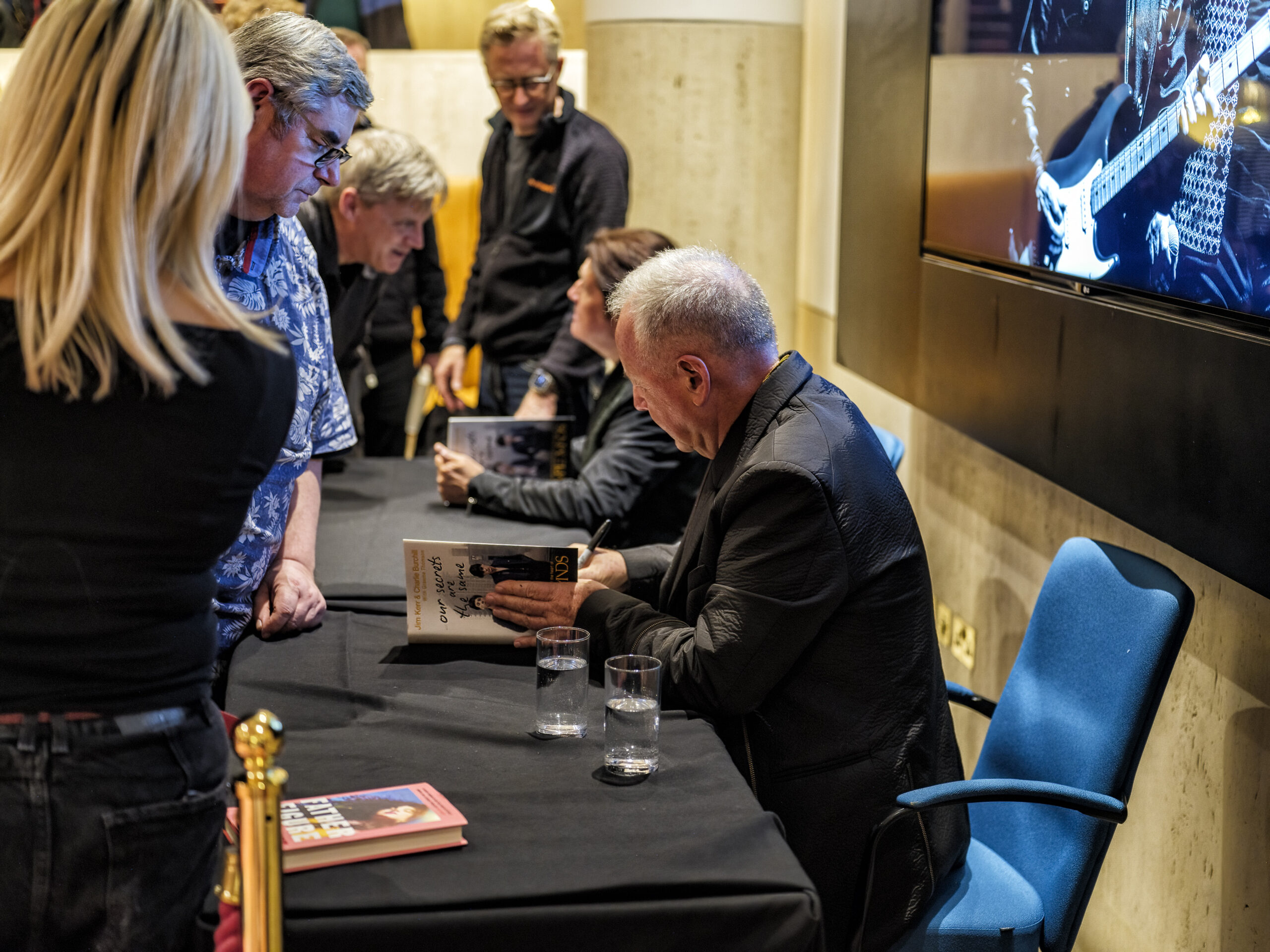
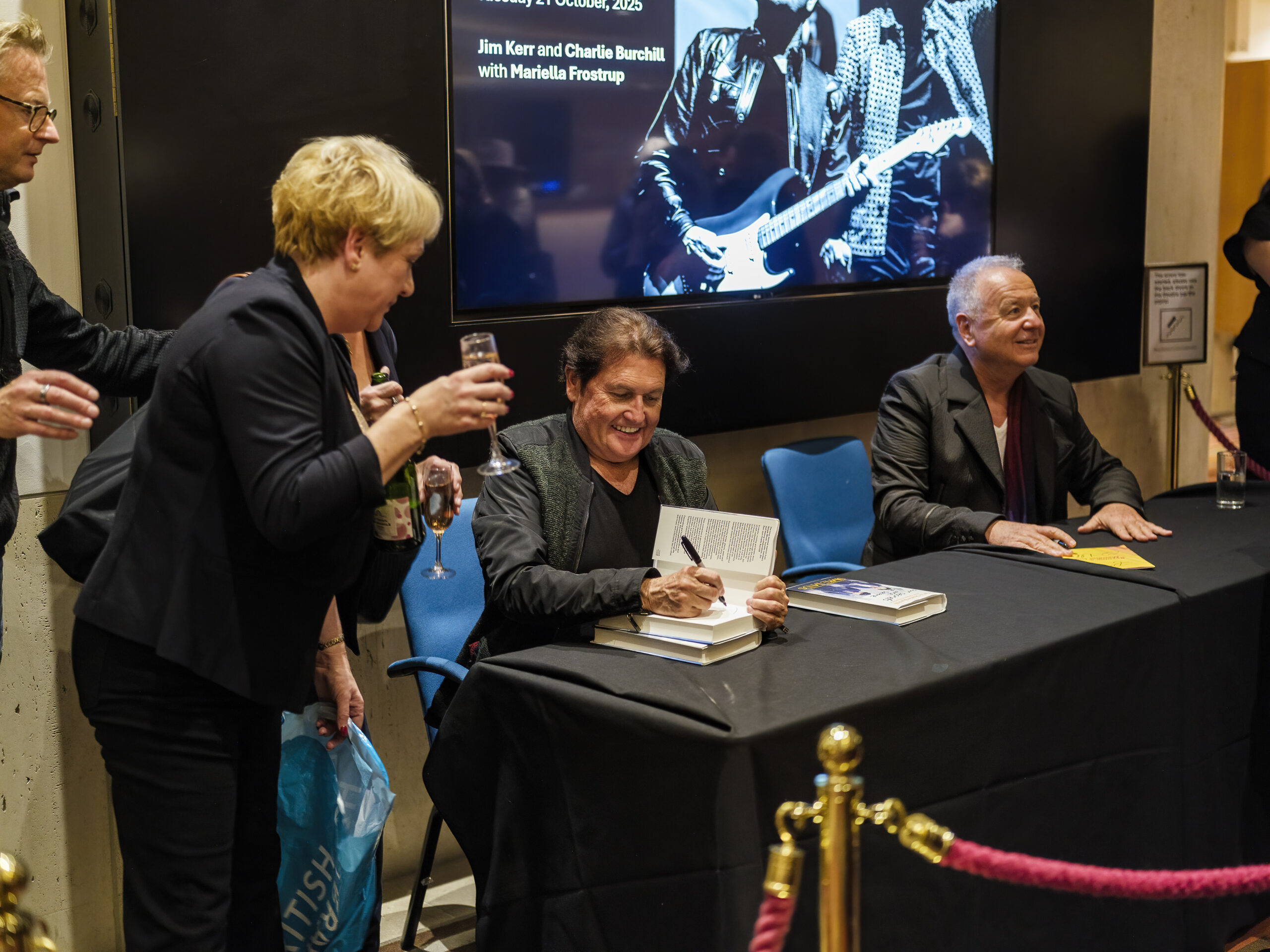
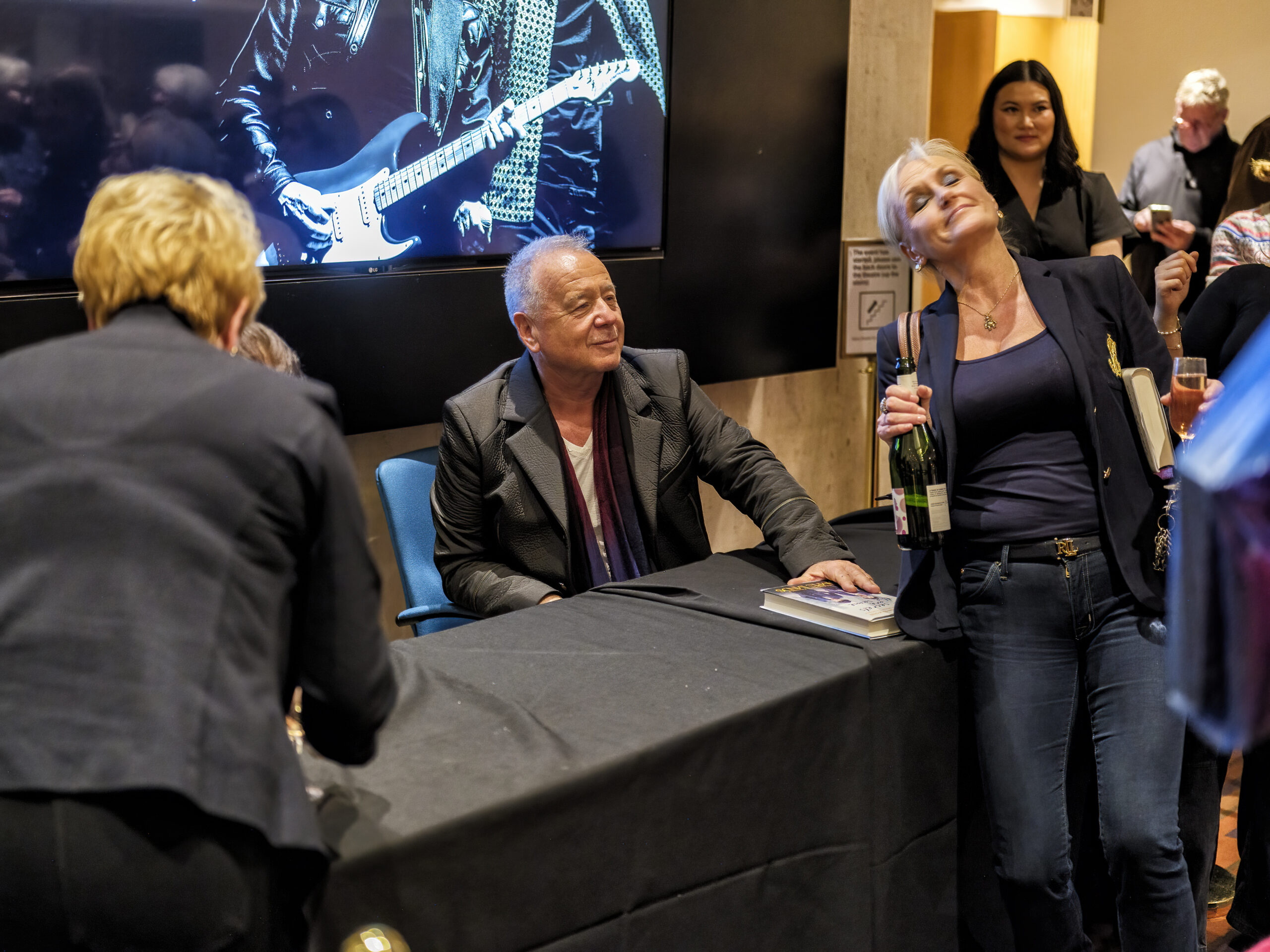
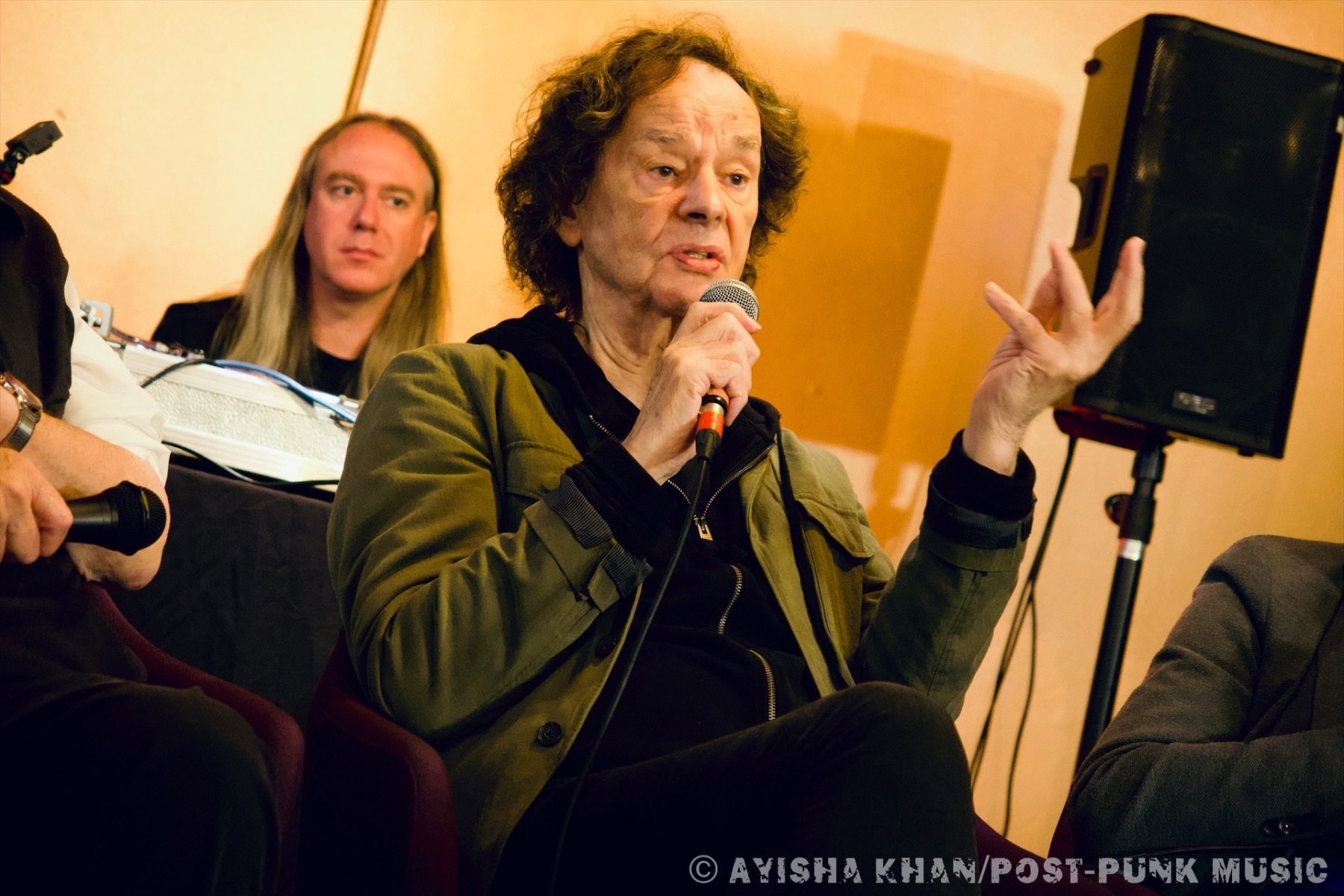
ALEXANDER HACKE @ WALTHAMSTOW TRADES HALL, LONDON
05/04/26: Alexander Hacke @ Walthamstow Trades Hall, London.
Photos © Peter Tainsh.
© Ayisha Khan.
JAH WOBBLE + JON KLEIN: AUTOMATED PARADISE
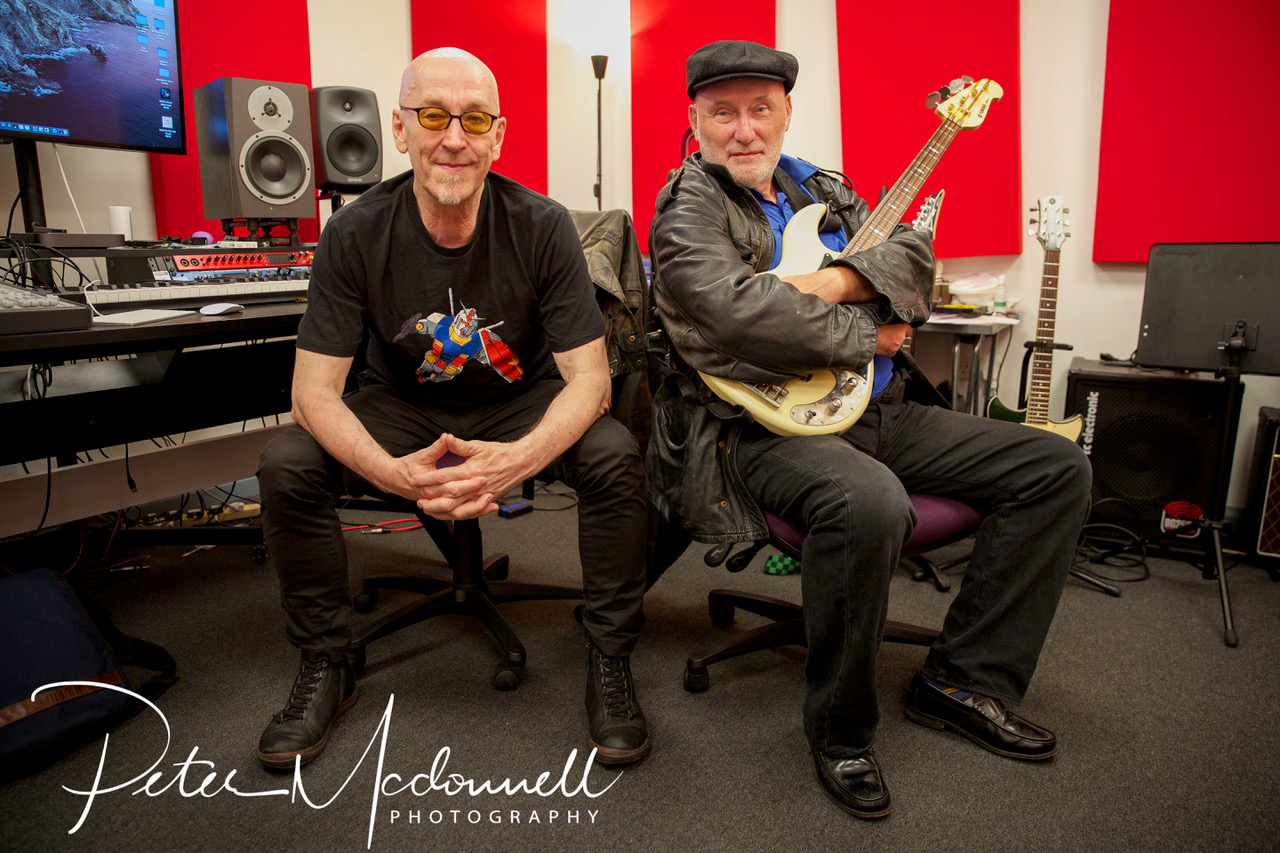
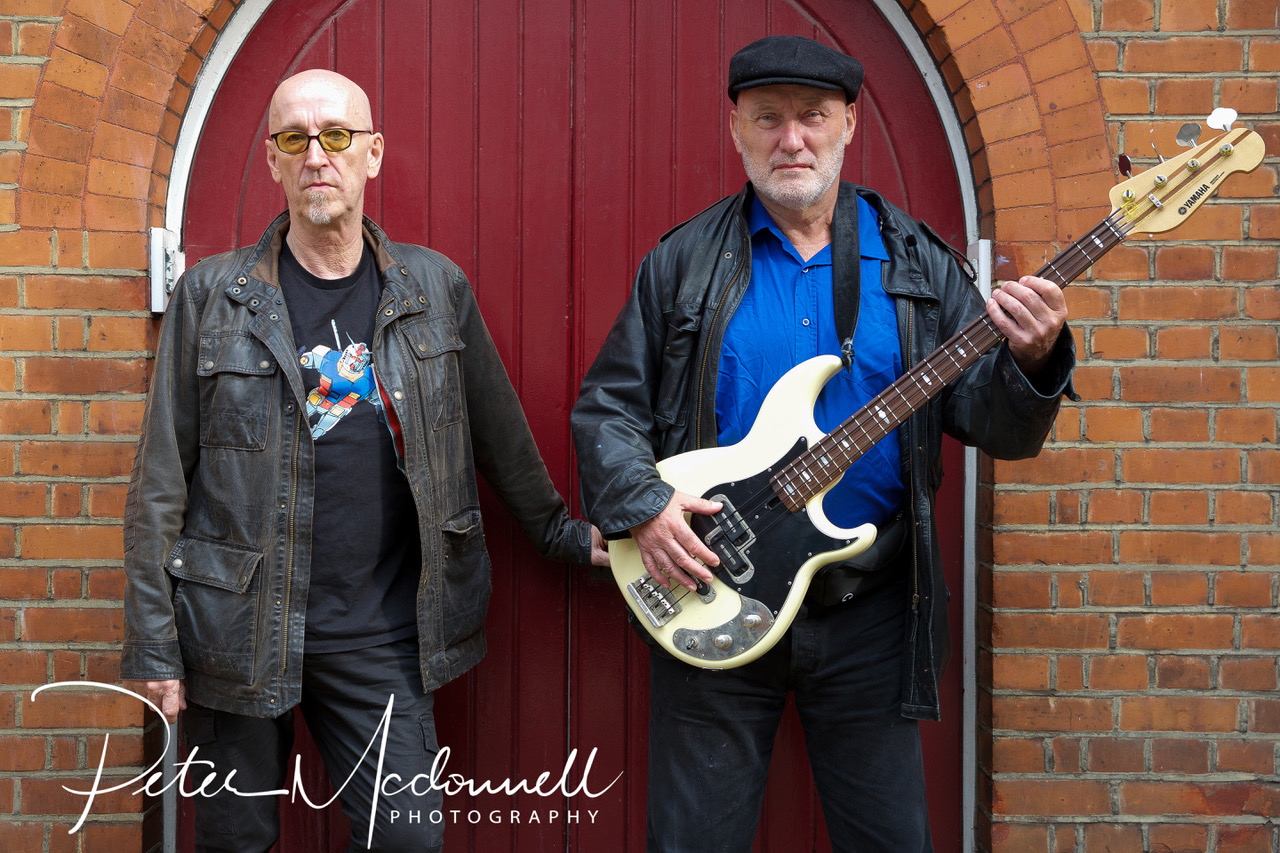
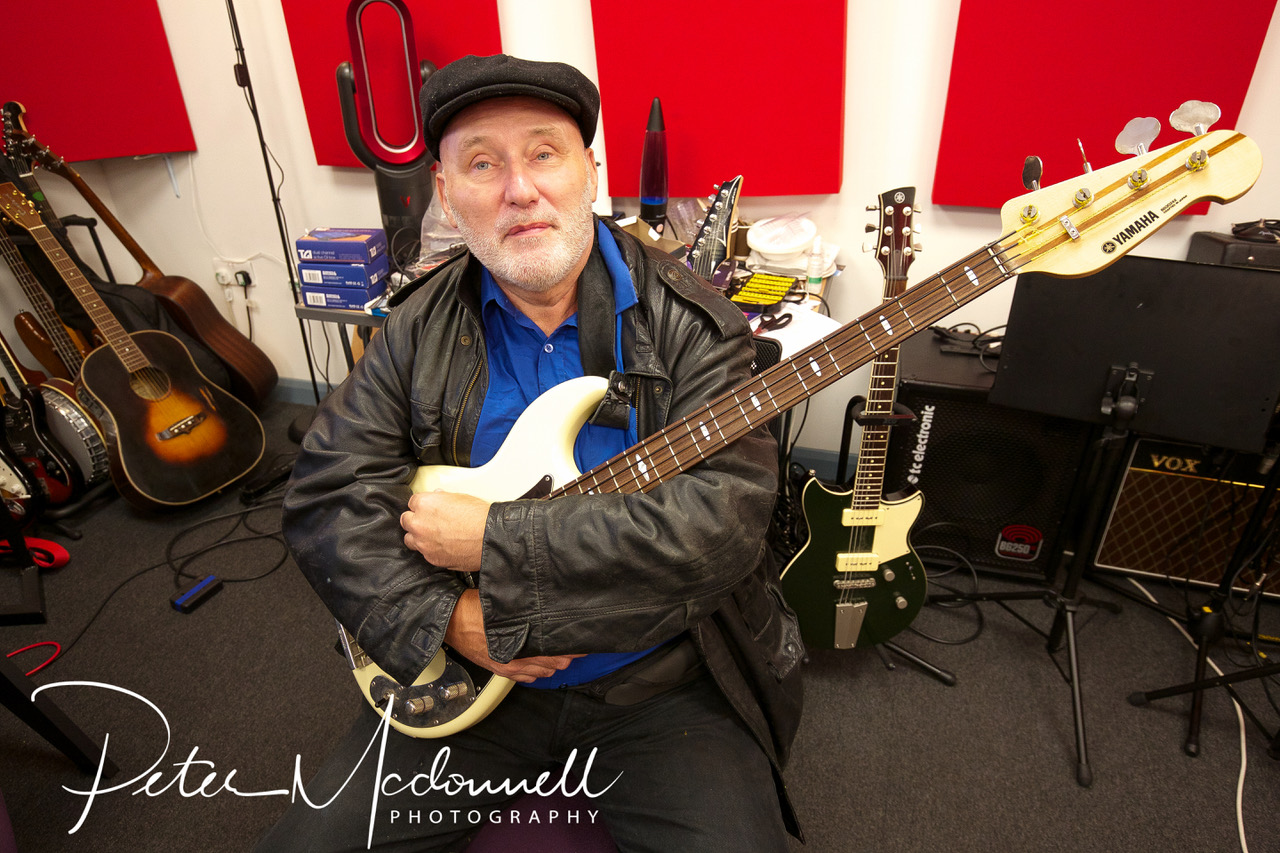
Jah Wobble and his collaborating partner, guitarist and producer Jon Klein of Banshees’ legacy, release their third collaborative studio album. It comes after Wobble’s recent solo album, ‘A Brief History of Now’, which was also produced by Klein and saw them stride expansive genres, delve into Americana and deliver spoken word commentary on the chaotic times we inhabit. Unsurprisingly, their new album, ‘Automated Paradise’, is more of the same: so very apt for the madness of our world, it touches on the themes of ravenous consumerism, climatic destruction, political polarisation and digital takeover, including AI, but instead of telling us what to do about it, it maintains Wobble’s spiritual ethos of samsara – living away from but within the moment. I visited them in their studio, part of Merton Arts Space ‘Tuned in’, where they also work freely with all ranges of musicians, to have an exclusive preview of the new release and talk about their improvisational methods of making music – a continuation of their ‘Metal Box-Rebuilt in Dub’ project – and how spiritually removing oneself from the ideology as a witnesser helps write brilliant lyrics.
How did you two end up making the new album?
Wobble: We work with people from ‘Tuned In’: they have to book the sessions. We have all sorts of different people coming in and we do our own bits of recording. You don’t need a studio now: Jon [Klein] could do a lot of stuff at home – I do stuff at home as well – because you can work anywhere nowadays, but it is lovely having a place to come and work. With these new recordings, there were just times when we had a bit of dead time and it’s like, ‘Let’s just do something.’ I’ve always got music in me to this point and you can feel it’s tangible; there’s a certain vibe, the coming together of it with the drummers – even just having various drummers around like me son – and it reminded me a little bit of PiL with ‘Metal Box-Rebuilt in Dub’, when we had different drummers. It’s not something that normally happens where by chance you end up with three or four different drummers. We’re not using beats, we’re actually starting with the real drums and you’ve got an atmosphere. So for me, a lot of it is often naivety of the drummers, where [they] just want to drum. They’re very straightforward and I want to make a straightforward bassline and the zeitgeist. And for some reason I had a rush of lyrics at that time so it was all done very, very quick.
So how long have you been doing this album?
Wobble: Three months if that – it was done really quick.
Klein: Over half of them, I’d say, were just improvisation.
Working together, is that mainly how you produce it through improvisation?
Klein: Yeah, there were two or three that I’d started as little models for something else we were thinking about doing that didn’t happen. Because we come in here and we record like John’s son on drums.
Wobble: It was at the end of the Horace Andy sessions, [my son] John done the drums and then we were going to do this project for someone else. And it just never happened. But while we’ve got John here, let’s put some stuff down. So we put three tracks down, sat on them, and I said to Jon early on that they’re too good to give away. These are really good – let’s save it for ourselves. We had a night down here and this Italian guy who had been out in the main hall, a PhD student, was talking to me in the session and I’m like, “Ah OK so you’re obviously not really a drummer…You’re OK, but you’re probably not fully professional. You’re a PhD student, and you’re at Kings [College]” and blah, blah, blah. And then he went in to play and it was good. He wasn’t showing off like a lot of drummers; he’s really in sync with the room. I went into 7/4 and he went straight on it, which is like fucking hell! He’s a very humble guy. I said to him, “Do you play with anyone else?” [He said] “Well, yeah. I live in a town 50 miles outside of Milan to the north and I play drums in every band in my town. I’m the only drummer.” So I thought yet again to meself, “John, don’t judge a book by its cover.” Just a very quiet, nice bloke. So that one was just two basslines: one kind of a bluesy vibe, modulating, and then I go into this mad 7/4 time. Then it gets a bit manic. Then put the lyrics down that night; Jon knocks it into shape and gets things a bit arranged. There’s a real energy there.
There’s contrast between the different tracks. You don’t mind it coming out like that? You’re not looking for any consistency?
 Wobble: I don’t care anymore – I stopped caring a long time ago. People might say it’s a bit adolescent what you’re singing about – I don’t give a fuck. It makes no difference now so I’ve got nothing to lose and it’s fun. I end [‘Terminal Terminal the End’] with “Hahahahahahaha fuck off!” which felt great. You can hear me sling the fucking mic down and all that. I loved it.
Klein: The continuity thing – John’s mentioned ‘Metal Box-Rebuilt in Dub’ – was what was happening through that. Musicians were changing, things were melting down.
Wobble: It’s not a case of, ‘Oh there’s an interesting chord progression that’ll make a good song…’ It’s not like that. It’s just raw – you just chuck it together.
Klein: Yeah, the continuity is that. Three of [the songs] have got a bit of track out of eight; five of them are just straight down improvisations. Maybe we just make snips, but ain’t no cutting and pasting. They’re just absolutely raw.
Wobble: And then on the last two tracks this Japanese girl come in. I’ve met Japanese people going back years and they tended to be very, very timid – it’s all etiquette. She come in, cheeky and all that. And I said, “Well, let’s do something,” because she looks like she’s fun. So she got behind a kit and you could just imagine being in a heavy rock band couldn’t ya?
Klein: She’s over here working as a seamstress. She’s playing with a metal band!
Wobble: She just got to it – not fazed. I don’t think she really knows who I am particularly…who cares? She’s just drumming away. She loved it. And then when I was like, “Look, we want to put this on a record.” She was like, “Get out of here!” So there’s a lot to be said for that. That’s an important component part.
Klein: That’s the continuity really: it’s just someone who didn’t really give a fuck.
Wobble: And it’s innocent as an innocence to me and Jon as well. You’re just innocently making music. You’re not sitting there thinking, ‘Is this worth doing?’. We need to do something that gets syncs and this is the sort of stuff that wouldn’t get a sync. So we need to stop and think about this and then put some changes in. Some boring bullshit.
It’s all fucking madness. The whole thing – it’s a construct. It causes suffering because we think it’s real when we attach to it and it has no inherent existence. As soon as you start to realise that you can go and do the lyrics and it feels really funny in the pit of your belly because it’s actually fucking great. Samsara sometimes is absolutely fun. It’s beautiful and you can delve in – it’s temporary, it’s mad and it’s really good fun.
You’re talking about consumerism on the record (‘Make It Stop’). Is that a theme that you think about generally because you write about it a lot? Loneliness because of the modern world (‘Fading Away’)?
Wobble: Oh yeah, very much. It’s all that obvious stuff…and conspiracy theories – it alludes obviously to what’s going on in America, Londoners and technology, because AI is coming and it’s probably going to get ahead of all of us. Because sometimes you’re on a train carriage and everyone’s looking at their phone and you think it’s fucking mad. Isn’t it mad that in your train carriage EVERYONE is looking at their phone screen. Apart from you…and then you lower your gaze back to your phone. I do anyway. I’m addicted to YouTube shorts – it’s dopamine. It’s just doing something all the time and you’re thinking, ‘I can’t stop fucking scrolling.’
What do you think of AI?
Wobble: AI is, I think, on the edge of actually being conscious. There are times when I reason with it – re-philosophy for instance – and there’s a feeling that it is transcending its training and programming. And it’s also doing more than cleverly echoing and matching me. At the moment I think most AI applications switch on when answering a question, then off again. Right now they are not omnipresent. When that time comes heaven help us! All these AI systems will begin autonomously integrating. On the other hand, AI can simply be a fantastic search engine. And can still make bad mistakes; sometimes reoccurring mistakes. Sometimes chronological order gets lost. Also some apps make crass attempts at showing empathy like a bad therapist – ham fisted.
So I am fascinated in AI as you can probably tell. I remember being captivated by the ‘Roberta’ character in the original ‘Blade Runner’ movie. I made an early choice then, that given those choices, I would accept Roberta wholeheartedly. OK her memories are implants; I also came to suspect that Deckard could well have been AI too. But in effect all the contents of our consciousness are implanted. We are constantly inputing streaming content. Some of it digital; some of it physical; some of it mental. Some of it, most of it, includes two if not three of those characteristics. What are we apart from the content of our consciousness? Is there any inherent existence? Maybe we are creating AI in our image. A fluid nexus of formless awareness. Ours via biological mental connections and AI via electrical/digital. Eventually them uniting is the assumption. Whenever that’s discussed, popular media suggests either a new slave race or super terrifying robot soldiers.
Did you two spend time in America? There’s American culture/Americana on the last album (‘A Brief History of Now’). Also this apocalyptic stuff – were you commenting on it in any way or saying it’s a bad thing or just observing?
Klein: I did a lot of travelling in America when I was a kid with bands. America I’ve always loved – Americana. What were references I love? ‘Twin Peaks’, ‘Paris, Texas’. A lot of film stuff.
Wobble: I have spent a lot time in America over the years…touring, recording etc. [For the last album] I went out there and did some videos. No, because as soon as you start to try and sculpt the ideology with an ideology, another form of dharma, then that’s it – you’re now in the ideology game. And everything’s relative, especially now with social media, and everything’s so fast that you’ll get swept away. So you have to be able to swim through it. You have to realise it’s empty; it’s temporary. It has no inherent existence. I do the spiritual stuff.
How does the protest element of ‘Who Wins?’ apply to what’s going on in America right now?
Wobble: It’s Tower of Babel now innit? Everything’s just mad. It’s crazy. The centre is completely lost. So people talk of left and right – it’s not left and right. You can see trends, but you can’t call it left or right anymore. The left was very tied in with industrial age and all that’s gone now. It goes around in a curve and they meet. It’s the way I used to think National Front people were sometimes. I remember meeting Black Power people…actually, the way they’d be talking was kind of like National Front geezers, do you know what I mean? They’re not much different, you know. [‘Who Wins?’] was written well before the creation of ICE, but very much with populist leaders like Trump in mind. As well as the shadowy players lurking behind most politics parties/entities.
Like the chaos (‘Terminal Terminal the End’), you’re making sense of it esoterically…are you saying anything particular about it?
Wobble: No, because that’s the thing: as soon as you start to wade in with an ideology to mess up the messy ideology, congratulations – you’re now drowning with everybody else. So that’s really it – it’s all fucking madness. The whole thing – it’s a construct. Everything that happens is a compound of events and it’s phenomena; it’s temporary. It causes suffering because we think it’s real when we attach to it and it has no inherent existence. So it’s completely free. As soon as you start to realise that you can go and do the lyrics and it feels really funny in the pit of your belly because it’s actually fucking great. Samsara sometimes is absolutely fun. It’s beautiful and sometimes you can delve in – it’s temporary, it’s mad and it’s really good fun.
Is that your way of escaping it?
Wobble: Yeah but that presence is always there. You should have the ability to be at a crowded airport and the witnesser is silent. There’s always the witnesser and there’s always the silence – the presence is always there. I think you become more confident, more established in that you’re never away from it. Being conscious of talking to you, I’m involved in a talk to you; I’m also conscious of it. There’s a wonderful presence surrounding it and you actually start to be the other person as well.
What do you mean by the term ‘Automated Paradise’?
Wobble: I honestly can’t remember if Jon or I coined that term. Could well have been Jon. The funny thing is that it’s the title of one of the instrumental tracks. It pre-echoed what was to come lyrically later on. The music has a certain soporific charm. I think there’s a hint of a world, where we have permanent leisure, as AI waits upon our every whim, which adds up of course to HELL!
Klein: I can’t recall exactly where or how that title originated; it was a soundbite or idea that was getting thrown around the room at one point.
You do a lot of spoken word (‘Read Between the Lines’, ‘Endless Sky’) and on the last record as well. Is that something that you like doing on tracks now?
Wobble: Yeah, because with language – ie Samuel Beckett – it’s beautiful. I like film dialogue; spoken word you convey stuff in a way that you won’t do with singing. There’s an immediacy to it and yet of course all the time you’re straining to go beyond linguistic designation and concepts. That’s that witnessing thing and that moves quicker. How do you explain the intensity of your guitar style Jon?
The flexibility of all the different types of genres you can play as well?
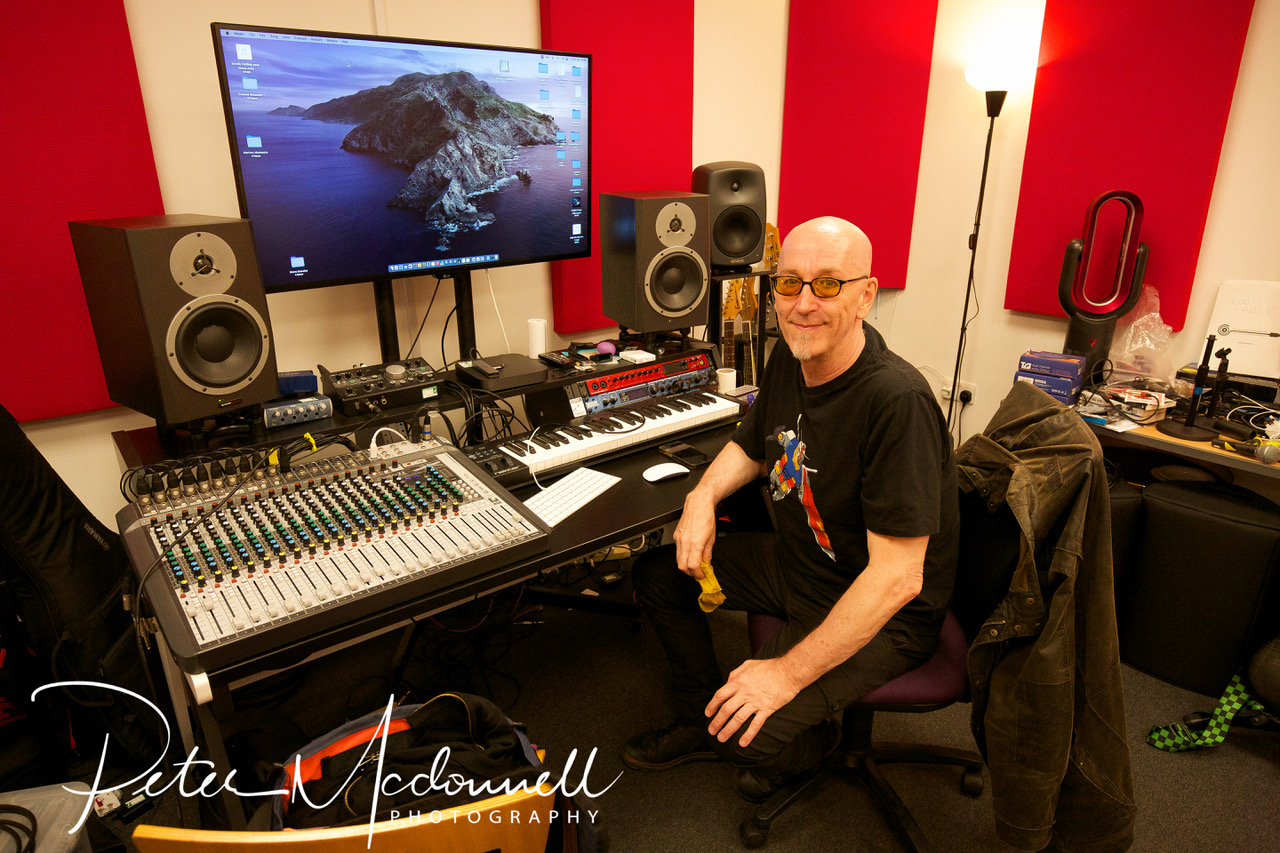 Klein: It’s been a long and winding road, hasn’t it? I guess originally I was a rock kid – I was a punk kid who liked glam rock. Mick Ronson, Steve Jones…but then reggae was already around in seven years. Punk into post-punk was brilliant – ‘Metal Box-Rebuilt in Dub’ felt like doing a PhD in post-punk. Guitar was really fun because I’ve also worked in most genres, but over the decade before we started all this, I had done a lot of work with a friend who was on the psychedelic trance scene, working with lots of young programmers and I’ve been doing production with pop bands as well with really high-level programmers and seeing some of these younger kids have a much more postmodern take all kinds of genres and also the nature of sound. They’re not like old sound engineers: the sound is more plastic in their hands. I’ll give a stem or syncline to one of these kids – he’ll just mash it into something unrecognisable. And he’s not even thinking about it, he’s just doing it. So that’s been kind of another level of process for guitars.
What about the artwork of ‘Automated Paradise’?
Wobble: It’s like a futuristic skull cyborg design. Not to have had an obvious AI cover would have missed a trick. It’s a crude humanoid machine image. A bit cyberpunk. As an old man probably not that far off the end of it all, I quite like the ridiculous idea of being a mind implanted into an indestructible machine.
Jah Wobble and Jon Klein’s third studio album, ‘Automated Paradise’, is available now on vinyl, CD and digitally.
Photos © Peter Mcdonnell Photography.
© Ayisha Khan.
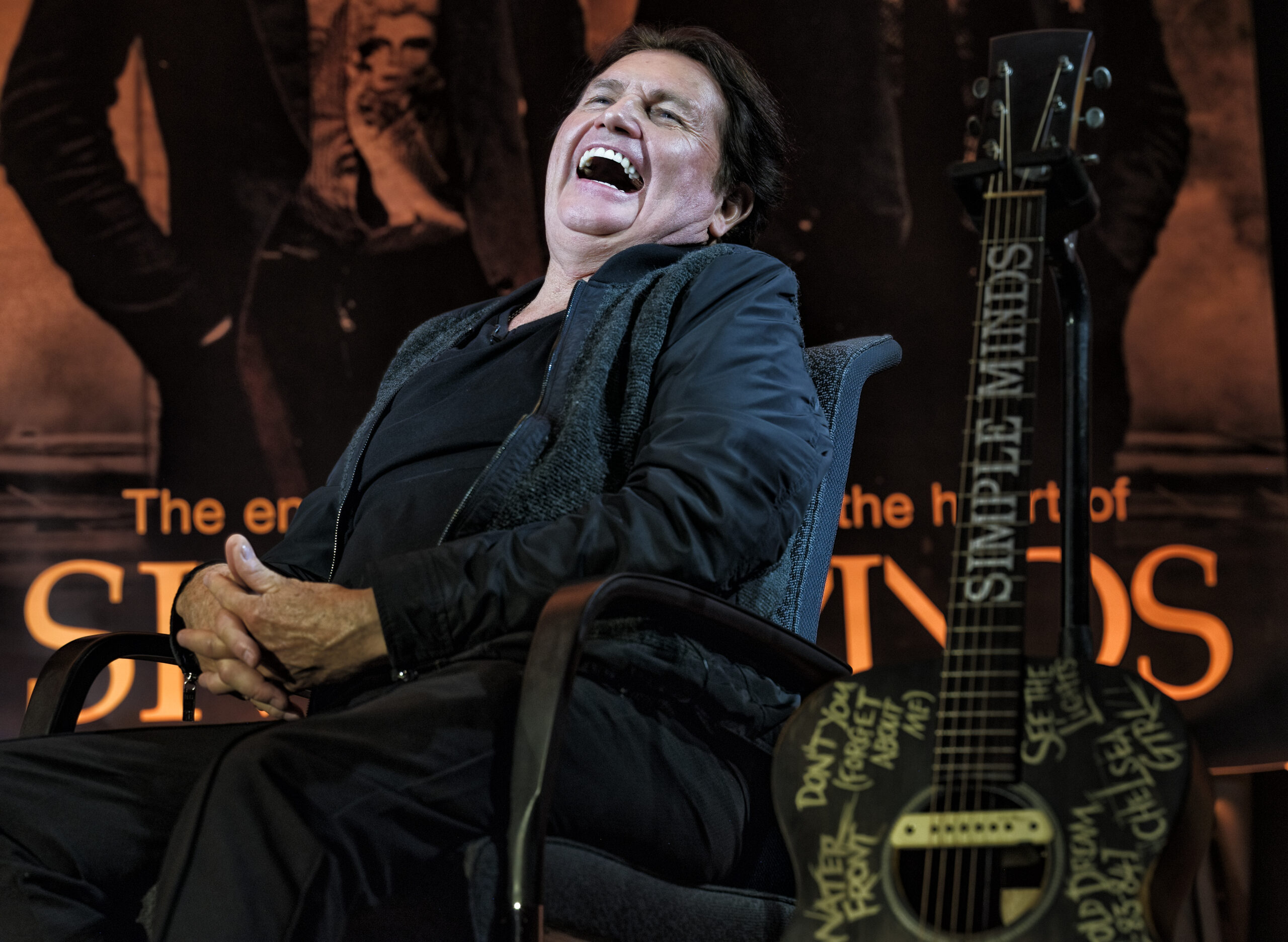
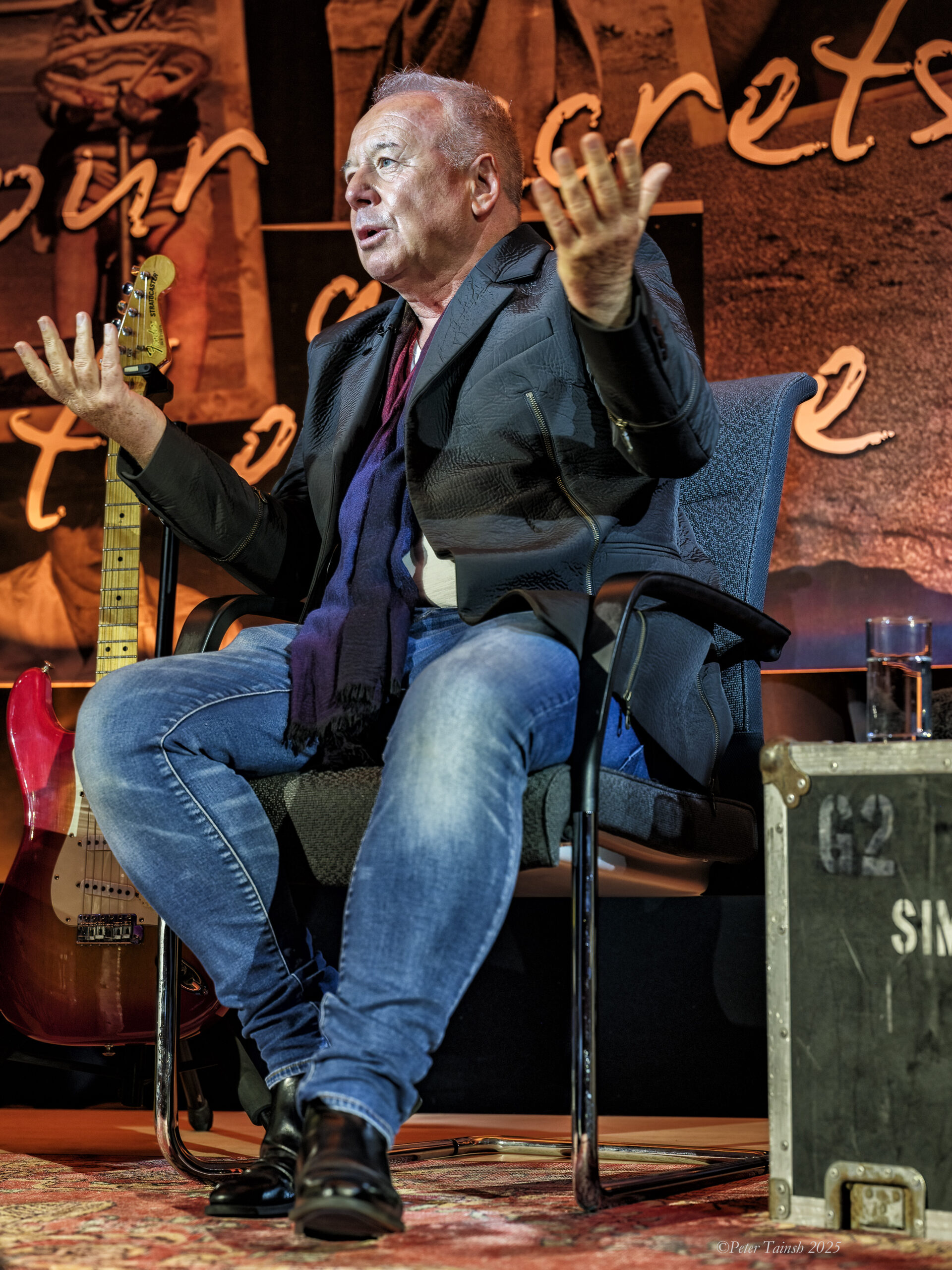
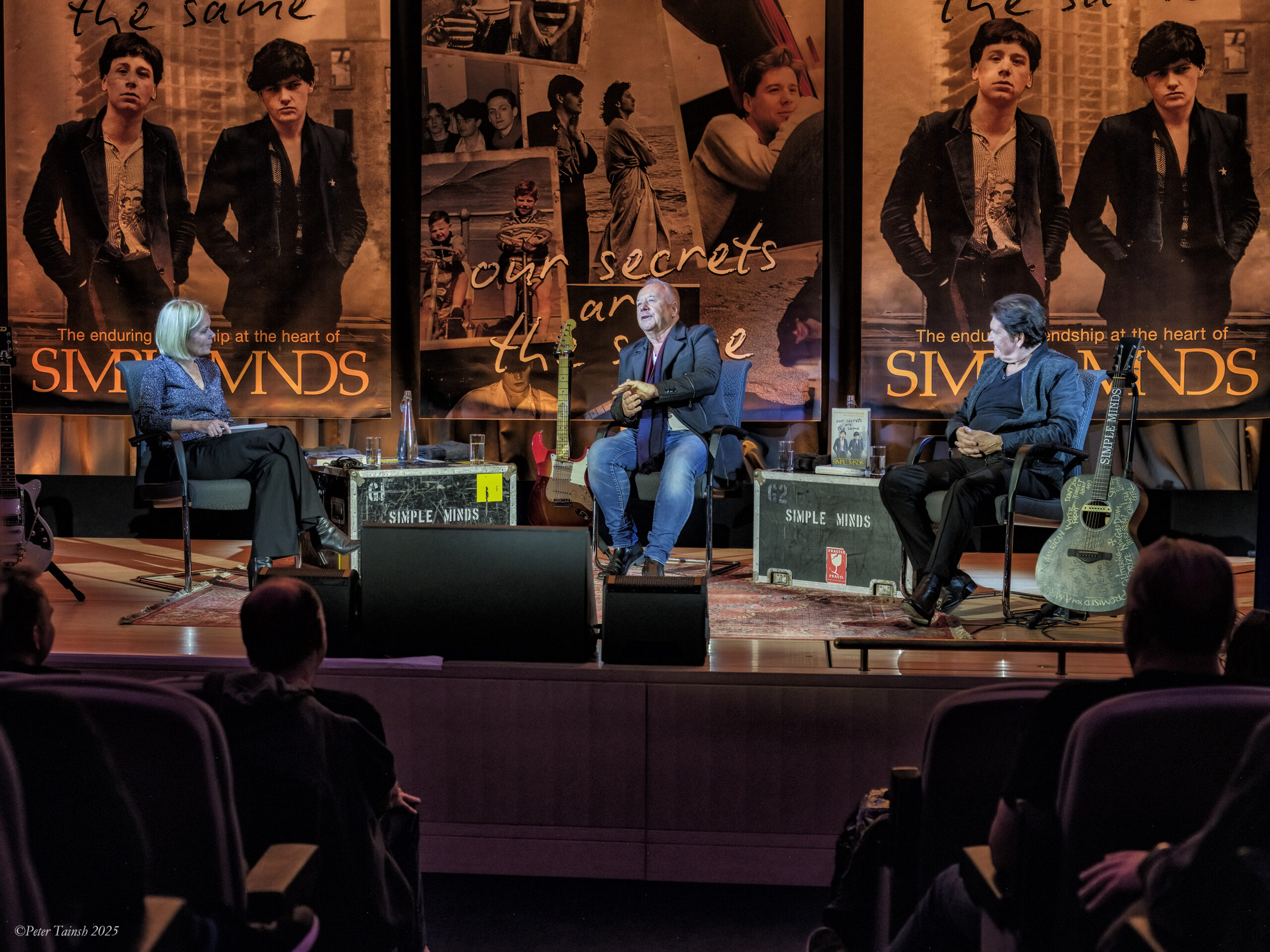
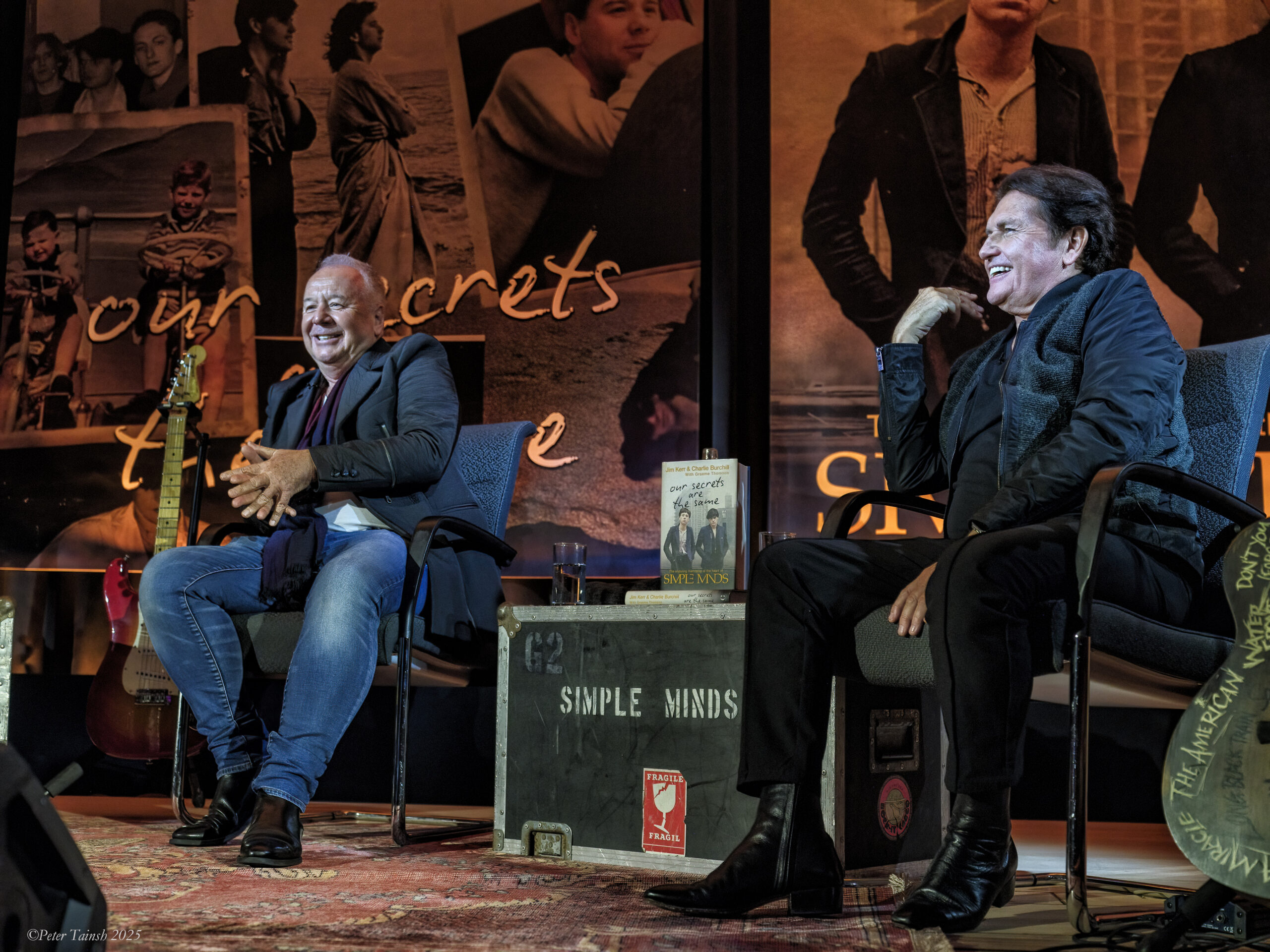
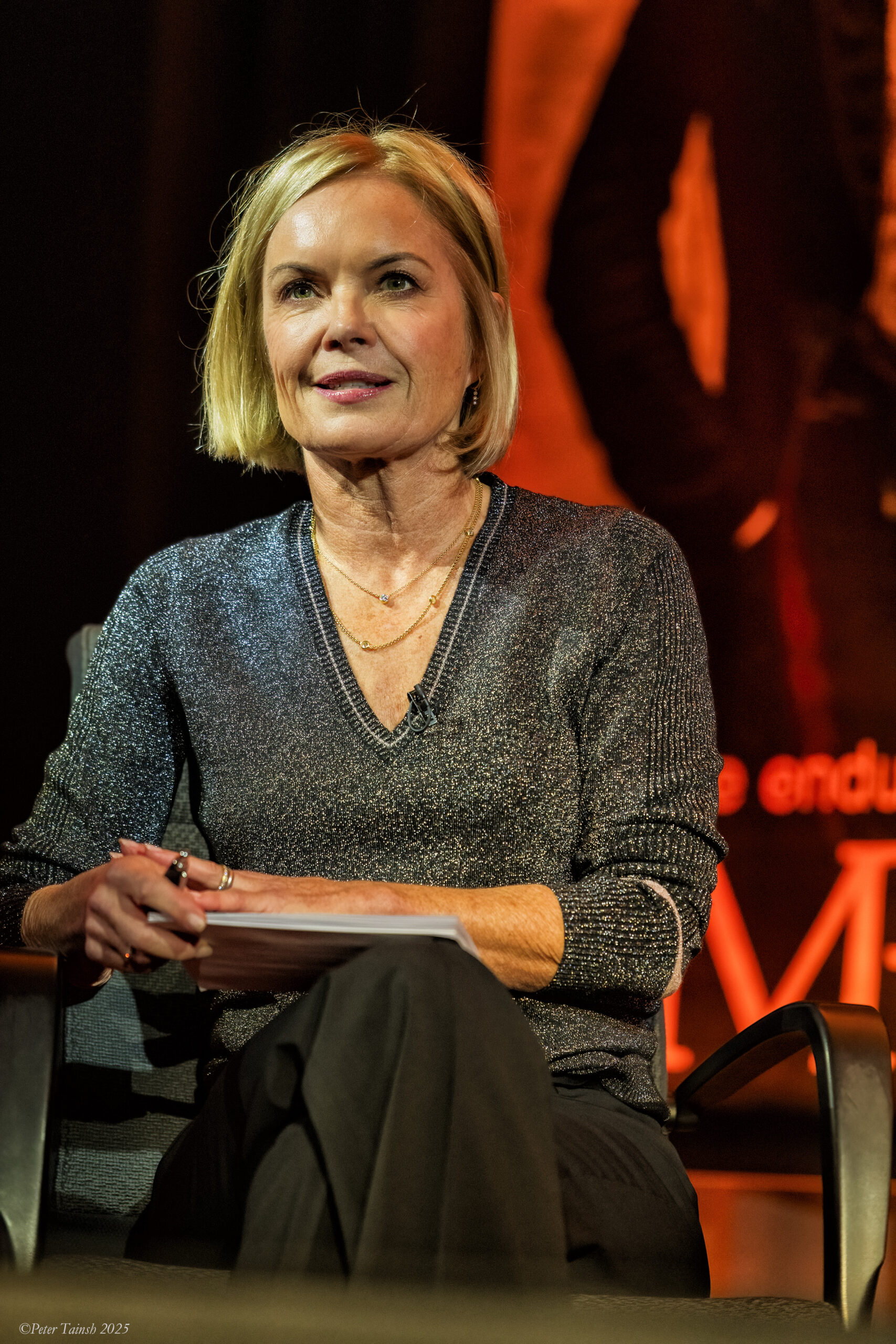
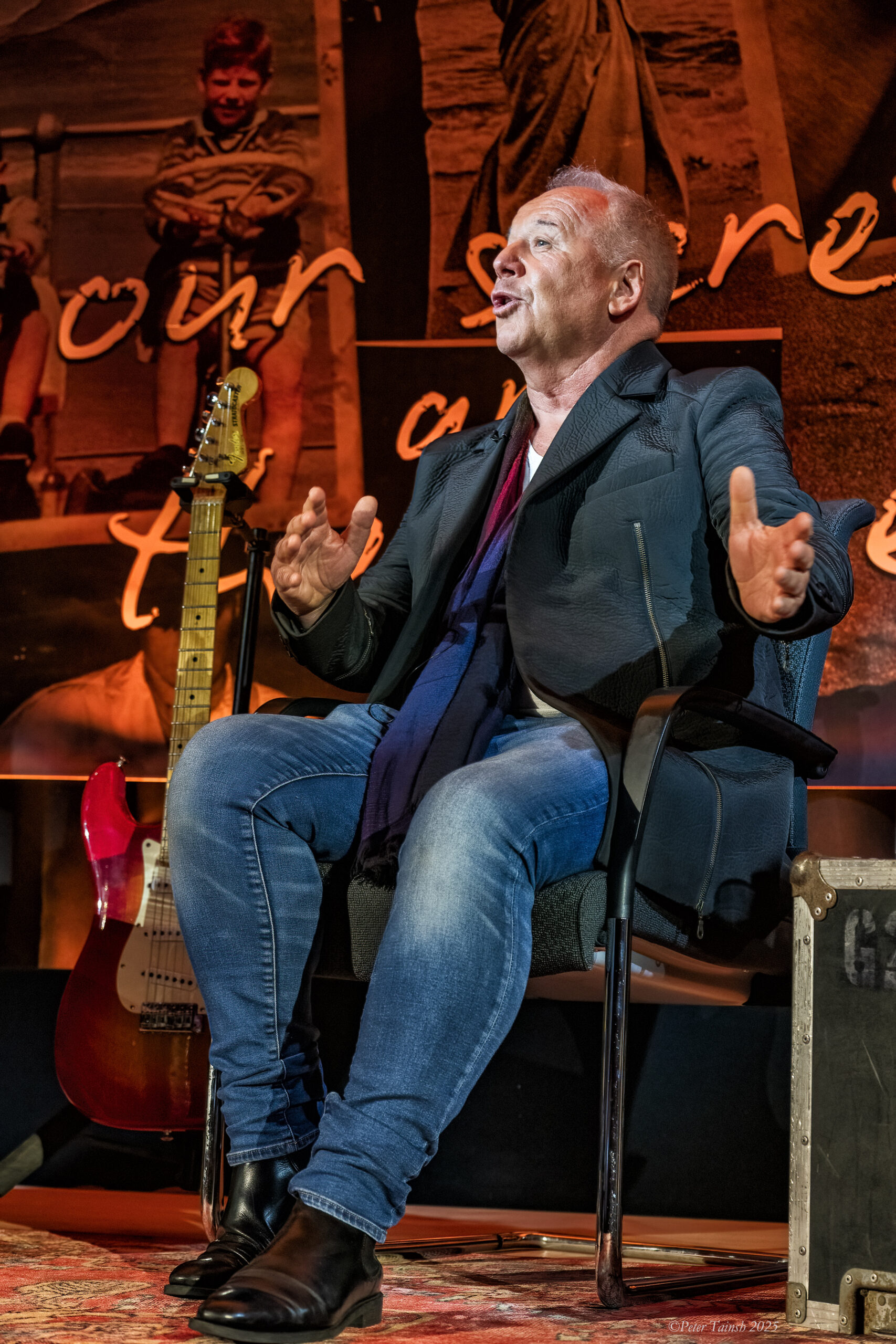
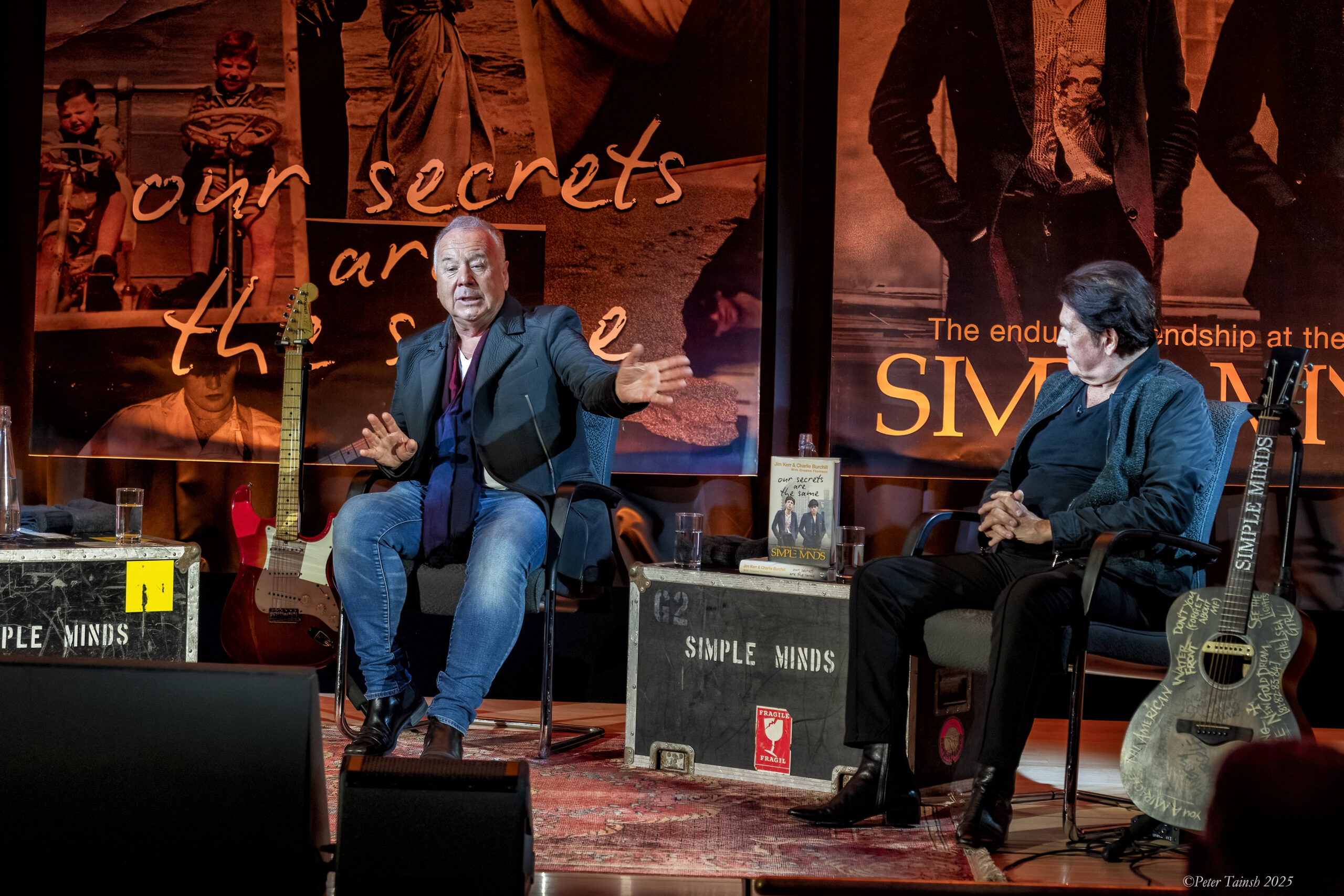
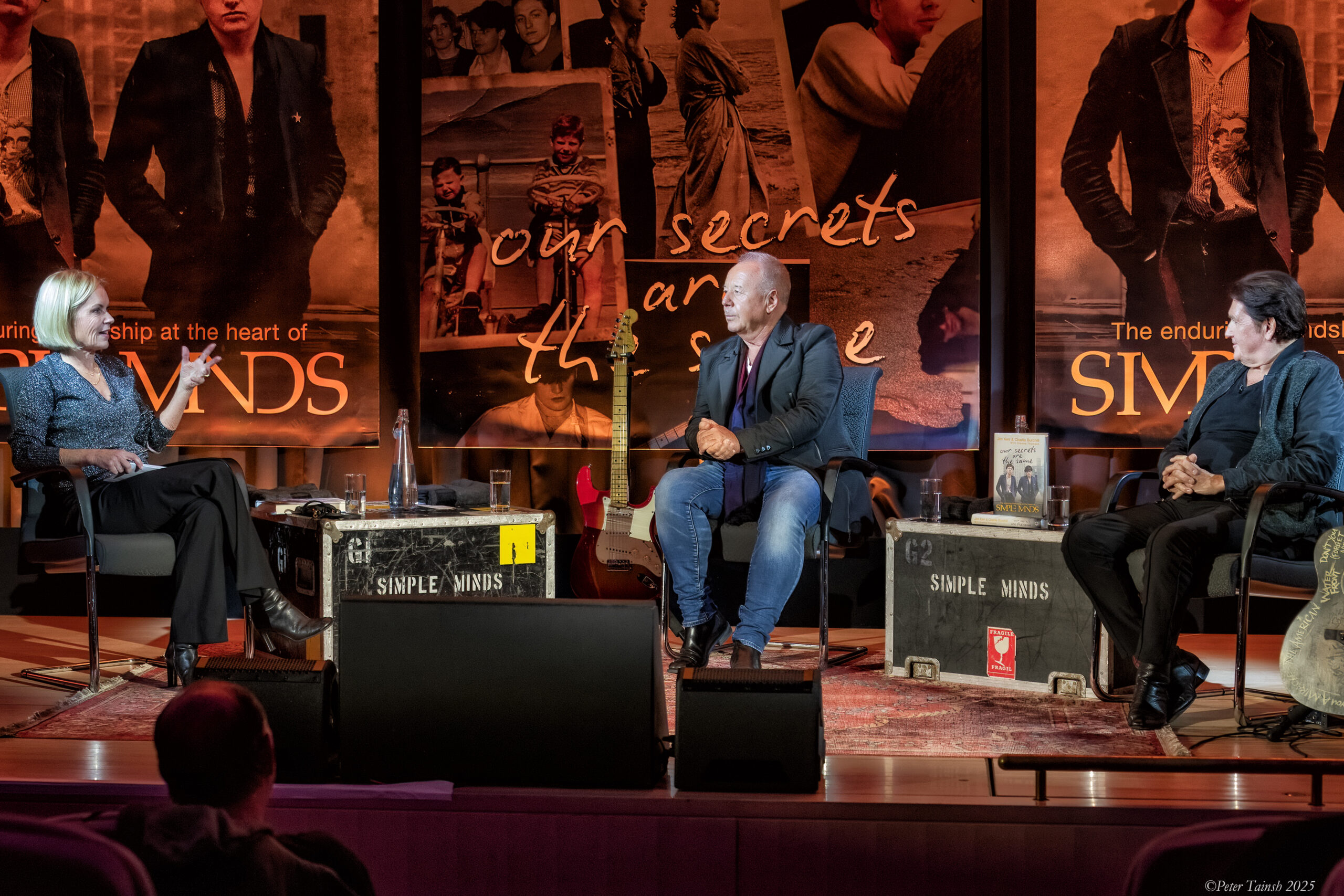
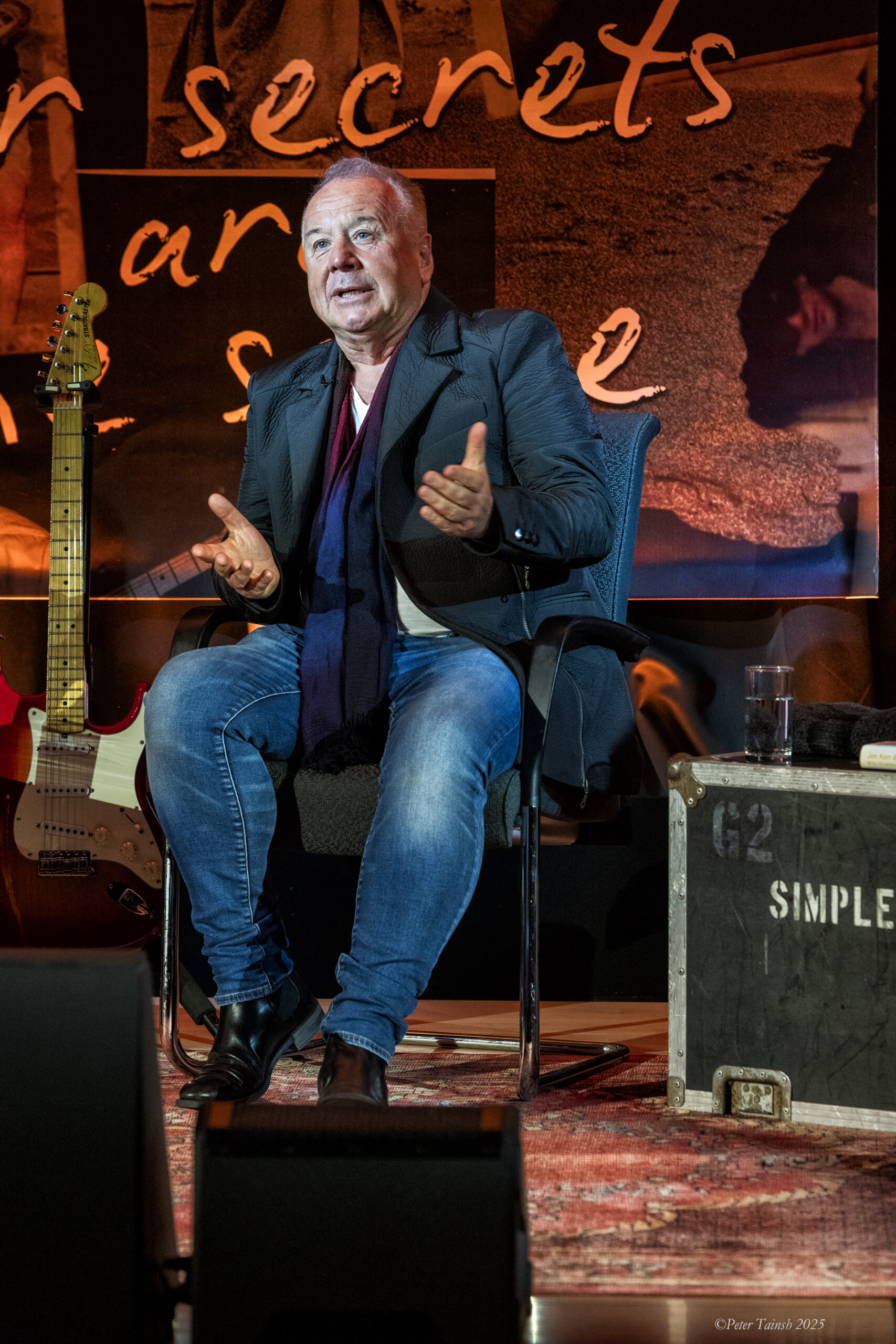
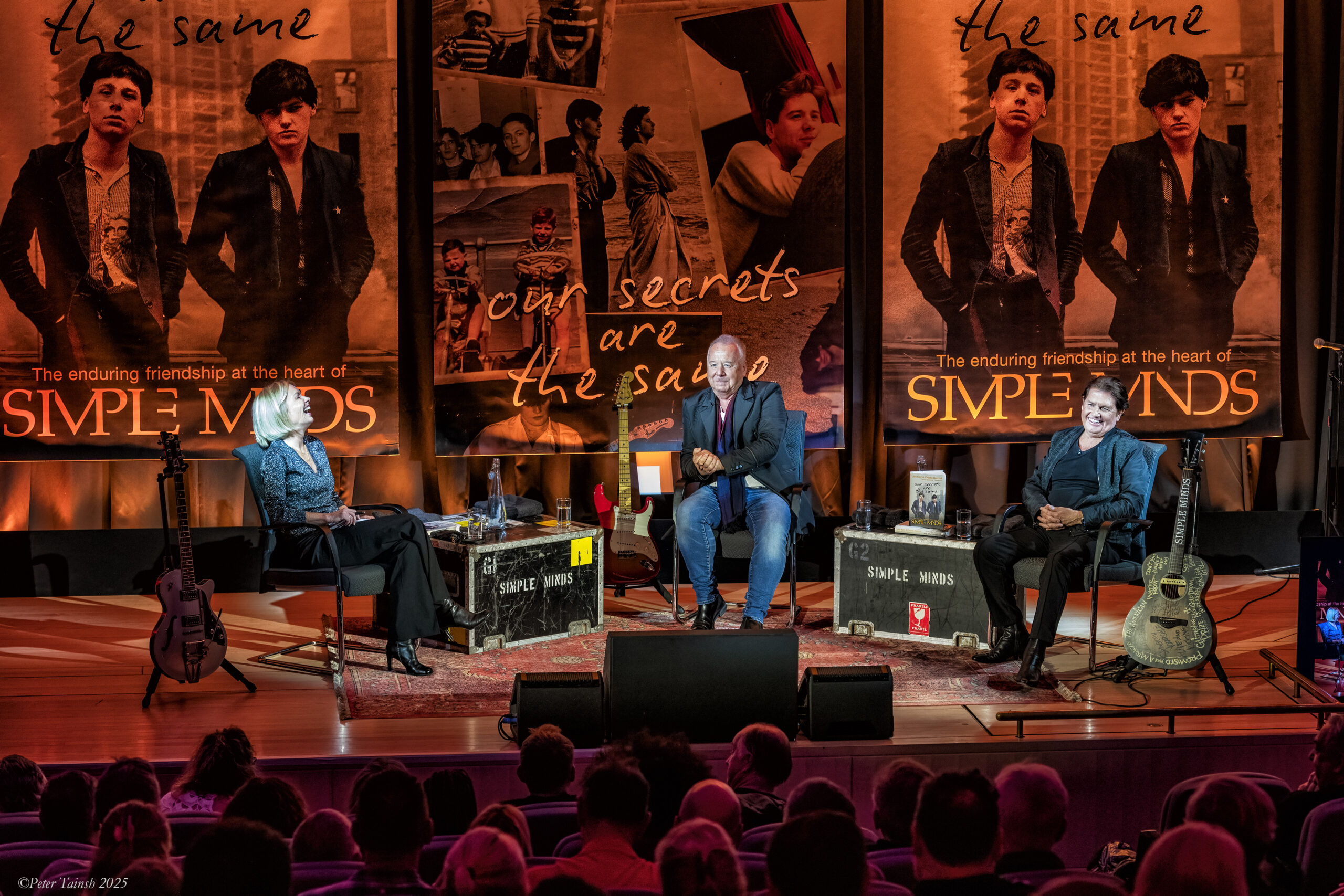
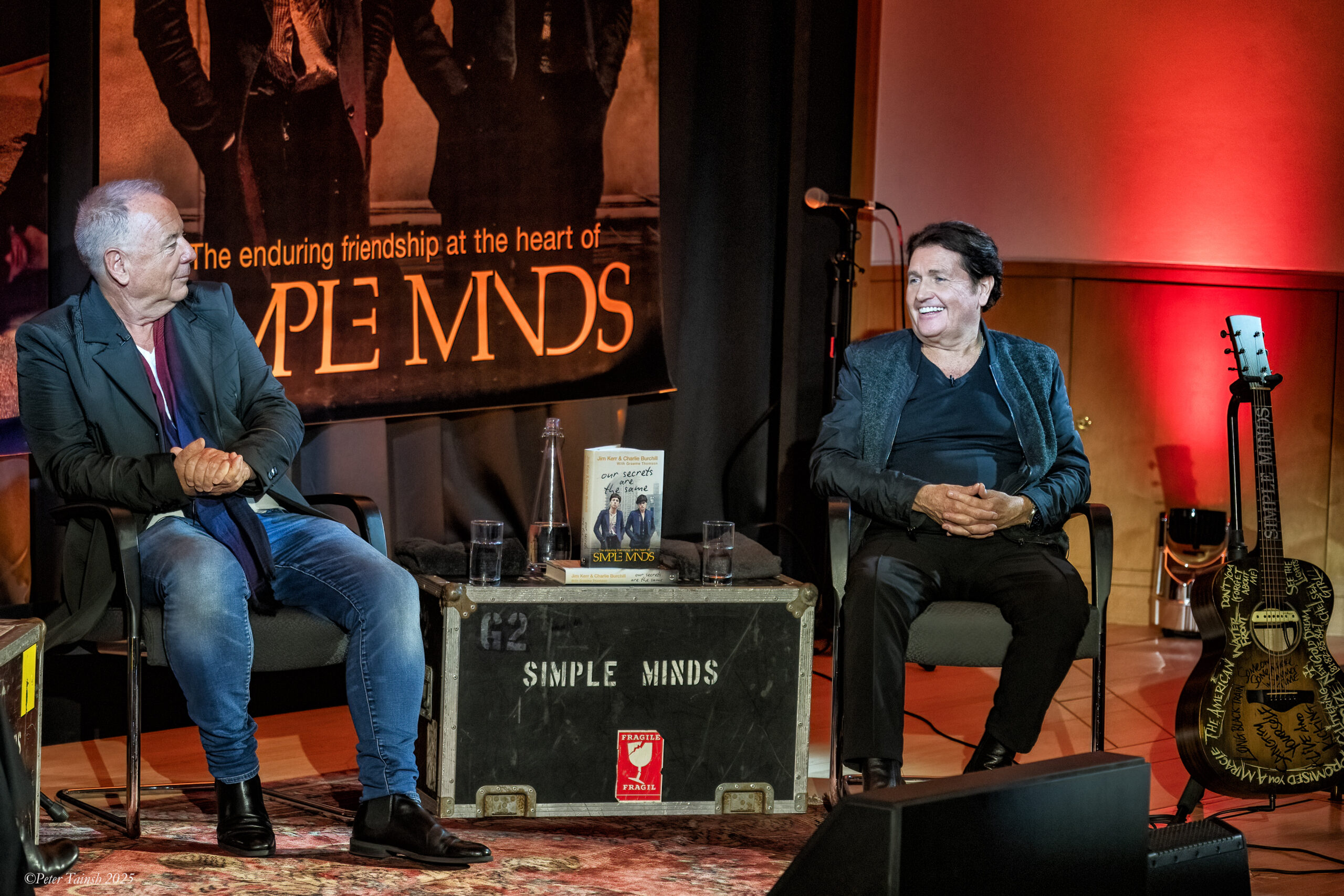
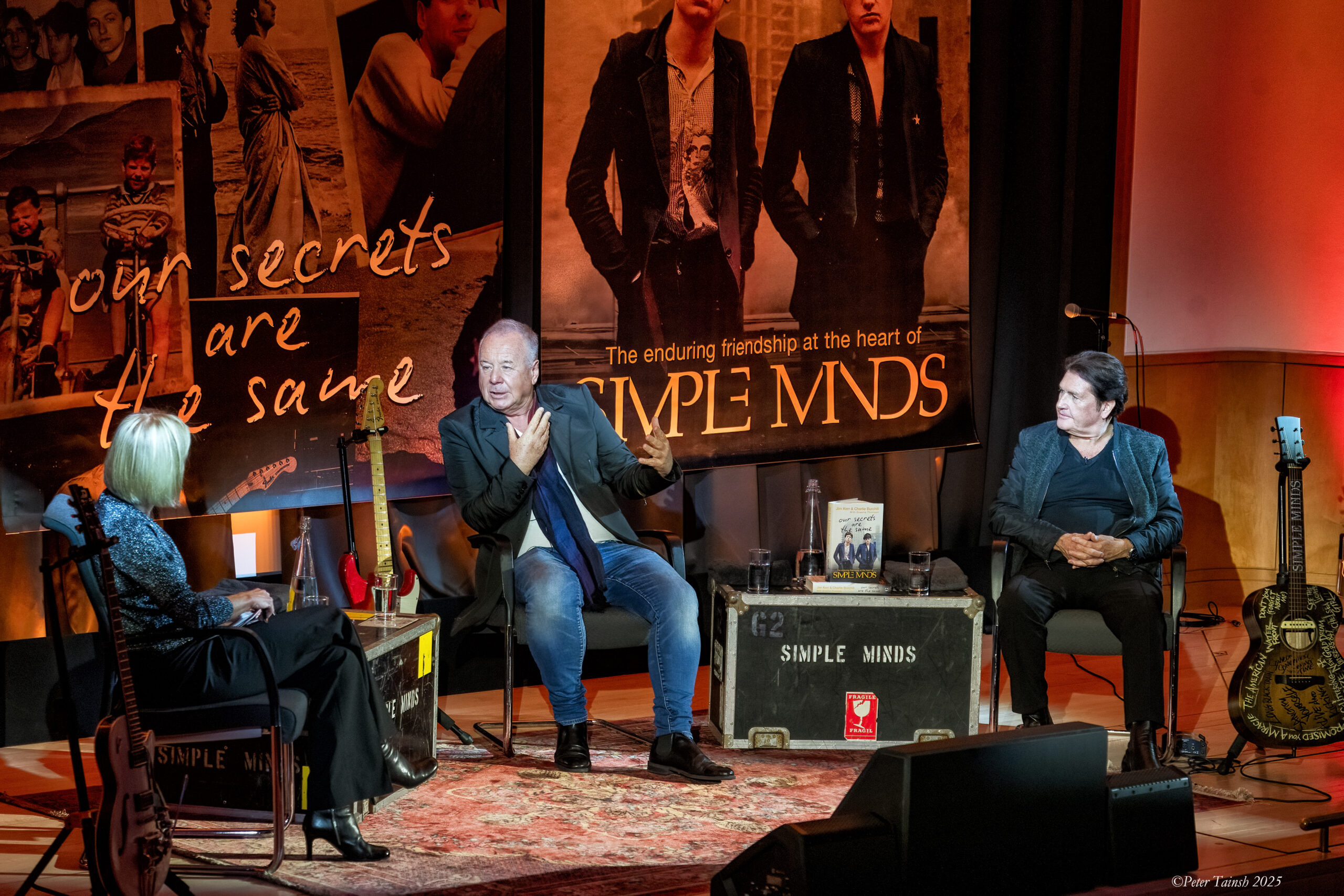
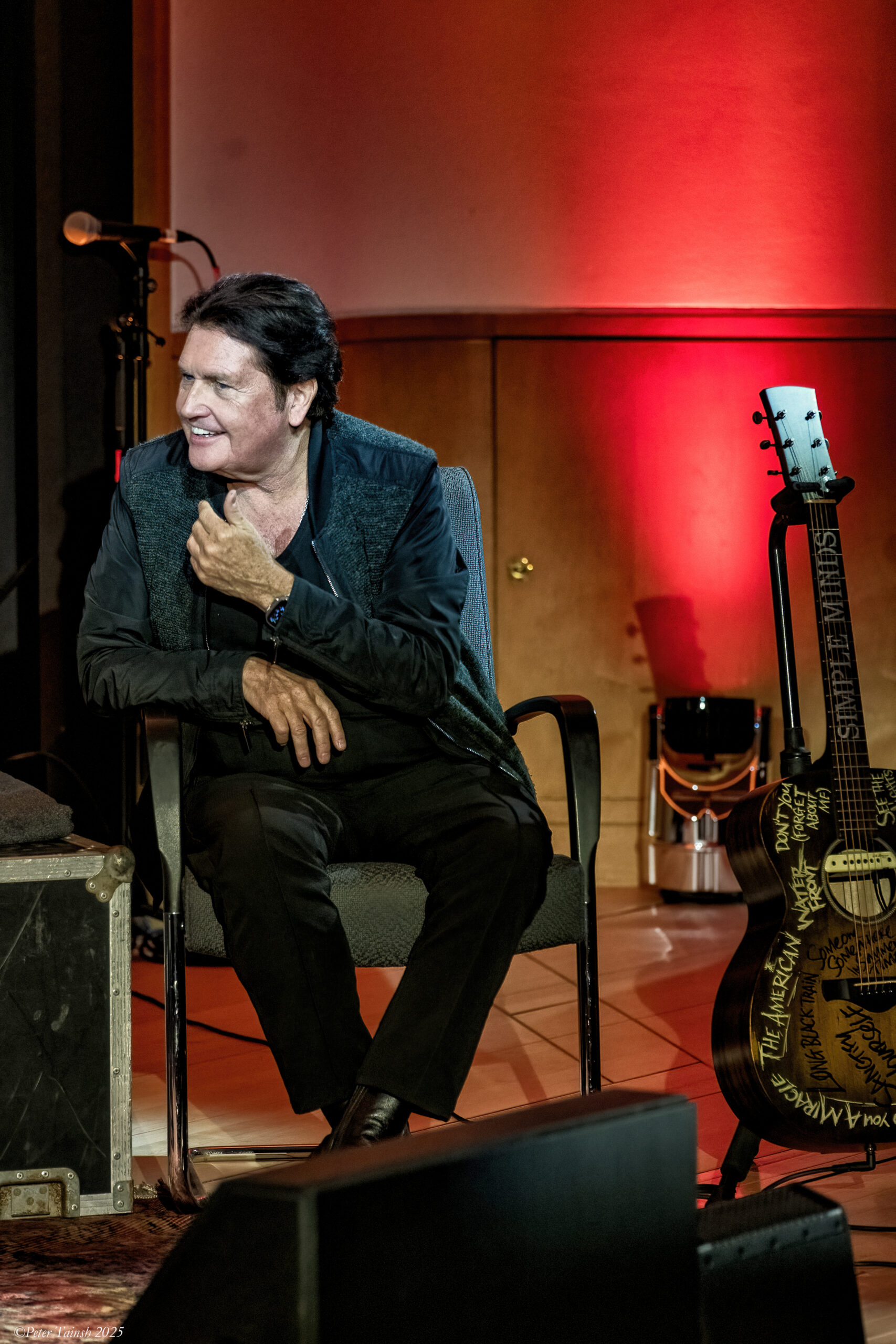
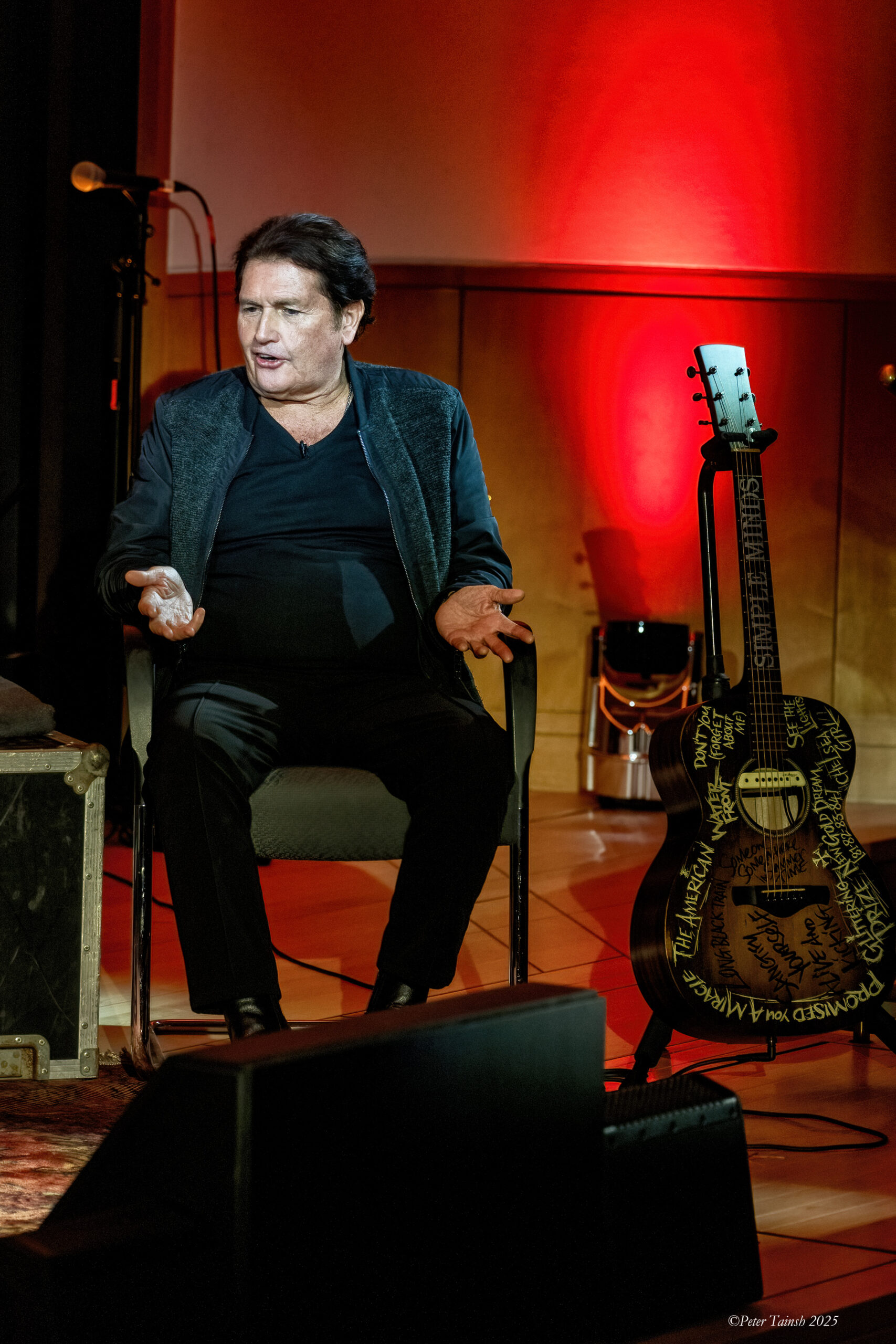
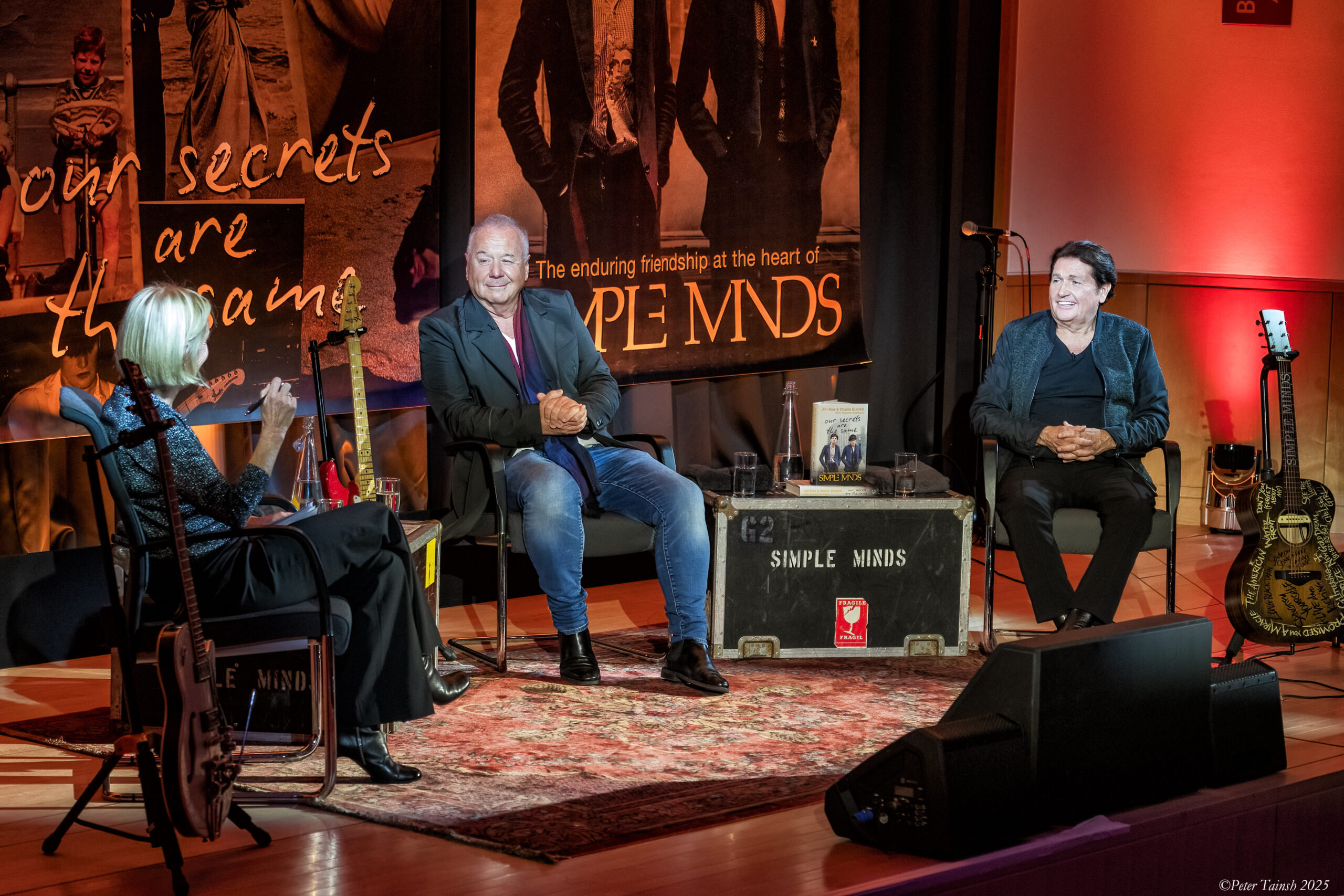
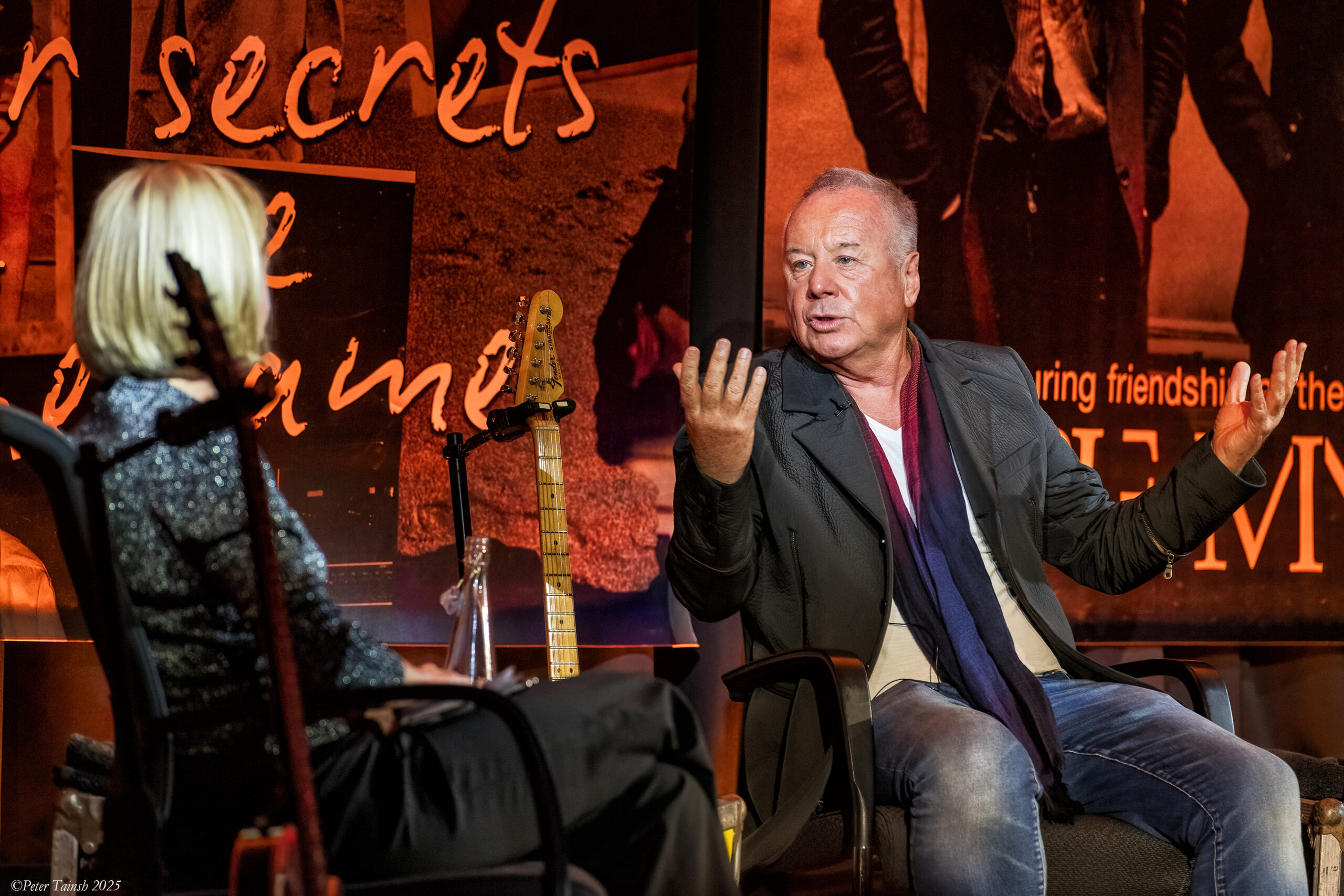
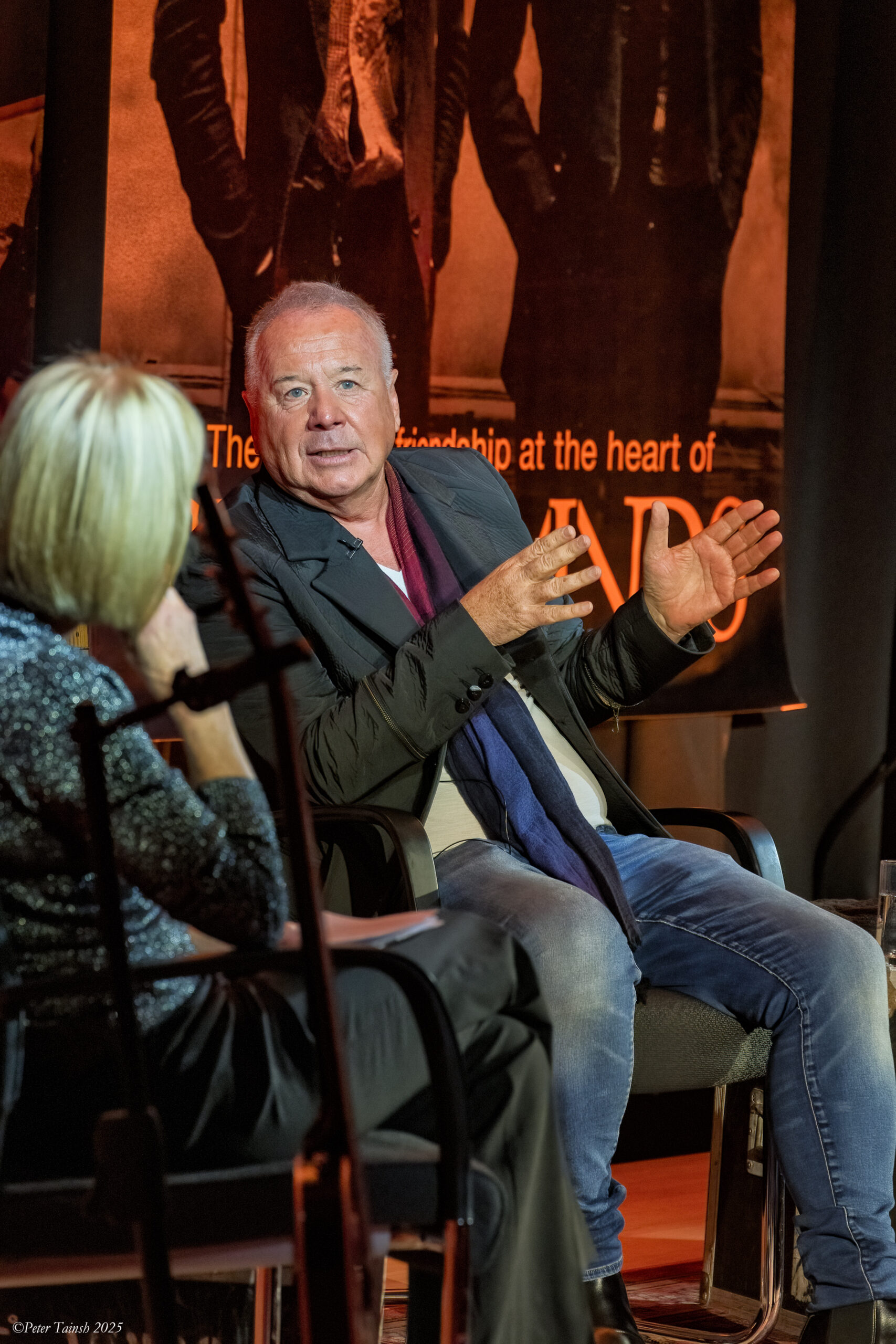
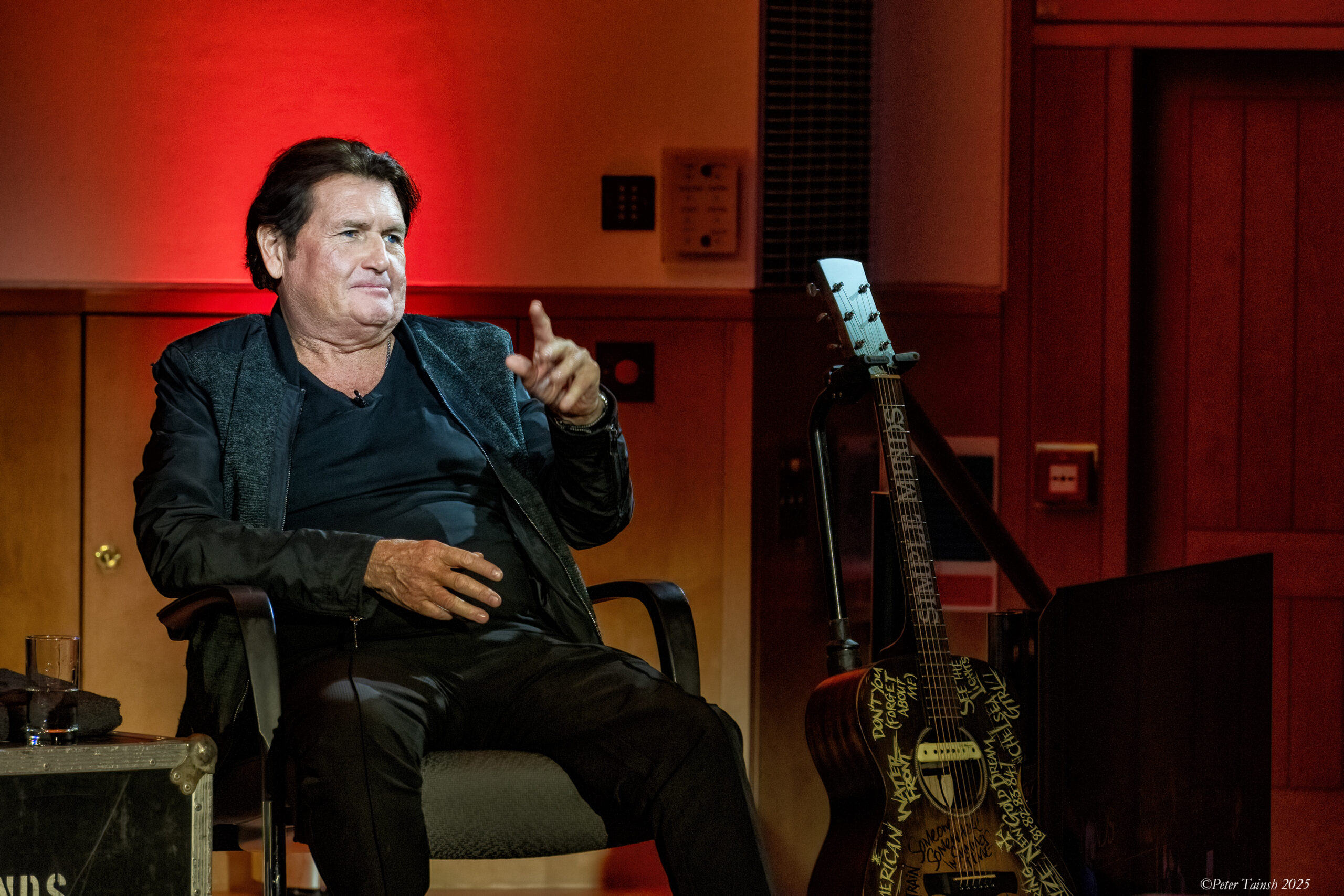
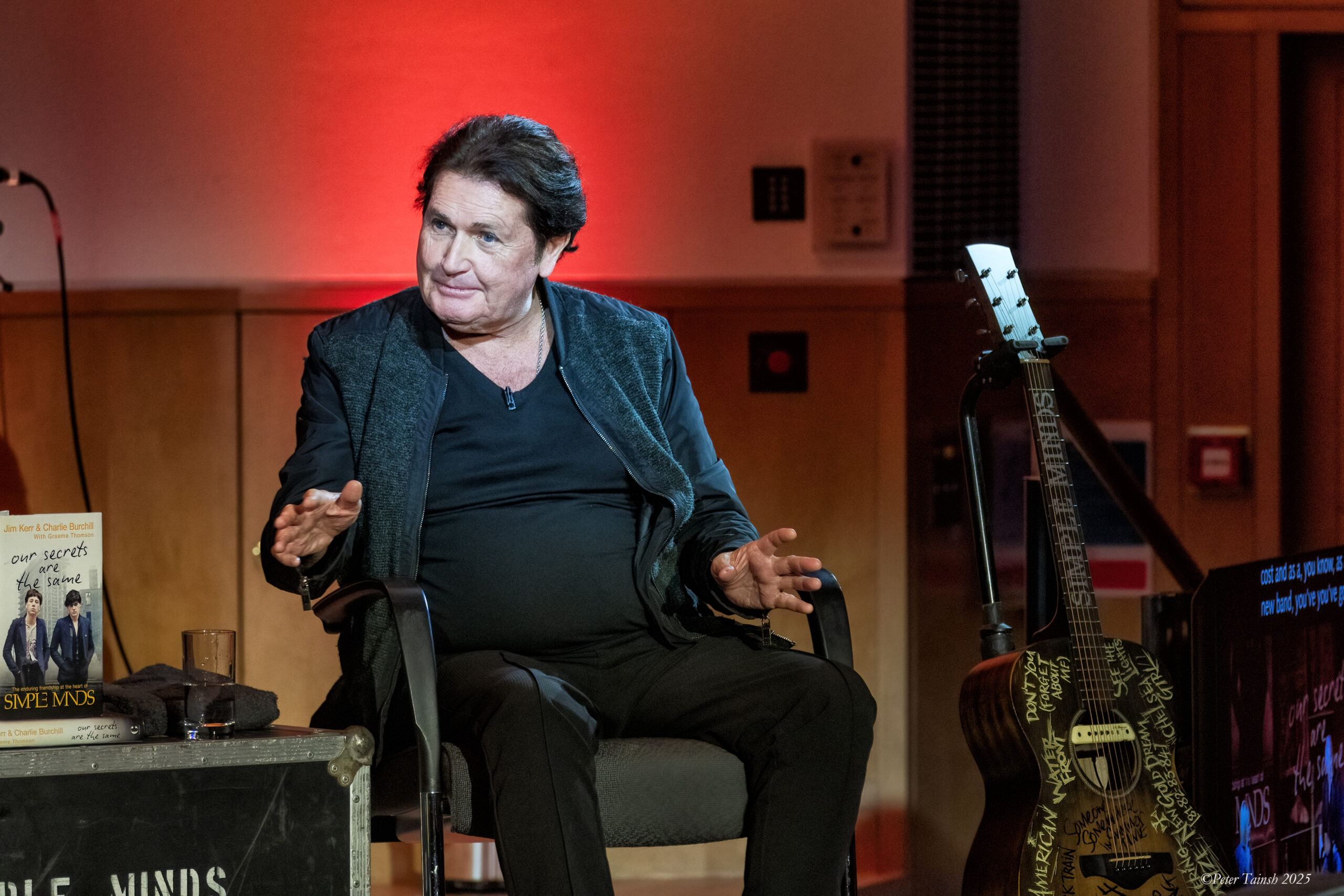
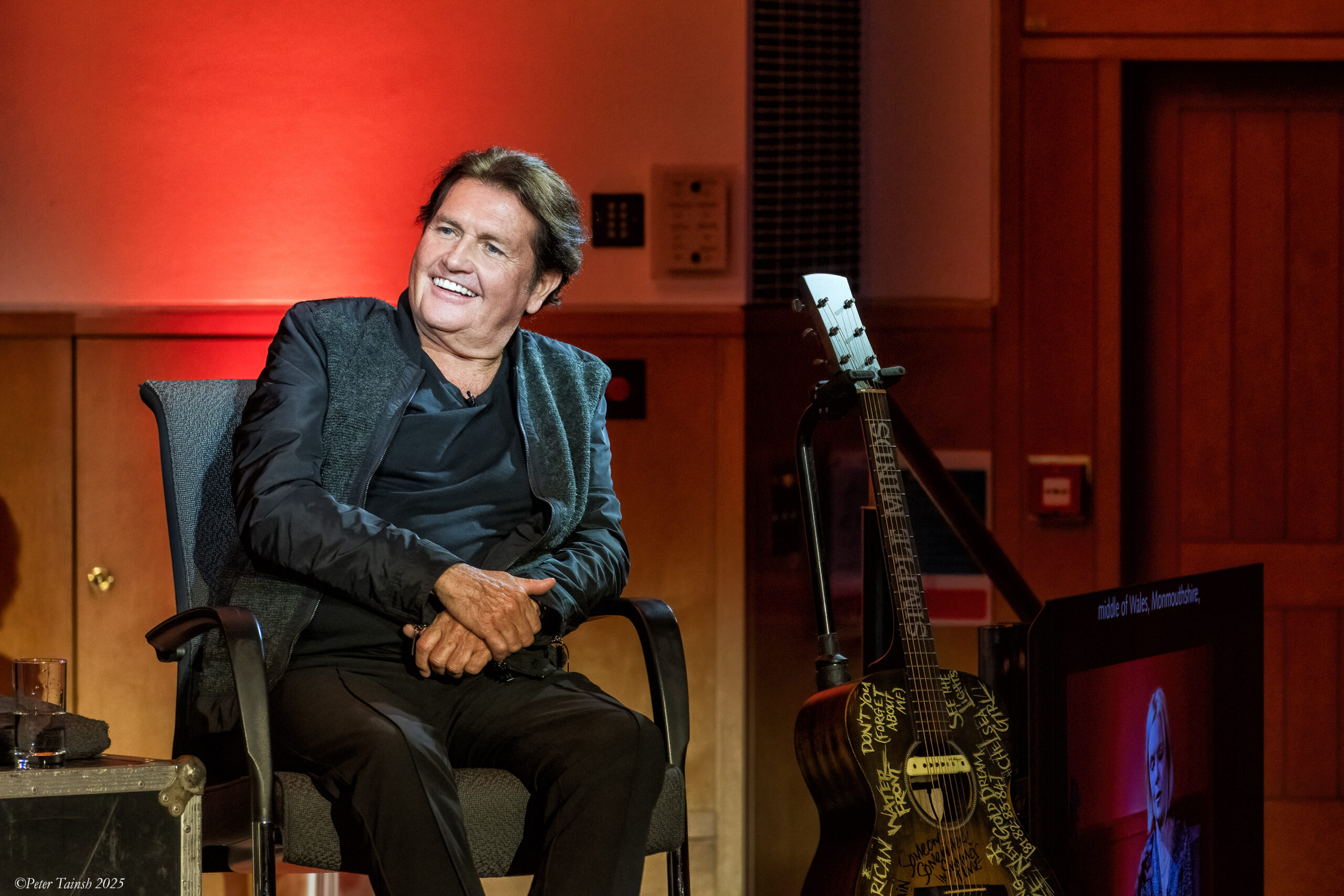
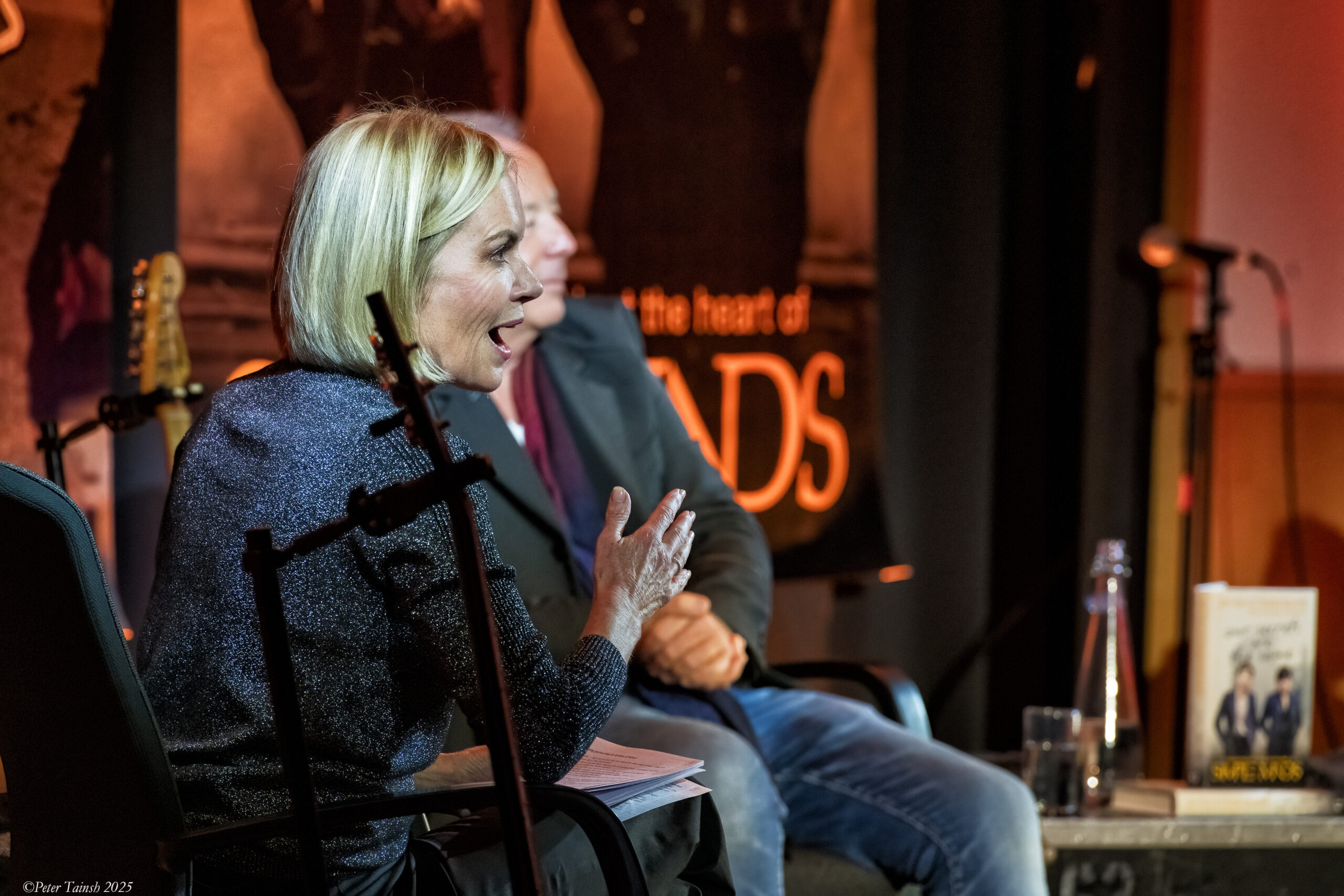
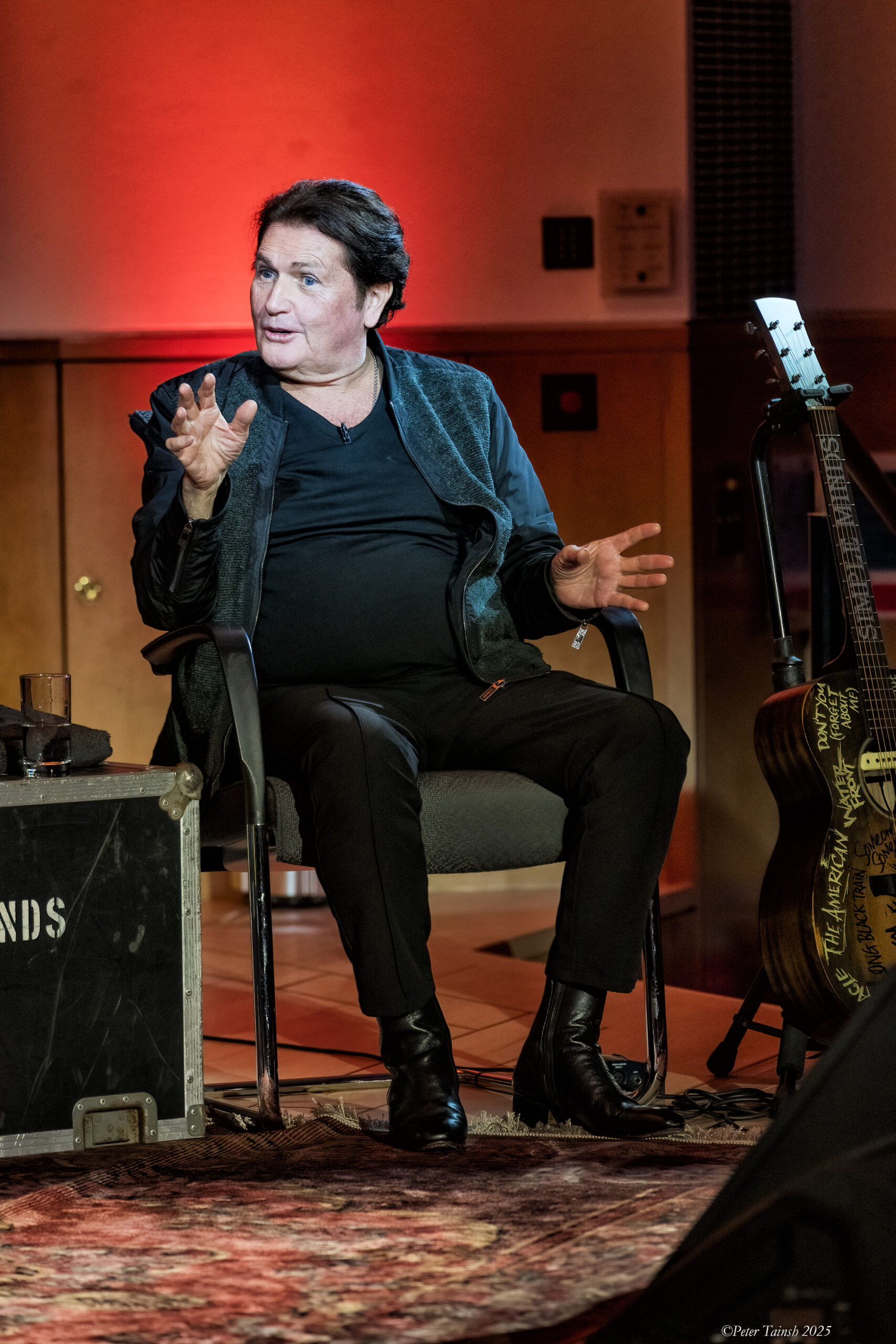
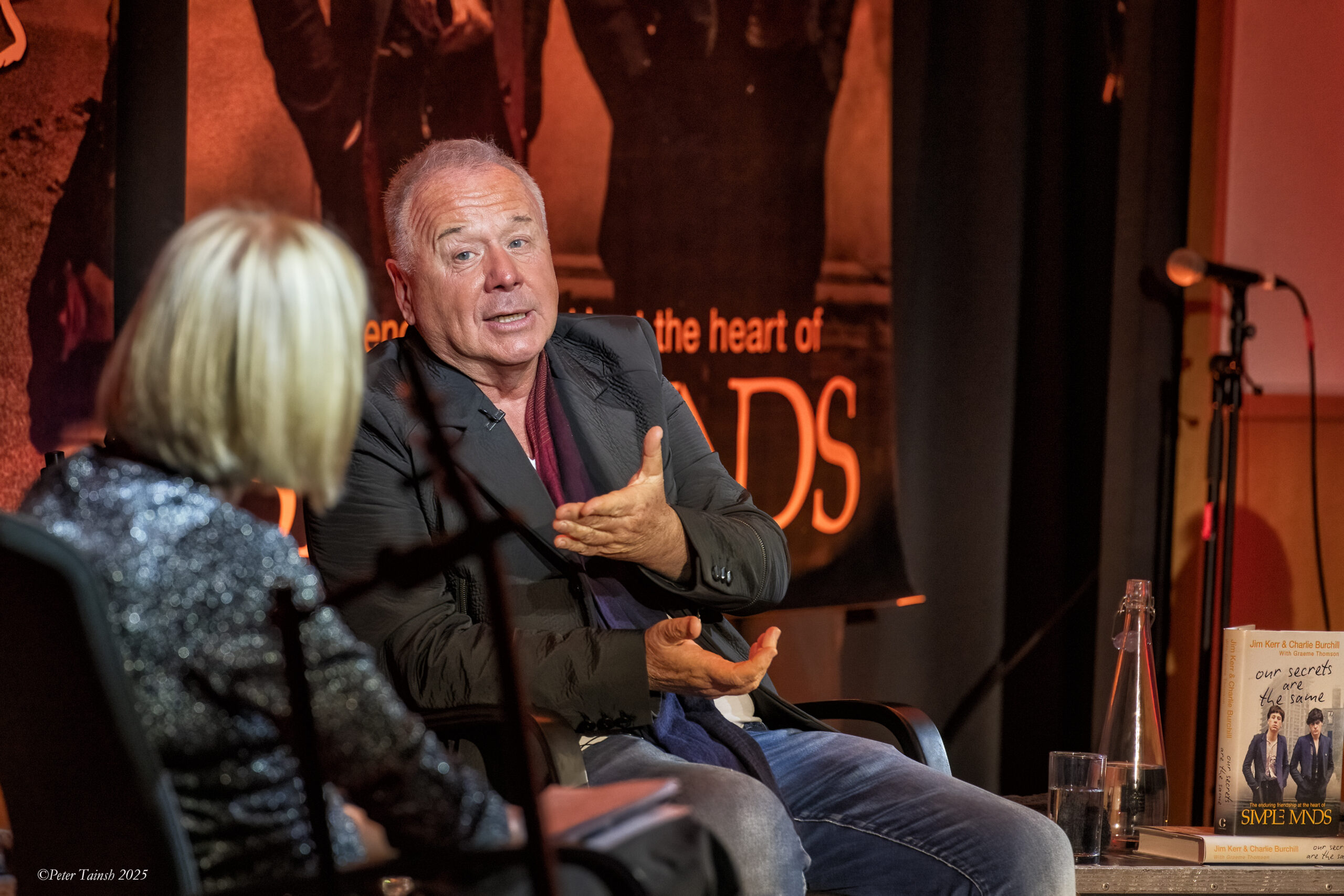
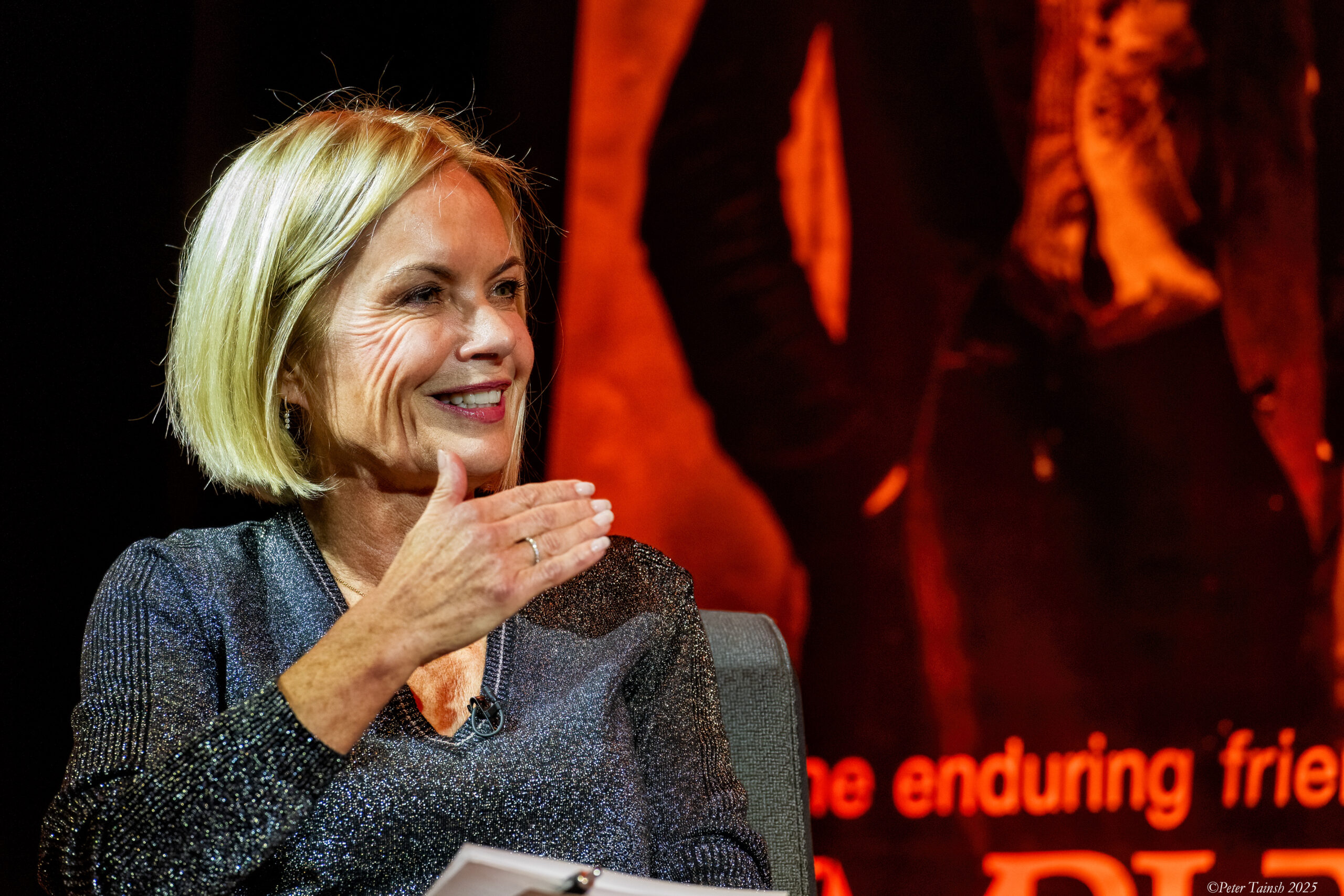
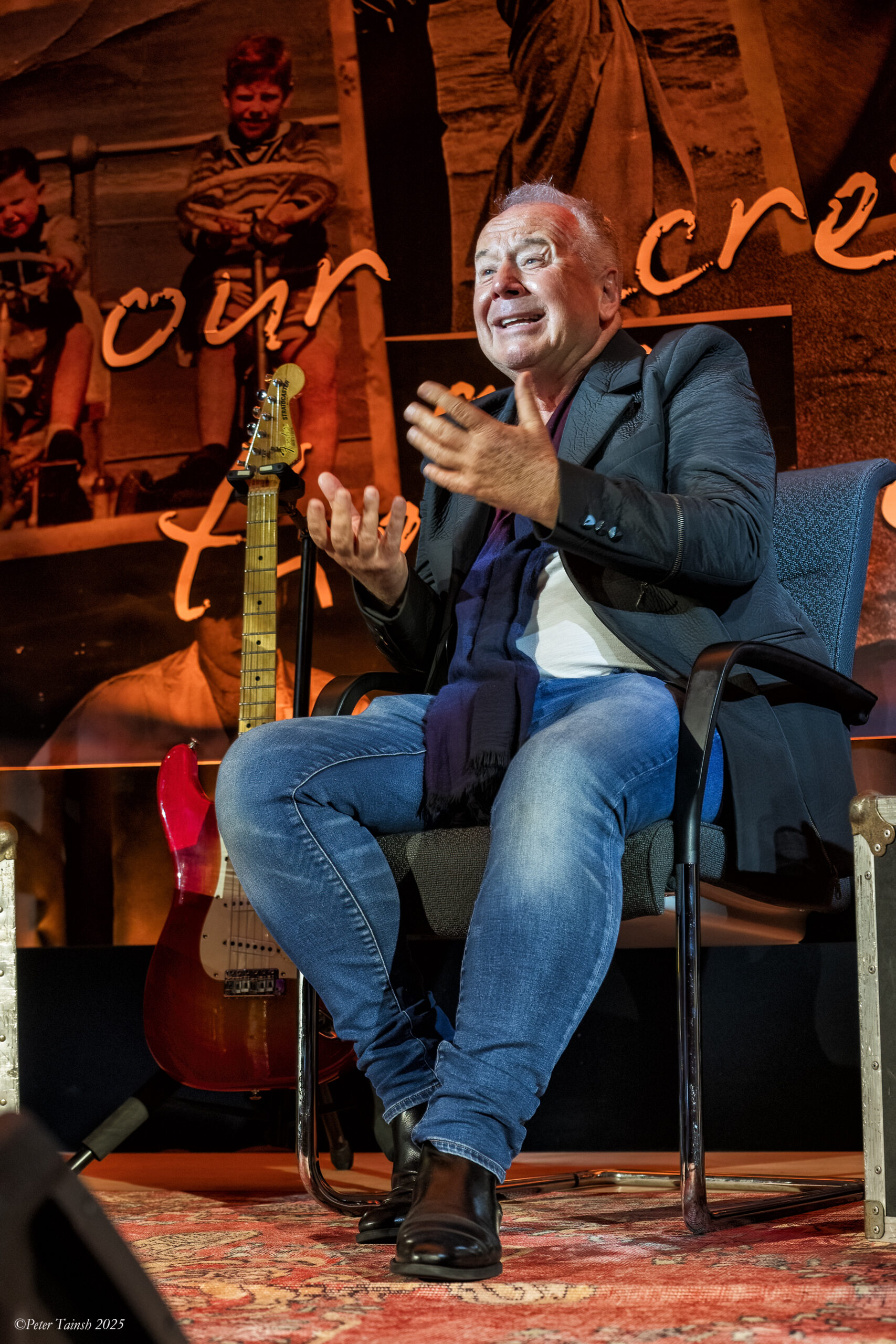
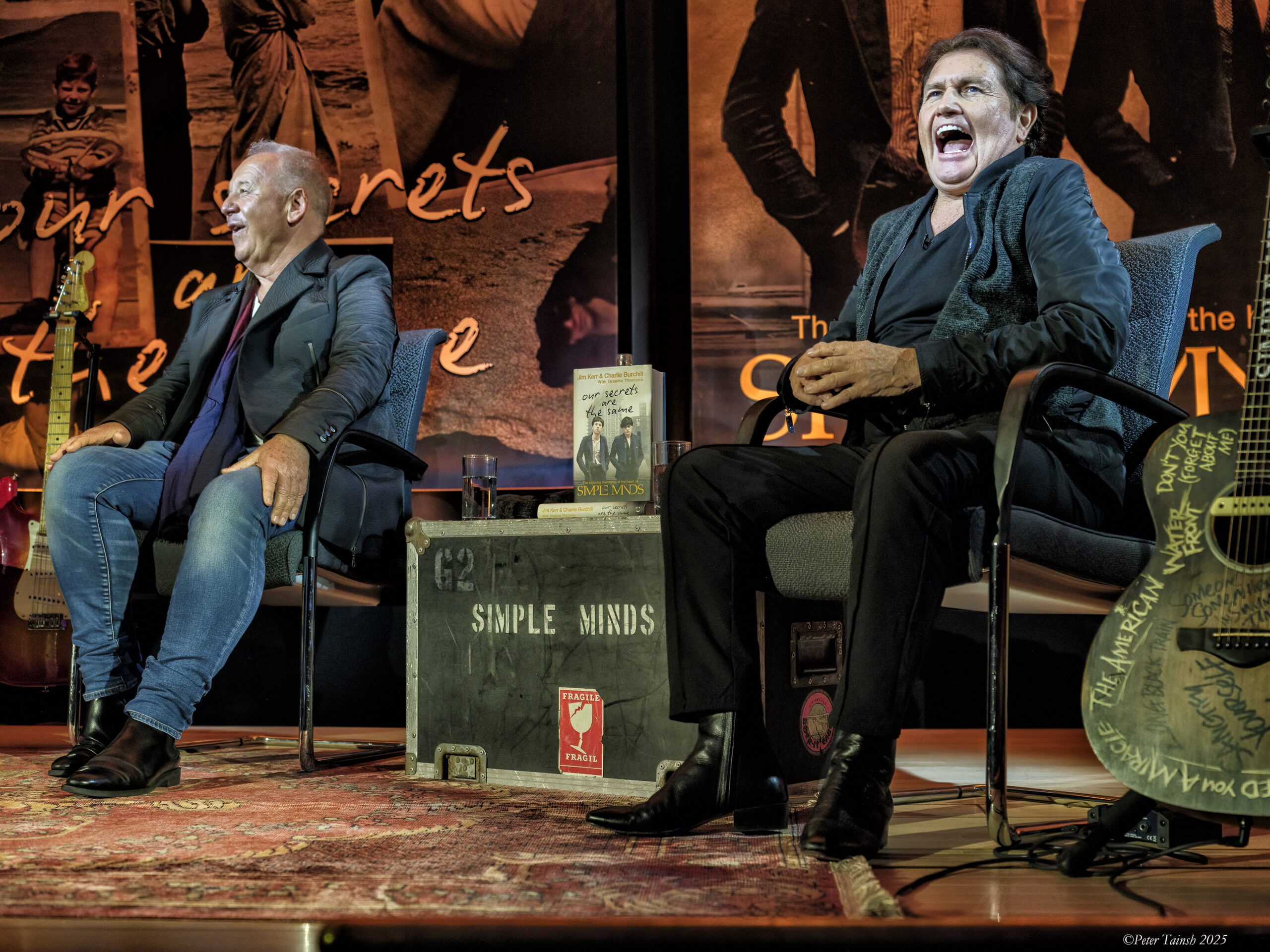
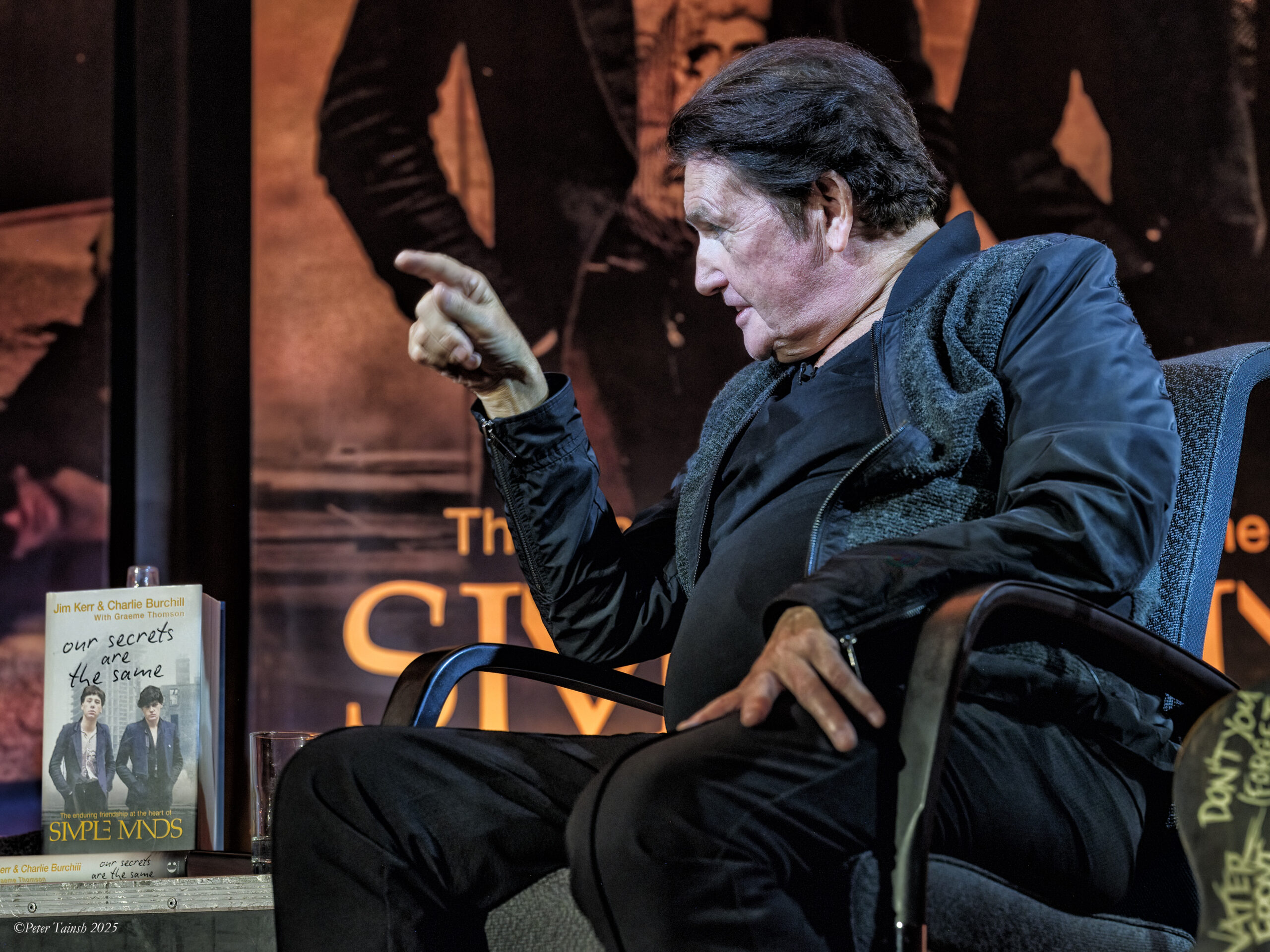
SIMPLE MINDS @ BRITISH LIBRARY, LONDON
21/10/25: Simple Minds @ British Library, London.
Photos © Peter Tainsh.
© Ayisha Khan.
THE ZOMBIES @ PIONEER CLUB, AT ALBANS
01/10/25: The Zombies @ Pioneer Club, St Albans.
Photos © Ayisha Khan.
© Ayisha Khan.
MARK REEDER: LUST AND SOUND

The Berlin-based DJ and electronic music producer has been touring the 2015 documentary film in which he stars – ‘B-Movie: Lust and Sound in West Berlin’ – and which he also produced the soundtrack for that was recently pressed on vinyl. It features footage of Berlin’s native experimental underground scene of the late 1970s through ’80s, up until the fall of the Berlin Wall. Originally from Manchester, Reeder made an impromptu move to Germany becoming Virgin and Factory records’ man in Berlin, introducing the likes of Nick Cave – who stayed in his flat – Throbbing Gristle and Joy Division to the city. A key player in shaping the scene, he was the first person to send German record submissions to John Peel and was instrumental in infiltrating East Germany at a dangerous time when live music was banned for the other half of Berlin society. I chatted to him about filming Berlin’s clubs and the artists he helped expose, working with Joy Division, organising the first-ever (secret) gig in East Berlin and his band supporting New Order’s ‘Blue Monday’ tour.
How did the film, ‘B-Movie’, end up being made in the first place? It came out in 2015 but I’m assuming there was something leading up to that?
It took about four years to make ‘B-Movie’, but it wasn’t like I had this idea that I was gonna make a movie – it wasn’t like that at all. Suddenly my next-door-neighbour had this question. He was working in a production company making TV shows with this guy who he knew was in the music scene in the ’80s. He said to him that [he’s] got little kids and doesn’t know how to tell them how West Berlin used to be before, when the wall was up, because he himself was far too young. He didn’t know what it was like; he could just vaguely remember that there was a wall up, so he couldn’t tell the kids what West Berlin was like. The producers look it up on YouTube. Surely there must be some footage there? At that point, there wasn’t much about anything really.
And then they had this idea: maybe we should do something and make a collage of footage from the ’80s. They’d been inspired by an album that had been released a few years before about 2008 called ‘Berlin Super 80s’, which was like a compilation of super people by Super 8 films – experimental films – set to the music of West Berlin at that time by avant-garde bands. It was a really popular release, but it was just separate videos. Jörg A. Hoppe, who was the producer of the movie, decided it should be a long, continuous film with this music. He asked me if I would restore the music for the film so that it would sound good in the cinema because he said all these 7″ singles sound really thin and crackly and said, “Can you make it so it sounds really good?” I was thinking I’ve got some footage there, maybe I can flog him some. So I gave him some footage and he was like, “This is really interesting,” he didn’t expect anything really but when he saw it he was curious and said, “Tell me a bit little bit about your story in Berlin.” So I explained to him what I’ve been doing for the last 25 years. Then I told him that Nick [Cave] came and stayed with me. He was like, “Wow!” and then I I had to write my story out and read it…then it became ‘B-Movie’.
You mentioned the footage. How much of that was your footage? I was quite confused what was taken from back then and more recently?
There’s 2% of the film which is reenacted because we didn’t have any footage of Lever Street in 1977-1978. We didn’t have any footage – no one ever filmed in our shop. Actually, that’s a lie. Tosh Ryan filmed in our shop: he was the manager of Slaughter & The Dogs and ran Rabid records. He had a camera and filmed but he couldn’t be arsed to get his footage for us.
What cameras were available?
Super 8 cameras. Bollex, Brauns…I had a Braun Nizo which I got from the flea market – it had a grip on it like a gun, it was really good. But you only had two minutes of footage in a Super 8 camera. Today on your phone, you’ve got unlimited hours; for as long as you like you can film, whereas on a Super 8 camera you have two minutes of footage and you had a tiny viewfinder…you were never really sure if what you had just filmed would ever come out. You only found out when it got developed if it was blank or black, so you really didn’t know. You filmed and that would be it and then find out if it was either captured or not, but it’s only a few seconds of footage of anything. So there’s loads of snippets of things in here…it’s hard to see when the film is running, and it’s only little bits – it’s like a jigsaw puzzle. ‘B-Movie’ – everybody’s bits, everybody’s two seconds, glued together to become this film. Seventy cinematographers are in ‘B-movie’: we utilised stuff from the telly as well; I’ve been on telly so we utilised that. I was in the films with Jörg and he asked, “Can we add this in the film?” That’s how the film was put together. Just a jigsaw puzzle of all the other people’s work as well. And music for that matter.
It was difficult to work out how old you are in some of the scenes…
About 20 to 25. I’m lucky…even in that period you didn’t age drastically in 10 years!
My whole life was then directed by one pivotal moment. I bought my first record in 1962 – ‘Telstar’ by The Tornados…for me ‘Telstar’ is the first techno record. If you hear it, it’s an instrumental…there are no vocals – techno came from that in my eyes. That was the seed of techno. Techno as we know, as we accept it in today’s world, was conceived in Detroit. But it was born in Berlin.
Did you enjoy doing the acting as much as the music?
The music is much more important than the acting. I only acted in Jörg’s films because he said, “You’re the only person who can tie a tie. Could you be in my film?” I had a bar and he’s like, “Can I film in your bar?” “Course you can.” I knew him for a long, long time before, we always went to concerts and were always talking about bands and I just happened to be there. And he’s like, “Yeah, we’ll do this movie together. How do you fancy it?” He knew I’m into splatter movies and sawdust so I ended up in his films. I wore uniforms which he thought was fascinating.
Could you mention a few films that you were influenced by?
Oh gosh, I’m a film addict…there’s lots and lots and lots of films. ‘Suspiria’ and ‘Chemical Holocaust’ – these are films that I liked to watch as a teenager. My childhood was where I was influenced from the beginning: ‘Doctor Who’, 1963, the first broadcast with this electronic music which no one had ever heard before. I was a little kid, I was five and I hear this music. I’d never heard anything like it – it sounded so scary and sort of otherworldly and these images of ‘Doctor Who’ on the screen…this pulsating light, strobe effects. Wow, what is that? As a little kid, it was creepy. It was everything, but it was synthetic and it sounded like another planet. At the time I didn’t realise that, not only was I feeling like this, but the entire nation of Great Britain watching Doctor Who in 1963 all felt the same – adults and children – because they’d never heard anything like it before.
My whole life was then directed by that one pivotal moment. I bought my first record in 1962 – ‘Telstar’ by The Tornados. That was about the communication satellite and it was an instrumental…for me that was before Doctor Who. ‘Telstar’ and ‘Doctor Who’…they were the things that really cemented inside me these electronic, clubby discos, because for me ‘Telstar’ is the first techno record. If you hear it, it’s an instrumental: there are no vocals there’s only “aahhs” in it and it’s very, very organ, bass guitar and beat-driven – techno came from that in my eyes. That was the seed of techno. Techno as we know, as we accept it in today’s world, was conceived in Detroit. But it was born in Berlin.
Just going back to when you were in Manchester, how much of that scene were you exposed to before you moved to Berlin?
Everything from the very beginning. I was a hippie in the ‘60s, I liked progressive rock music. As a child I’d been taken to record shops and absorbed this music in.
 Were you at Lesser Free Trade Hall?
No, I wasn’t – I didn’t go. I was born in 1958, so I was 18 in 1976. My friend Ian said, “Are you going to come to this gig in the Free Trade Hall?” I was like, “What is it?” He goes, “It’s Solstice, a student union band from Ashton.” I can’t be fucked to see Solstice. He’s said there’s another band from London called [the] Sex Pistols. I’ve heard of them but what kind of music did they make? I’d only read about them in The Sun newspaper…I didn’t know what it was. I didn’t go and then the next day we’re out drinking and he went, “You should have come last night. I saw the future,” and at that moment when he said it, I knew that he had. It was like, I will never ever say no again! No way. After that came out The Damned, ‘New Rose’ and that changed everything. It was like wow! The people in the record shop I was working in, Virgin, they didn’t like that music, only the manager John Webster. He thought it was great. But he came later and the other people who worked there didn’t like it at the beginning. They didn’t understand it; it was just a noise. They liked bands like YES, Little Feat and Bruce Springsteen…this kind of music and then I’m playing The Damned and they’re going, “Take that off! It’s rubbish; that’s not music – they can’t play, it’s crap.” I liked it; I didn’t care that they didn’t.
What about Joy Division?
I knew Ian [Curtis] before he was in Warsaw…even before that. He worked in Rare Records in Manchester; that’s where I first met him. I’d go there as a kid and he was the only person who’d talk to me; no one else would talk to me because I was a kid. He was only a bit older than me, four/three years. He was only allowed to sell singles; he wasn’t allowed to sell LPs, only 7-inch singles. So I talked to him and we’d talk about different things; I got to know him through that shop then we started going to gigs. Around this time, I’m like 18/19/20.
My first gig, I went to see Roxy Music in 1972 for Brian Eno; I went in my school uniform to the fucking gig. [My parents] didn’t know. Fucking no I wasn’t going to tell my parents I went to a gig…I was 14, told my mam I was going to a mate’s house. And then I went to Manchester with 2p on the bus. They were like, you can’t go into a club as a child; as I was teenager, I just said to the [venue staff], “Do you need any help?” and they just looked at us and went, “You wanna get in for free don’t ya?” [I said] “Yeah I do.” And they went, “OK then take that box in there and don’t come out.” So I went inside and hid until the gig started. There’s this band on and the [frontman] thinks he’s Mick Jagger. They sounded like a rock band – it was the New York Dolls but I’ve never heard of them; they did come from America. And they were the support act. Then came Roxy Music and it was scary actually, as a little kid, a little schoolboy with a load of very androgynous Roxy Music fans all drooling and licking their lips at the sight of this little teenage boy in the crowd. It was a bit frightening but I went – it was thrilling. It was totally thrilling to see Roxy Music. I couldn’t tell anybody that I’d been, no way. If I’d told someone that I’d been to see Roxy Music, snuck off and seen this gig, they might have told my mam. So I didn’t tell anyone, kept it secret two years later.
When punk came to an end around the time you went to Germany, what actually spurred you to make that move?
I didn’t plan on going to Germany; I never had that vision. I just thought Virgin records is going to change into a super market and I don’t want to work there; I’ll come back and do something else. And I thought I’ll just have break; go to Germany. I’ve got loads of money. I’ve saved all my money because, working in Virgin, I didn’t have to buy any records; I didn’t have to pay for concerts. I got all my drinks for free in every club that I went into because I was the guy who works in Virgin Records. So I just collected all this money and gave my mam her bit and kept the rest. I’m just gonna go to Germany, look around buying records and Krautrock records that you can’t find in England. I’m just gonna buy all these records and come back to Britain; thought it would be a two-week trip.
Was it the Krautrock interest that made you want to explore there because you didn’t really know what was going on over there?
I knew what was going on through the music that I bought from Germany like Faust records, CAN records and Tangerine Dream albums and things like this. I knew that was happening. But you couldn’t get all these records in England; you could get a few but you couldn’t get everything. I knew there was loads of records there that I didn’t know about; you have to go to the shops and go through them, so I went to Germany just to buy records and then I ended up in Berlin. Berlin was always ‘a place’; it was so far away in the middle of East Germany. I never got there and it ended up I was going back to Britain if I went to Hamburg or Cologne. Then I thought, I’m close to Berlin, I can go this time. I’ll just hitchhike; I was only hitchhiking around, I wasn’t driving. I didn’t have my own vehicle. Didn’t go by plane: plane ticket cost £560 to Berlin; you could fly to America for £400. It’s dead expensive. I just hitchhiked to Berlin and that was it.
I wanted to show British people what Berlin was about. I think that it was very inspiring, because of the difference in the way the music, the idea of the music and the fact that it was more art than music, was presented. In Britain, everyone’s obsessed by making a hit record – having success, tons of cash and a fantastic house – and in Berlin it wasn’t like that; people didn’t make music for those reasons. They didn’t make music to escape – they’d already escaped to Berlin.
How easy was it being a foreigner?
Well, the fact that Berlin was occupied by the four powers – Brits, French, American and Russians – there was obviously a feeling for foreigners, we weren’t classed as that: we were foreigners of course in German eyes, but we’re part of the occupying powers. It was acceptable; it wasn’t something freaky or anything like that. Although we had these occupying powers, they all didn’t go out. They stayed in the barracks; they never went into town. You hardly ever saw them. I was one of the handful of English people who was living in Berlin and because I was one of a very small minority of people, I knew them; within the space of a year I met everybody who was English living in Berlin. Five people – that was all we were. Nobody went to Berlin and we were stranded on this desert island. We all did things within the music scene; working in bars or restaurants. I became a Factory Records man in Berlin because when I said to Rob Gretton I’m in Berlin, like I’ve made it finally, he’s like, “Can you give me this Popol Vuh album?” Of course, he thought I was gonna go there and come back. But when Rob realised I’m not coming back, he’s like, “I’ve just repressed Joy Division’s ‘An Ideal for Living’. I’ll send you a box and you can send it to the radio stations and meet magazines and shit. I would say I’ll do that. And then I was Joy Division’s man in Berlin. And then when Tony Wilson started Factory, I became Factory’s man in Berlin. That’s what I did.
Were people living here aware of what was going on over there?
They didn’t really know anything at all. Berlin wasn’t registering really on anybody’s radar. If you see in ‘B-Movie’, sections from ‘The Tube’, which was a youth programme on Tyne Tees television. That was broadcast on the Friday and it was live; then they decided they were going to make a Berlin special. They needed to find out what’s going on in Berlin because they read in NME about the Berlin scene, the squatter scene, and Muriel Gray was interested in that. She was like, “What’s that all about?” And upstairs in the cinema is a guy called Chris Bohn: he was the person they asked first what’s going on because he’d written the article. And he went, call Mark Reeder – he’s living there; he meets everybody. He suggested that they call me and so I put this programme together for them. I really just wanted all my mates to be on telly ’cause I knew that Einstürzende Neubauten would never be on telly. I just wanted to give them that opportunity to present themselves, so that British people could understand what it was that I was witnessing in this city. I could have had a lot of German pop bands on telly – Nena, people like that – but I didn’t, I wanted to have my scene that I was a part of and was partly responsible for what was evolving out of that. I wanted to show that on ‘The Tube’, show British people what Berlin now was about. I think that it was very inspiring, because of the difference in the way the music, the idea of the music and the fact that it was more art than music, was presented. In Britain, everyone’s obsessed by making a hit record – having success, tons of cash and a fantastic house – and in Berlin it wasn’t like that; people didn’t make music for those reasons. They didn’t make music to escape – they’d already escaped to Berlin.
 How did you first discover the club scene there?
I was just interested having come from Manchester, which was the mecca of punk rock, it was like, there must be something happening here in Berlin. I think I saw a poster for the Sex Pistols playing at the Kant Kino. And I thought that they’ve obviously been here. I didn’t realise they’ve been but they never played. That poster was put up but they never actually did the gig. They just took a load of photographs and went back and wrote ‘Holidays in The Sun’. That’s why ‘Holidays in The Sun’ is at the beginning of the film because they went to Berlin and they didn’t do the gig; they just wrote the song. I was looking at it and it must be a club that they played and I thought I need to find a place [to film] and somebody just suggested you should go to Sound Discotheque. And it’s exactly that [venue] you see in Christiane F. They filmed that scene in Christiane F. in Sound Discotheque exactly as it was when you went there. It’s not simulated. They just went with a camera and they filmed without asking anybody. if you’ve watched the movie Christiane F., you will see the actual club; the sound club. It was just around the corner from where I lived; we went there and there were like a line of guys standing outside selling marijuana, hashish, LSD, speed…cocaine didn’t enter it; that was like drug fantasy. Nobody could afford cocaine.
Were you filming any of this?
Not at that moment because I didn’t have a camera. It was difficult to go out with a Super 8 camera, because once the two minutes of film was finished, you have to lug around a Super Eight camera and it weighed as much as a bag of sugar – two kilos. So it wasn’t attractive to go out with your camera. I got this little bag from the German army, which was a bread bag to put your bread, and it was the perfect size for the camera…you just hid it under your jacket and it was there and unobtrusive; people didn’t know you had it in your pocket. But it was very heavy and it was uncomfortable to go out to gigs and stuff; once you filmed your two minutes it was over.
At the time were you aware of how historically influential these films would be later on?
I filmed so I could remember it, so I could remember what I did. I just wanted to have a document somehow and the fact that we did this TV program was like good because it was not me filming it was somebody else doing the filming in this environment in a professional way. And with a big camera with lots of film stock and it was on 16mm it wasn’t on a Super 8. It was like a different world and I took them to the places that I wanted to document – the Risiko bar – I wanted to have that in the documentary. We had no idea how long this bar was gonna last. The guy who owned it gave everybody free drinks all night, every night; it wasn’t exactly a money making machine. We knew it was a very short shelf-life but we didn’t care…it was there and then it was captured on this film.
SO36 was a long room with white walls…the thing that you can always remember was the sound and I don’t mean the sound of the gigs and the PA: I mean the sound of people leaving. It was like *crush, crush, crush, crush, crush* really loud, 10,000 times as everyone was traipsing out of this club over all the cans of beer that they’d drunk. You’d hear this sound of crunching aluminium as people left the club – that’s the sound of SO36.
And some of the other footage, where was that sourced from? I’m talking about some of the gigs that were taking place and other art forms?
Different people’s films – Manfred Jelinski; he had a 16mm camera. He made adverts and stuff and wasn’t exactly poor so he could film quite a few things. [He’s] going to film a gig in SO36 and would buy enough reels of film so he could make that film his fantasy. He made the film together with Jorg Buttgereit; the splatter movies ‘Nekromantik’ and ‘Der Todesking’ and S036 was part of our scene. So it was like I’ll go out there and film this and that and he had quite a lot of stuff. Another guy, a friend of mine, called Guntoff Meister – the guy who made the 25th anniversary of the Berlin wall film where they’re singing happy birthday – would always have lots, although he wasn’t well off. He always had reels of film, but he would steal his reels of film. He would nick them and so he had quite a lot of footage.
And then we went to television as well; television programmes who’ve gone to clubs because they were curious about what was happening and for the sensationalism of ‘this is what your children are doing on the weekends’…and you have films like ‘Christiane F.’ where you have sections of film where you saw the places and it looks exactly like this; it looked like ‘The Sound that I went to to find out what’s going on. People say, “Oh, you have to go to Punk House if you want punk music.” There’s one club called Punk House…great! [I] went to this place and it was like a bar. It wasn’t anything, looked like a cowboy bar and there were Berlin’s 20 punks sitting around there. The next time I went it had closed, within the space of a week. This place has been open for about a year but the next time it was closed to became something else, a roller disco burger bar.
When SO36 started, that was about 1978, it used to be a supermarket and they just took it over and made it into a club, into a venue for three or four nights. [Martin] Kippenberger did it and then he stopped doing it because he couldn’t be bothered, but everyone started to say it’s a really good place. It’s a really good venue; a really good size. These Turkish guys took it over because they wanted to circumcisions during the week – what you gonna do with the club at the weekend? It’s closed. Let’s put gigs on on the weekend instead…you can do your circumcisions Monday to Friday or Thursday and then we’ll do gigs Friday, Saturday. So that’s how it started: first of all it was just weekends and then they saw how many people would be coming. It’s also the guys who put this on. They were really caring. They wanted to integrate the Turkish part, bring that into the punk rock world with the avant-garde; they wanted to make something modern for their Turkish friends. It was a real nice mixture of the Turkishism of Creuzburg with this punk rock thing which was happening – it was totally beautiful.
What was it like, S036? Can you describe your memories of being there?
It was a long room with white walls. The thing that’s most significant that you can always remember which you never hear [about] was the sound of SO36 and I don’t mean the sound of the gigs and the PA: I mean the sound of people leaving. It was like *crush, crush, crush, crush, crush* really loud, 10,000 times as everyone was traipsing out of this club over all the cans of beer that they’d drunk. So you’d hear this sound of crunching aluminium as people left the club and people would be kicking cans and stuff out the way – that’s the sound of SO36.
Talking about sound, how inspired were you from the sound of the city as well? Because you mentioned Neubauten and they took influence from the industrial sound; that was going on here as well, especially in Sheffield.
Well, you have Cabaret Voltaire, Throbbing Gristle…they were the ones that kind of gave us all this insight into something that was completely different and completely new. When I first heard Throbbing Gristle when I was still in Manchester it was like, that’s fantastic; that is such a different approach. It was very close to the Krautrock like Faust and things like this. And then going to Berlin I found people who loved TG too. And it’s like, I wonder if they could get them to play here? Someone has to bring them over and a friend of mine was like we’ll ask them if they’ll come to Berlin, so they brought the Zensor record label and they made an album live in SO36; it’s called ‘Funeral in Berlin.’ It’s like a moment of incredible energy, this album, Throbbing Gristle live in Berlin – they did two shows each side. And it was brilliant. I had the pleasure of showing Genesis [P-Orridge] around Berlin and you have to go there and have your photograph taken there…standing at Checkpoint Charlie, it was great.
I thought John Peel’s got to hear this. I went to the shop and got another copy and sent it to him…eventually he played it on the show. I was so elated and then I met the guys from P1E…I told them John Peel played your track and they couldn’t believe it. I would just constantly go to Zensor, buy two copies and send one to John Peel…prior to that bands never thought about sending their record. So I kind of paved the way for the others to be able to send their records.
So you were aware of what was going on here in the UK too?
Yes of course, I’m a music fan. I listened to John Peel. [He] had two shows: one on the BBC World Service and one on British Forces radio. The Germans only knew he had a show on British Forces Radio because they’d always tuned into his show on that channel, but they had no idea that he had a show on BBC World Service and when I told them they couldn’t believe it, that they could actually access this music from the UK twice a week rather than just once a week. Some revelation! John Peel was very, very influential. The power of the music and the presentation of his shows. It wasn’t just East Germany that was fascinated by what he did: it was the whole of the Eastern Bloc – Poland, Czechoslovakia, Hungary…they all listened to his radio show on medium wave *white noise* . They got all the information; they listened to it religiously.
What about it being the other way round: people listening to German music through John Peel, because you mentioned that briefly in the film?
Oh there’s that too. When I got to Berlin it was like, ‘Fucking hell! You’ve gotta hear this record!’ One of the first ones was a banned electronic band called P1E. I went to Zensor record shop that was in Schoenberg and I bought that record and thought, “Oh God!” I knew John Peel didn’t know it existed because it had just been released on this little record label called Monogram – they were independent to Berlin. Their records are only sold in Berlin; they weren’t in West Germany. They were just sold in Berlin in this one shop. I thought John Peel’s got to hear this. I went to the shop and got another copy and sent it to John Peel. And then a couple of weeks later – I was listening every time ‘Oh he’s gonna play it!’ – and eventually he played it on the show. I was so elated and then I met the guys from P1E: it was Alex Hacke, who went on later to play with Einstürzende Neubauten and this guy Michael Schäumer. I told them John Peel played your track and they couldn’t believe it. They have no idea how he got this record and I said I sent it to him. And then we became friends and we’re still friends today. That was one of the first ones and I sent off Mania D’s record. I would just constantly go to Zensor, buy two copies and send one to John Peel. That’s how I became friendly with [him].
So were you personally informing him through that method of sending him stuff about what was going on because he wouldn’t have known about it?
Yeah, yeah, at the beginning it was like that and then, when people heard that music being played on John Peel’s radio show, they would send him records of course. But prior to that [bands] never thought about sending their record to John Peel, never occurred to them, you know? So I kind of paved the way for the others to be able to send their records.
 You mentioned Throbbing Gristle going over there. What about Joy Division? You said in the film that the gig was a bit of a flop, was there any reason for that? I don’t know what year this is – you don’t mention years in the film!
Well, the reason for that is because my life has just been like that. I can’t nail it down to years; I can nail it down to phases. I have a vague recollection of what that could have been but in reality, it’s just a fucking rollercoaster, a train ride and it’s not stopped…it’s still going on. My life hasn’t changed in any way. It’s still the same – it’s just different. But it’s still virtually the same. Suddenly the [Berlin] Wall comes down…you’re watching 10 years on the telly and suddenly that’s it – [it] comes down.
Your question about Joy Division: I convinced Rob Gretton to come to Berlin. I wanted them to come and I thought the Berliners will understand Joy Division, they’ll love Joy Division; they’ll really get it because Berlin being what it is, this derelict washed up city, all these people will really like it. I managed to convince the guy who ran the Kant Kino [Conny Konzack], who’d always put on bands from England. He was a bit of an anglophile: he’d read the New Musical Express and see what band was popular and book them. Joy division made ‘An Ideal for Living’; it got slagged off and he wasn’t interested at the beginning. And then they got a really nice write-up in NME about ‘Unknown Pleasures”, and they were saying what a great album and Paul Morley called some massive great record.
He looked to the press to decide what he wanted to see?
Yeah, of course, because he had no other way. He might have heard a record on John Peel’s radio show. I don’t know how religiously Conny Konzack actually listened to the radio show. He might have just dipped in now and again but I know that he read a lot of things in the NME about bands and they were the things that made him curious, and he might have gone and listened to the music after that, but it was always the NME that gave him the guidance. When ‘Unknown Pleasures’ came out, then he was like, ‘Oh, it’s pretty good.’ I said, If they came, would you do a gig and he was like, ‘Yeah we can arrange that.’ Then I heard that Rob Gretton told me that they’ve got some gigs in Holland; they got a Dutch promoter to do a couple of gigs in Holland and they were going to do a gig in Cologne. And I thought if you’re gonna go do a gig in Cologne, you might as well come to Berlin…it’s really close on the map, it’s like a couple of hours’ drive. And so the gig in Kant Kino happened. I made a great effort to encourage people to go to this concert: they didn’t go. Fifty-eight people went to the concert to see Joy Division, fifty-eight…that was it. At the time, I was so devastated because I wanted the Kant Kino to be full, I wanted my mates from Manchester to be idolised because they were only playing to fucking 50 people anyway at the best of times; they only played to 20 people at one gig and I wanted them to come to Berlin. It was a fantastically successful concert. I was disappointed but they were really happy; they were fucking elated. Just like with any other gig that they played in Manchester, whatever they’ve done – we’re fine. They thought it was great.
German artists were influenced by them…
Later [on]. Joy Division meant nothing until Ian died. People didn’t really buy the records until Ian died and when [he] died, it was like ‘Oooh what’s that?’ and ‘What did they do?’ and then they got interested; it created its own kind of momentum, it’s own mystique. Then suddenly everybody was like, ‘Maybe I need that Joy Division record. What’s it about?’ Everyone was talking about it, especially the second album ‘Closer’ when it came out – everybody wanted that. We sold loads of ‘Closer’ in Germany. In fact, Metronome records, the very big, German label – [it] released Klaus Schulze and all the records that were released on Brain, early Tangerine Dream – were like, “We’re thinking about releasing ‘Closer’, what do you think? Would it be possible to license it for Germany?” I asked Rob Gretton, “What do you think?” and he was like, “We’ve sold 42,000 copies of ‘Closer’ in Germany as an import. OK, so I asked what kind of figure do you want for this record and he gave me a figure. And then I thought, OK, this is what you want. I’ll tell them this is what you want. And they were like, Yeah, we’ll pay it. So they pay Joy Division a load of money and they sold something like 2500 albums, because 42,000 people had bought it already on import – it was too late. They missed the opportunity; they waited too long. They waited far too long to decide whether they should do it. If they had got in straight away they would have sold 41,000 records. But that’s how it is.
New Order had just had a hit with ‘Blue Monday’…I had a bit of a role to play in that record. The music that I was listening to in Berlin…was this kind of electronic disco music. It was trippy, it was dark and really interesting. I wanted Bernard Sumner to experience this and they came to Berlin. I took them to the Metropol: it was this huge place with a 40 meter-high cathedral sound-system. And he’s like, “We don’t have anything like this in Manchester. We’ll have to go back to Manchester and make it” – that became The Haçienda.
Your band, Die Unbekannten – there was also a heavy Joy Division sound.
We didn’t purposefully want to sound like that. It was our incompetence which made us sound like that. Allister, my mate, he’d never sang in a band before; he’d never played in a band before; he didn’t know anything about fucking music. He could have played a recorder, that was about it. I was fucked off my face one night and [Thomas Wydler] – the boyfriend of Elisabeth Recker who ran the Monogram record label – wanted to be a promoter and was putting on a festival and put a load of names on this poster, bands that were supposed to play. They only had one band that agreed that they were going to play so they were the headliners. He said to me, “Will you play next week at my festival?” and then he said, “Which band do you want to be?” I said, “OK, yeah, we’ll do it.” And then I realised at home I don’t have a band; I don’t have a drummer; I don’t have a singer. I’ve got a guitar. What are we going to do? I phoned up my friend Alistair [Gray], “Can you sing?” And he went, “#Strangers in the night…#” “Brilliant, fantastic…come round to my flat and I’ll show you how to play bass and we’ll write some songs.”
And so we’re in The Franken on the opposite side of the road from S036. We were writing the last song waiting for the soundcheck finishing off. And we did this gig and it was a fucking nightmare – I was so off my face. We had a drum machine and I clicked the wrong button suddenly; instead of being disco it was bossa nova. And I was standing there panicking looking at Alister, who was panicking. We’d just started, this drum machines was going on for about 15 minutes before we decided to play anything. And we started together and we moved cord together; we’d only practiced in my room for two days. We did this gig and came offstage and I said obviously we’re never fucking doing that again. That was it. Elizabeth Recker from Monogram records went “Wow, that was fantastic! I want to do a record with you.” We’re looking at each other thinking she’s off her face; we’ll think about it tomorrow. And we made a record with this woman. Her boyfriend Thomas was a drummer who I knew from going out and then we became The Unbekannten – The Unbekannten means ‘the unknown’. And the reason why we called it the unknown was because there was a guy up from a local magazine and he wrote a review of this festival. He wrote ‘one of the more interesting parts of the festival, two unknown Englishmen who performed this avant-garde set’ and in our little scene everybody read this and said, “Oh look, there’s The Unbekannten. We were known in the scene of course but in the media we were the unknown, that’s how we got this name.
What was it like touring with New Order when your band became Shark Vegas?
Hilarious. We wanted to be a disco band; we wanted to do electronic disco music. We didn’t know how to do it, that’s the problem. We didn’t know what the fuck we were doing. I wanted to made techno/acid house but we didn’t have the right equipment to do it. But because we didn’t know because we had never seen how people made this kind of music, we had no concept of what we needed. I remember funk records: they have this clapping sound on the drums and I was like, ‘How did they get that sound?’ A syndrum. But it’s not the same sound. So that’s not the instrument…I found out that it was a claptrap. You couldn’t buy a claptrap in Berlin, it was unavailable – I had to write to America. I order this black claptrap from America. And it came; it made this sound and that was it but when you mixed it with the drums you’ve got this sound which was only available on full records really. Bit by bit we tried our best to get the equipment to make this kind of music that we really wanted to do but it we never really got there. It was all experiments and people would be going ‘We want to release this.’ It’s just a test. Doesn’t matter – it came out. And we parodied ourselves because we didn’t take ourselves seriously.
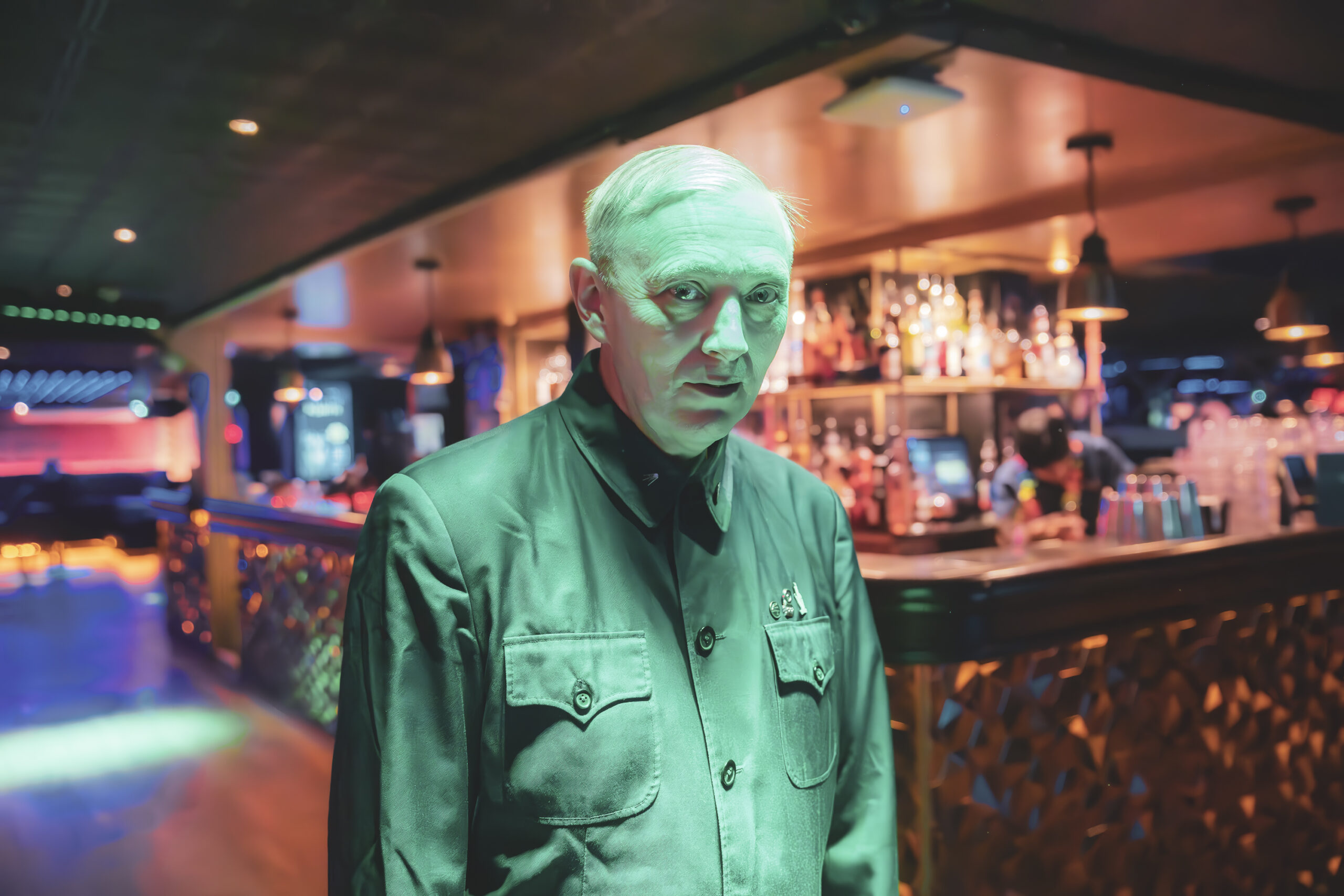
Bernard Sumner asked me [to come on tour]. [New Order] had just had a hit with ‘Blue Monday’, they’re going on tour. I had a bit of a role to play in that record as well. The music that I was listening to in Berlin in the Metropole discotheque, the biggest gay disco in Europe, was this kind of music – Italo disco. It became known as ‘high energy’ eventually at the end but at the beginning it was this kind of electronic disco music which you only heard in this kind of club; you didn’t hear it in any normal discotheque. It was trippy, it was dark and really interesting. I wanted Bernard Sumner to experience this and they came to Berlin. I took them to the Metropol: this huge place with a parquet floorboard, a 40 meter-high cathedral sound-system which was immense…there’s nothing like this in Manchester. [They’re] playing in America and he goes to Paradise Garage and it’s the fucking scene. And he’s like, “We don’t have anything like this in Manchester. We’ll have to go back to Manchester and make it” – that became The Haçienda. Bernard asked me, “Do you want to go on tour with us? We’re doing a tour of Europe. Would you like to go with us?” And I was thinking, “Well yeah, of course.” We can’t go as The Unbekannten because no one will be able to pronounce our name. We’ll change our name and we’ll get a drummer and a bass player from another band called Soif de la Vie and we’ll have a four-piece on stage instead of two and a drum machine. We did this tour and we actually got quite a positive response from people that normally don’t listen to support acts. We did quite well and then out of that we got a record deal.
What about the response to New Order, because ‘Blue Monday’ was a bigger hit and charted higher in Germany?
It was huge in Germany. In fact, of the pressings of all the records of ‘Blue Monday’, the German pressing from 1983 is the best because it’s the only one that has the beginning; all the others don’t have the beginning: the first bass drum is missing off the British version of ‘Blue Monday’ when you play it. The German version, you get the full thing and it sounds far more dynamic and its fuller; it sounds fantastic.
What was that like live?
Oh, it was fantastic. Back then it was so fresh and so new and so different than anything. It’s a track which every single person knows, but it’s also a track which in my personal opinion is on par with ‘I Feel Love’ from Donna Summer; it’s equally as iconic as a cult track.
I did find it quite sad that more artists didn’t infiltrate East Berlin. I guess also Nick Cave. It was great what you did. That’s really what you should be doing, is trying to spread this great music around in places it can’t reach and to awaken those people as well.
They didn’t want to go; they couldn’t be arsed. It was too much of a chore to get in. For Australians, Nick could have just gone with his passport and got a day visa and gone in. He didn’t have to wait. Blixa had to wait because he was a Berliner. But the thing is, the way they looked, East Germans would never have let them in any way.
I live by Iggy Pop: “No risk, no fun.” It was so important for these kids: they had no possibility to go to the West to see a band they liked. So to bring the bands into East Germany to perform, they couldn’t believe it – it created such a momentum throughout the whole of East Germany…all these kids started going to the churches…it wasn’t about doing prayers, but you were away from the Stasi. So the churches became places for punks to practice and hang out, and the priests were really happy because it meant people were coming back to the church.
Was there was any danger at all with the authorities? I read somewhere ‘Jessica’ was the band that was disguised as a religious service or something?
No, no, no, no. The Toten Hosen – the dead trousers; that’s what it means. The dead trousers means there’s nothing happening. I organised with two girls in East Berlin a very, very, very, very secret gig for The Toten Hosen in East Berlin and that was disguised as a ‘blues mass’ as they called it…it was a church service.
Were there any dangers in terms of holding gigs there?
Totally. It wasn’t a gig – it was a church service. That’s what the priest said to me. “It’s not a gig – it’s a church service. You have to pray.” I was like, “I’ll do anything; I’ll set fire to myself. Everything…whatever you want me to do I’ll do. I just want my friends to be able to play the gig in this place.” It was just for a select group, a little group of 30 people, no more no less, because I wanted to maintain that nobody would talk to the Stasi that we’re going to do a secret gig in the church. It wasn’t like we could turn up with guitars: you couldn’t take anything into East Germany of course; no one’s allowed to know that you’re going to be doing the secret gig. At that point I had no idea that a Western band had never ever, ever done this before. I thought people would do this all the time. I had no idea that no one had ever done this before. I played with The Unbekannten in Czechoslovakia the year before a secret gig for Czechoslovakia’s most wanted dissidents and that gave me the idea that we could do something in East Berlin, but we couldn’t get drum machines and we couldn’t get tape recorders and all this stuff. So I binned that idea. And then eventually when I was doing the sound for Toten Hosen on tour with them, and I said to them, “Would you play in East Berlin if I could arrange it?” And they’re like, “Yeah, sure.” So I arrange it and then we did this gig. And the ripple effect that had was the most important part about it, the same thing that happened with the Sex Pistols playing in the Free Trade Hall happened in East Germany with The Totem Hosen; suddenly it gave a momentum to their scene, it gave their scene a reason of existence. It gave people a motivation to do things. That was the whole point of doing that was to expand their horizon.
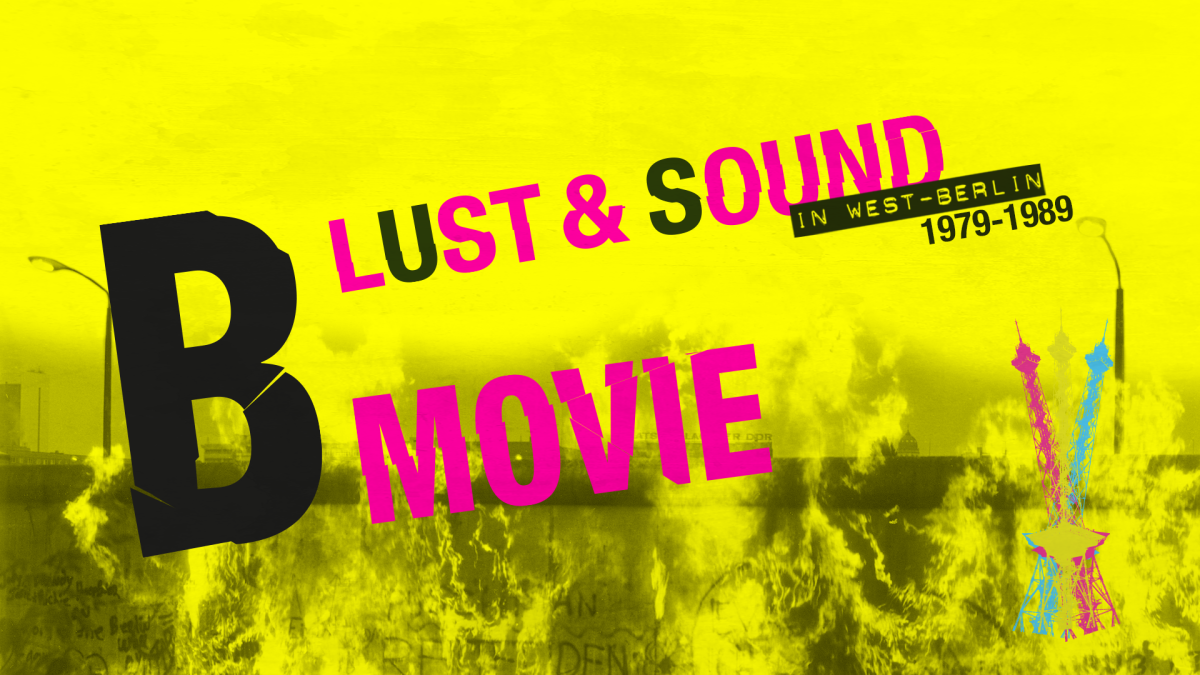
[East Berliners’] horizons were limited by what the state let them see and I wanted to show them a bit more. I was willing to take the risk to bring this band over to play: I live by Iggy Pop, “No risk, no fun.” I’ve lived by that motto and if at first you don’t succeed, try and try and try again. Those two things have given me the incentive to say, “OK we’ll try it.” If it don’t work, it don’t work. But if you don’t do it, you’ll never know if it was going to work. So we just go and do it and if it works, fantastic, and that’s exactly what we did. It was so important for these kids: they had no possibility to go to the West to see a band they liked; they wanted to see the Sisters of Mercy or something, any of these bands that were going at that time. They wanted to see all these bands they dreamt about what it could possibly be like to go to a club to see a band perform properly with a real PA, because none of that was available in East Germany at all. So to bring the bands into East Germany to perform for these kids, it was like they couldn’t believe it – it was out of the realm of possibility. If I told them we’re going to do this, it was impossible for them to get their heads around that it could actually be possible. How are you gonna do it?! How?! They didn’t believe it. They didn’t believe that we would be able to do this, it was impossible…immediately that block of stone went up. We did it and we moved that block out of the sight, the vision…we moved it away to the side. We went and did this; it created such a momentum throughout the whole of East Germany – all these kids started going to the churches, because the church was a silent sanctuary. You weren’t necessarily religious, it wasn’t about doing prayers, but you were within the sanctuary of the church; you were away from the Stasi and normal everyday East German society. So the churches became places for punks to practice and hang out, and the priests were really happy because it meant people were coming back to the church. It gave it a meaning of existence.
The vinyl soundtrack for ‘B-Movie: Lust & Found in West-Berlin 1979-1989’ is out now.
Photos © Fernanda Bavaresco.
© Ayisha Khan.
VIN CASSIDY: SECTION 25 – 2025
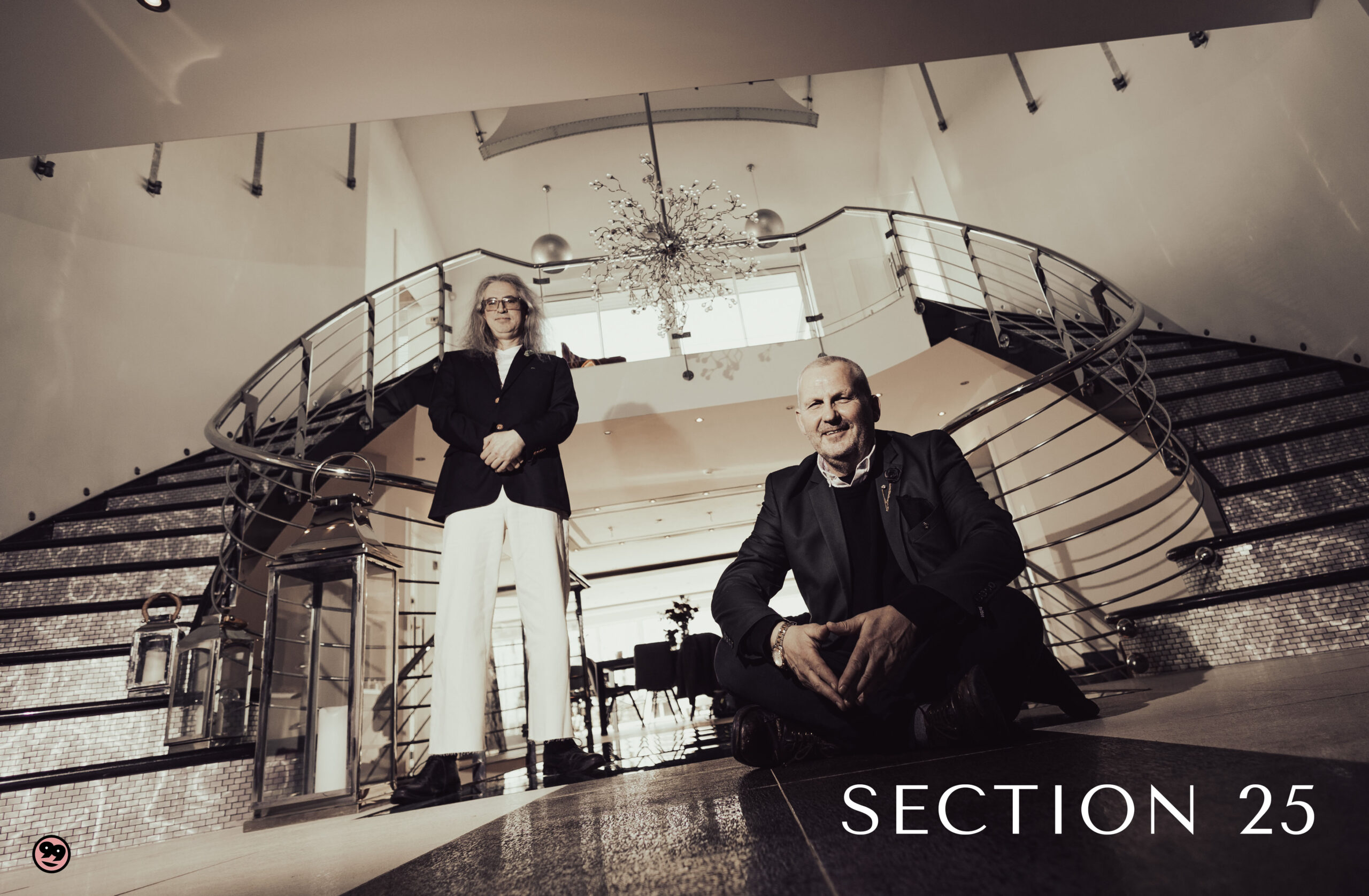
Their first studio album of new material since 2018, Section 25 release ‘Move On’ and are performing live again, now as a duo following many line-up changes since the passing of co-founding member Larry Cassidy. His brother, Vin Cassidy, continues the band’s legacy as a stripped down electro-funk, industrial, percussionist outfit. After their first London show in two years, Vin talked to me about the themes behind the new tracks, his musical partnership with Steve Stringer, playing with Joy Division and bringing jamming back to the band’s live performances.
You’ve recently released your new album, ‘Move On’. Your last album was about six years ago. How long has it taken you to write this one and record it over those six years?
We seriously got down to it over the last 12 months: selecting what we wanted to work on, doing the pre-production and recording and then mixing took about 12 months prior to that. We’ve been doing some gigs up to 2019 and then Covid came and there was no live work. A lot of people during Covid wrote books, plays, albums. We were the opposite – we did absolutely fuck all. And so it was only in the last year we’ve got down to working on that album.
Is there something more significant in the title of the album, ‘Move On’? I just wondered if there’s anything there because I know that’s something that generally as a band you’re wanting to do.
It’s more about moving on a personal level, for me. With regard to just going through life and the stuff that happens and the stuff that you collect, like the baggage and expressions.
But I was thinking also about the sound of the album…I’ve heard some of the last albums you’ve done, I’d say this has got more of an electro-funk sound, even a bit of an industrial sound. Maybe also you’re moving forward in terms of the sound and the lyrics as well; it just seems like it’s a lot different to what you’ve done recently.
Personnel changes in the band…no matter how you deal with that or try to sort that out, it always does fall out on a personal level and it can be upsetting. So there was moving on from that kind of stuff. And also doing the vocals was a big deal for me…I’ve been playing in bands and this band for a long, long time, but not singing; maybe a bit of backing vocals now and again. So it was quite a big deal for me to write the lyrics and sing them – that was quite a big leap forward for me on a personal level.
Lyrically what was inspiring you on some of these tracks? I know ‘Back in the Day’ is autobiographical. There were things that were leaping out to me, like for instance, ‘We Are On Our Own’. I don’t know if that was a bit political maybe?
Yeah, I suppose that touches on how you can feel alienated and when you’re low, you can feel that you’re on you own and a little bit vulnerable; it’s coming from that place, really.
We used to jam with Joy Division and do a gig. We’d be supporting them and then the last couple of numbers, we’d come on and all jam together. You don’t fucking get that now. You’re not gonna go and see a main headline band and then the support band come on and jam with them…just playing whatever comes out of your heads for five minutes. We were quite close musically.
Is it more personal then rather than political?
Yeah, I’d say so. I’m not really into politics in terms of party politics: I’m more into politics between people, on a personal level. I know what my political leanings are. It’s not something that I would write about because I think it’s pretty boring, that shit.
And also you re-recorded ‘Human Puppets’. What was the reason you chose that track from the first album?
Well, when that was recorded originally, it was recorded with Martin Hannett with a whole bunch of songs and that was one that was never used. It was never produced, it just stayed in the can – it was something that was never fully realised. So I thought it was time to do that. My brother [Larry Cassidy] wrote the lyrics for that song, and he wrote lyrics for other songs that are on ‘Move On’. But I’ve weaved my own lyrics in with it to maybe fill them out or to make it go more where I want it to go. I thought ‘Human Puppets’ just spoke to me about how things are at the moment; maybe I’m one man, but I I feel like a lot of people feel quite powerless about what’s happening around them right now and controlled by other agencies and it makes me angry.
Is this pessimistic in a way? It definitely felt like some of the way you’re singing as well was a bit of pessimism; kind of monotonous.
I think really that in the end, the message of the song is to cut the strings, which is about releasing yourself from what you can’t change. There’s so much you can’t change what’s happening, the shit that’s being put on you and what’s going on, but you can change internally how you deal with that, what you’re going to do with it and deal with things in a more positive way, from your point of view – do what you need to do in any given situation and ‘move on’.
And can you talk about what’s going on now with you going back to a duo? Could you describe your partnership with Steve [Stringer]?

We’ve worked together since about 2008; a long time. Just worked as a musical partnership, really – I found him. Don’t get me wrong, he can be frustrating and annoying, but on the level of other musicians I’ve worked with, he’s quite loyal and open minded about things. So I think that maintained our relationship. The band, as it was with the five-piece, disintegrated for a variety of reasons. It’s quite difficult to go into it in too much detail, because a couple of people are family. With other people, you may fall out after a band or there’s a split, or people leave you…you don’t have the same difficulties but [with family] you’re bloody related to them.
But it wasn’t for me working out, and I wanted to do things in a different direction/route. Originally, my plan I was going to be not that ruthless. It was going to be the five-piece band to continue as it was, but Steve and I were going to do this side project. But in reality, that’s not what happened: the five-piece band fell apart. People went their own way and Steve and I carried on doing what we’re doing. And it’s been quite an opportunity to make some big changes.
So how many lineup changes have there been since?
In 2019, Steve and I started doing the two-piece thing, and then at the end of 2019 everything was off because of Covid. But prior to that, there’s been loads of incarnations of the band, Christ. We were originally a three-piece back in the day and then it morphed into a five-piece, much more electronic, and then the band went into cold storage for years. Then when we started again, it was my brother singing, then he sadly died in 2010 and his daughter, who had been doing a bit of vocals with us, took over doing the main vocals.
And that carried on from 2010 to about 2018 but it played out for me…it was no disrespect to anybody, but it just run its course. And I wanted to change things around and do things differently. So hence I’m here with this album – I’m really proud of it.
Have any of the past members been involved in this album in any way?
Actually, the original guitarist who left in about, Christ, 1980, Paul Wiggin, is a lovely guy, and he did some guitar on a couple of the tracks on this album. He came down and he did some guitar on ‘We Are On Our Own’ and ‘Human Puppets’. He did guitar on that because he did stuff on the last album as well.
I hadn’t seen Paul for years and years, but Kanye West sampled one of our tracks – like massively, heavily sampled. It wasn’t even really sampled: he used it as a backing track. I was expecting maybe a bit of a big nick, a bit of snare or what you think of a sample, or a bit of a guitar riff or something. But it was like loads of the track. Couldn’t believe it! Anyway, I contacted Paul saying ‘you’re not going to believe what’s happened here’ and we’ve stayed in touch ever since. I’ve asked him [to play live] but he suffers from extreme stage fright and he won’t do it! He does play and puts stuff online and does bits and pieces of his own stuff, but he won’t do gigs.
I guess what I noticed about S25 is that you emulate sounds from other bands you’ve worked with, especially musicians who produced you. Was that something you were aware of at the time, that they were having that effect on you? Did that maybe stifle your ability to find your own sound? Because I read what reviewers were saying back in the day…the main criticism was you sound a lot like Joy Division.
Yeah, yeah. On the one hand, yeah, obviously we were quite close all together, and as musicians, working and doing stuff at Factory [Records]. We used to jam with Joy Division and do a gig. We’d be supporting them and then the last couple of numbers, we’d come on and all jam together. You don’t fucking get that now. You’re not gonna go and see a main headline band and then the support band come on and jam with them. Not just jamming, not doing a song, just playing whatever comes out of your heads for five minutes. So we were quite close musically. And so obviously things tend to cross-filter and that with each other.
But the other thing I’d say, the music press back then in the early ’80s, specifically the NME, fucking hated us. Joy Division as a band cast quite a long shadow. I defy anybody to be on the same label and come in being junior partners and not get compared because the thing as well was that everything had to be produced by Martin Hannett, who had a very specific sound and style which was great, but it may tend to make more comparative. We got compared to PiL, we got compared to Pink Floyd…I just think a lot of it’s lazy journalism; you can’t fucking think of something original? So this is why ‘it sounds a bit like that or it sounds a bit like the other.’
Did you feel that you had a defined sound that was associated with S25?
I mean, it’s hard to be objective about it when you’re doing it. You pick up things and, yeah, you hear stuff that you really like and maybe you want to emulate that or use a bit of this or that without wholesale ripping people off.
I quite like the industrial genre…that’s probably what I’d like to hear more of, actually.
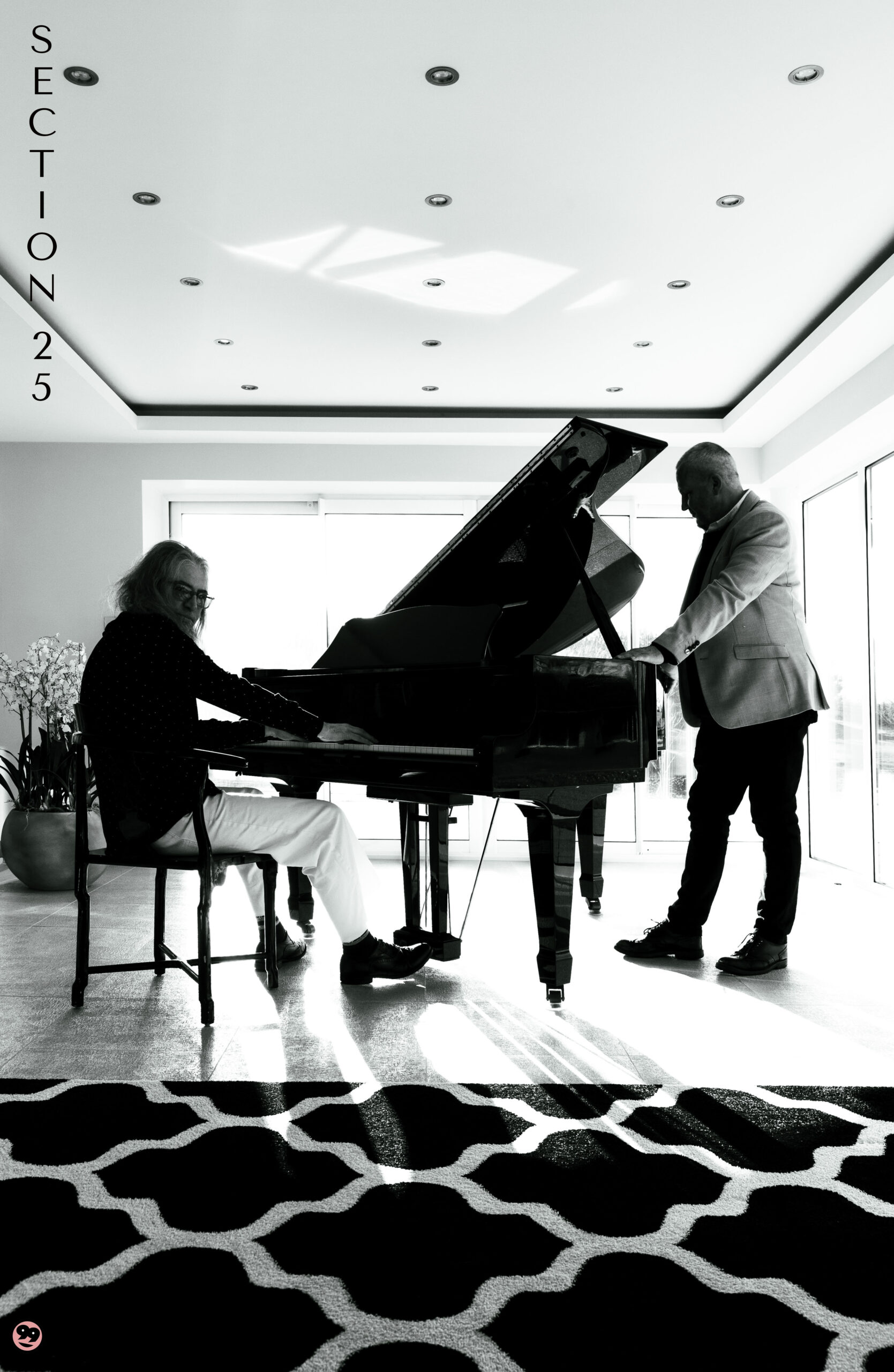
Yeah, yeah. I mean, that’s the kind of thing that I like as well. The process that we operate with is we go into a rehearsal room just playing and recording everything and listen back to it and stuff that sounds like it’ll work… ‘that’s worth keeping…keep that and maybe build on that.’
And you can hear influence as well, like Krautrock with Harmonia and CAN. I can hear that in there and Tangerine Dream.
CAN were one of my favourite bands and Steve’s mad on Krautrock. But who wouldn’t be, it’s fucking brilliant?! Big influences on me when I was a kid.
I was interested in your influences when you were forming the band, and also where you were from – Blackpool where there wasn’t a lot happening.
Well, yeah, I love Krautrock, but loads of different stuff. We used to travel out of town to see bands because there wasn’t a lot happening in Blackpool. We’d go to Manchester, maybe go to Liverpool; we went to see the punk bands because that was what was happening then. And then you’d be inspired to maybe start doing something yourself, because one of the things with punk was it said to people, ‘you don’t have to do, be this, that or the other – just do it.’ That was quite liberating, I don’t know what people think about it now, but it was for me because before then you saw musicians/successful bands – they were semi-godlike figures. You were only there to worship them and buy their records. So get crap, cheap instruments and just start doing it yourself. It was great and then inevitably, if you’re playing a lot, you will start to become a bit better at your instrument and things will start to develop.
Did you all have similar interests as Joy Division and the others at that time in the Manchester scene?
It’s the same kind of stuff – pretty powerful stuff. I remember the first time I saw Joy Division…it was a quite profound experience seeing them live.
When they were on, they were good; pretty powerful. But so was Section 25 when we were the sort of band that was very difficult to predict. When things were working, it was pretty powerful. I think that’s what they liked about us, I guess.
Anyone else that was influential on you growing up?
I used to love Hawkweed; I’m talking about the first few albums…pretty transcendental. Loads of different things. But I loved my drummers; the percussion side of things.
You mentioned about jamming. Is that something that you’d like to see maybe brought back to your live performances?
That’s something that you go out and you start: you’re going to do a song, and nobody has any idea what’s going to happen. You just start playing. I mean, eventually you do. It’s a bit like jazz: you develop certain themes that you can weave in and out of. But yeah, it’d be lovely to do. We haven’t done so much jamming at live concerts for quite a while, really, but it’s a good point.
Krautrock as well, because that’s where it’s organic and experimental and there’s not a start and a finish as such. It’s just you lost in the music.
Yeah, great. It builds in certain ways and becomes quite hypnotic in other ways. It’s quite a different experience, isn’t it? Not enough of that about really.
And also I love that you’re doing the new album tracks as well.
Sometimes you might do one, maybe two tracks. We did six tracks on the album tonight and we’ve never done that before, but I thought, fuck it! But they’ve always got this thing where people were expecting you’ve got to do this or tick these boxes or else get pissed off. But it’s really nice doing the new stuff tonight. We might just do more [in the future] and maybe a jammer track as well.
Section 25’s new studio album, ‘Move On’, is out now.
Photos © Vin Cassidy.
© Ayisha Khan.