DAVE FORMULA + NOKO (MAGAZINE): SONGS FROM UNDER THE FLOORBOARDS
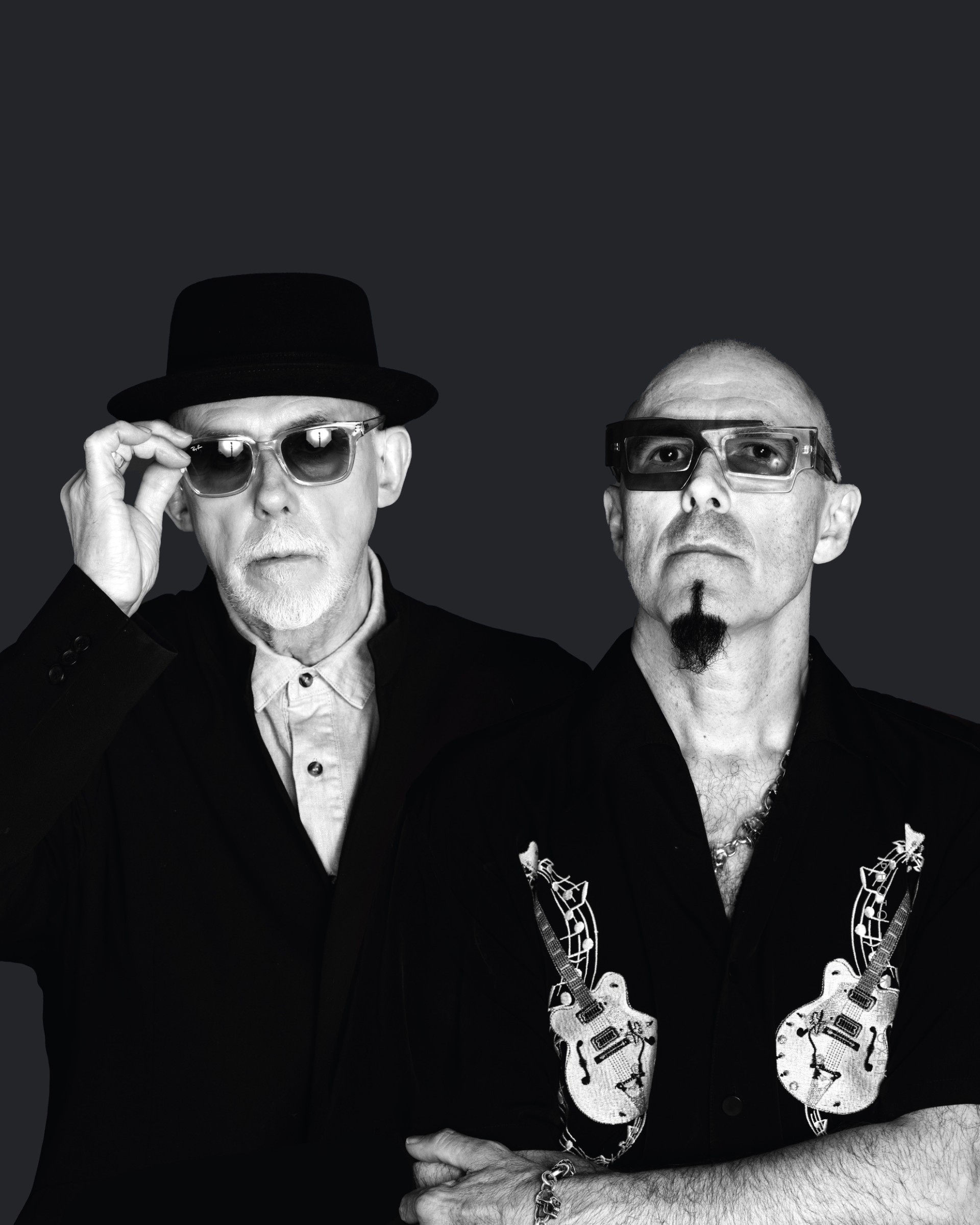
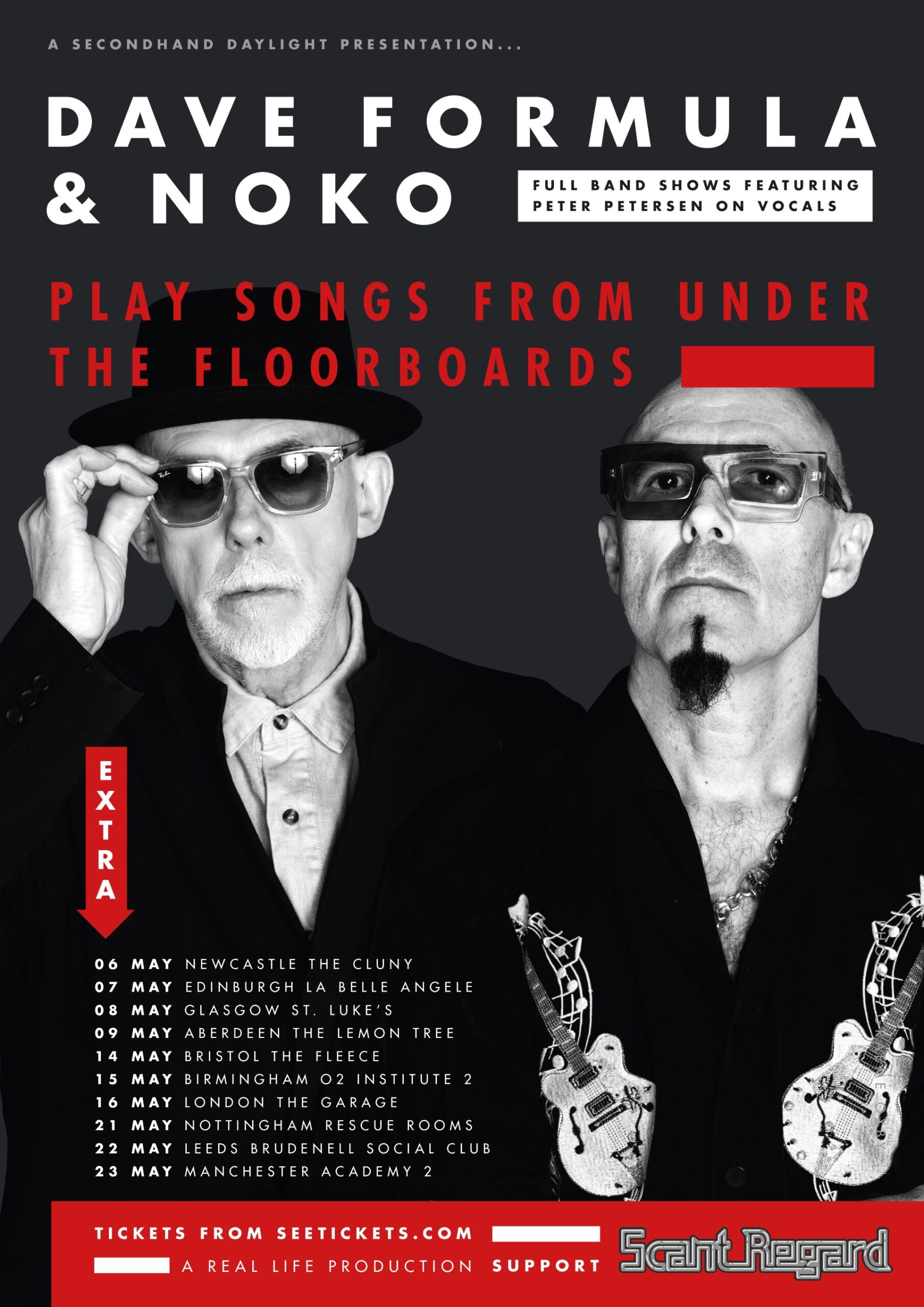
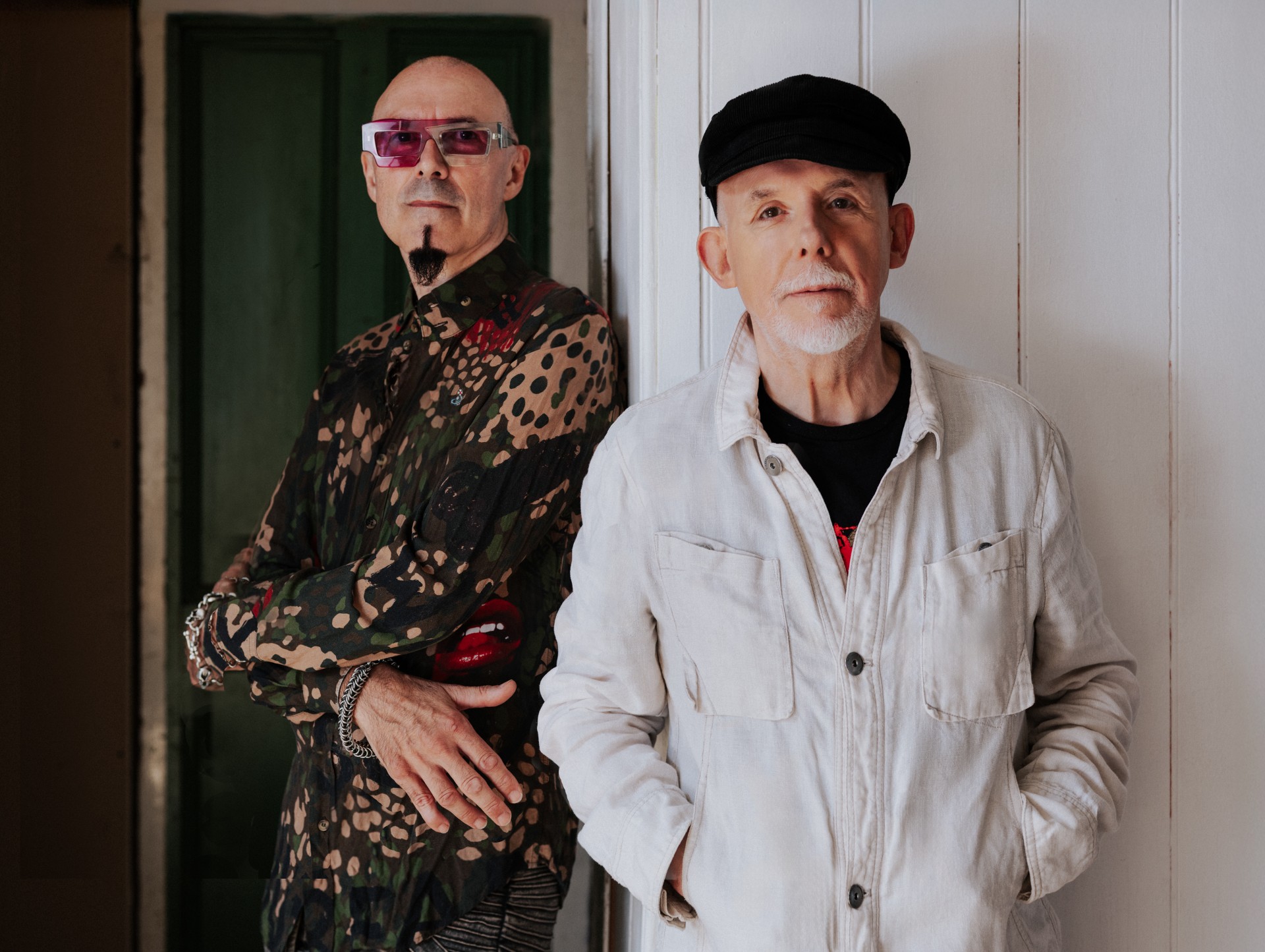
Following its permanent hiatus after 2011, Magazine were feared to never again have their songs heard before a live audience…that is until now. The band’s keyboardist Dave Formula and guitarist Noko have teamed up to bring the old world charm of the post-punk band back to a live audience, playing songs from their first three studio albums, some of which have never been performed live before. With their Anglo-French lineup featuring singer Peter Petersen and bassist Tim, as well as Dave’s son Max Tomlinson on drums, the pair hope that fans will appreciate hearing the band’s songs again after 15 long years. I chatted to Dave and Noko about their excitement for their ‘Songs From Under the Floorboards’ tour, why the band’s founder Howard Devoto will never perform with Magazine again, their long-time working partnership with each other and how ‘Secondhand Daylight’ is the best album the band ever made.
Following on from Magazine’s last tour in 2011 when you did ‘No Thyself’ and also Affection Place, how did the idea for this tour come up from working previously with the material?
D: Well it sounds a bit overwhelming. I just kept getting this feeling that I wanted to play particularly one tune, ‘Definitive Gaze’, from the first album [‘Real Life’], because in some ways, when we were making that album quite quickly after I joined the band, that was, for me, the absolute kind of realisation of my place within Magazine and how much I’d been able to put into the band and, to an extent, change the sound with the kind of keyboards I was using when we play it and when I played it in the past. It was like the ‘home run’ when we played it: it sums up my role within the gig when we’re doing it.
I just got this weird feeling I really need to play ‘Definitive Gaze’ again. And from that I thought, no, actually, I really want to play all the songs again. So I started to think about it more and thought, well, why not? Absolutely! It won’t be easy in some respects, but to an extent I was preempting the fact that I wasn’t sure that Howard would be up for if I tried to reorganise Magazine as such, because there’s been many occasions, in between 2009 when we initially reformed and now, where we get really tempting offers – certainly money-wise – to reform the tour. And every time I put it to him and try and find a way to make it more possible for him because he’s very conscious of getting older. I was saying, ‘Well, why don’t we do more of a Leonard Cohen thing, where we start off and I play the piano, using a couple of songs we constantly build it, everyone coming on bit by bit, and we only actually do 20 minutes as a band?’ So anyway, to cut a long story short, he didn’t want to do it.
Having worked with Peter [Petersen] the singer and Tim the bass player with Affection Place, I could see that they could actually fulfil a role within this thing that I wanted to do it, forming a band that could play the Magazine repertoire, so it can be developed like that with circumstance and the real desire on my part to play the tunes. I got in touch with Noko and he was incredibly enthusiastic about doing it so it’s been great to work with him. My son’s playing drums, so it’s different in a lot of ways, but when we got together for the first rehearsal in October it just happened within a few hours; we knew it was going to be great. So yes, it’s been a real thrill to put it back together, pretty much in a new way but still playing the same songs.
I would have happily done it, but Howard never wanted to, so our manager had to keep going back and [Howard] said, ‘Not this time.’ And of course, each time you do that, the money goes up. I thought he would not be able to resist because they were really good offers – he carried on resisting. He put in a lot of physical work getting really fit for those first shows in 2009 and thought ‘Well, it’s 15 years on. Can I go through all that again?’ I respect that.
N: We got offered all kinds of things over the years. Bit by bit, Howard’s lost interest in the live thing and we always had to say no to things. I went to see the Affection Place gig. I was standing there watching it and thinking, this is great to hear the songs again, isn’t it? Just simply the material, regardless of who’s singing it. After the gig, Dave came over and said, “How do you feel about taking something out next year and we’ll play those songs again.” It’s 15 years since I did it last time so it’s great to get back into it again; get back into that aesthetic mindset of playing all those tunes. It’s crazy: it seems like only a couple of years ago but it’s actually 15 years ago now. So yeah, it’s about time those songs were heard again, with some punk and some swagger.
Dave, with Affection Place, how many Magazine songs did you play in the set?
D: We started off doing ‘Shot by Both Sides’. The [band] said, ‘Should we do ‘Shot by Both Sides’? I said, ‘Yeah, why not?’ We ended up doing three: ‘Shot by Both Sides’, ‘Parade’ – something I’ve always felt strongly about – and ‘Feed the Enemy’. It worked really well. As I said, it just pushed me a little bit in the direction of thinking it might be possible. I didn’t think Barry [Adamson] would want to do it either because he’s very busy all the time. It might be possible using Peter as a singer and Tim as a bass player – Barry was a big influence on him when he first started so he can do that style really well and yet put his own personality into it – as Peter the singer can: he brings a real French angle to the songs. Howard always had a little bit of a thing about singing the odd word in French in original Magazine days. So [Peter’s] extended that and given it a more French new wave angle.
You said that Howard wasn’t interested. But I was reading Magazine’s revised biography and he said that he was interested if it was just about money. So you’ve got these offers but he doesn’t want to do it. I know the issues with Howard, of course, but if money was involved, I thought maybe that might have actually encouraged him, cynically speaking.
D: Yeah the weird thing is, when promoters are asking, I would have happily done it, but Howard never wanted to, so our manager had to keep going back and [Howard] said, ‘Not this time.’ And of course, each time you do that, the money goes up. So yeah, it’s bizarre. I thought at one point he would not be able to resist because they were really good offers – he carried on resisting. He felt that he put in a lot of physical work getting really fit for those first shows in 2009 and I think he thought, ‘Well, it’s 15 years on. Can I go through all that again?’ I respect that. I want to do it despite my advanced year (I’m the oldest in Magazine). This is the other reason, because it’s a special [80th] birthday [for me this year].
N: I’ve not spoken to Howard since we’ve done this, but Dave has; I wouldn’t have done it if Howard hadn’t been happy about us doing it. He’s just had so many opportunities to, even at the last minute. Dave said to him potentially you could be involved in this; he just doesn’t want to do the live thing anymore and I respect that, because it takes a lot out of [him]; he puts a lot into the show. It’s quite exhausting for him at the end of it all because he has to almost dig deep into his reservoir to find that character. It’s a lot of effort for him, so I understand. The money isn’t even a factor – I think he’s just over it. I was in Luxuria with Howard as well: we did that back in the ’80s and even at the end of that, he was a bit over it when he first left Magazine. He was over it when he started his solo album period. Then after Luxuria he got a bit tired. He just wants to move on. Emotionally as well, it just takes it out of him. Good luck to him. It’s fine, that’s his decision. But Dave and I, we just want to play the songs again: it’s a lot of fun.
Has there been any resistance to the idea of you doing this tour without Howard? Sometimes it’s strange to have somebody singing someone else’s songs that they’ve written but I understand that you have to continue wanting to play the material live and also for newer, younger audiences.
 D: It’s a valid point because it’s inevitable. The way I see it is, I called Howard when I realised I really want to go ahead with this. I thought I need to talk to Howard and tell him what I’m thinking of doing. So we had a conversation and I said, ‘Look, never for a minute did I envisage calling this ‘Magazine’, because it’s not Magazine; it’s not supposed to be Magazine.’ I was a long-term member of the band and Noko came in later but had a lot of history with Howard from the Luxuria days, and I’ve worked with him in the studio in London. But at the same time, I always find it quite uncomfortable about bands that call themselves the same band name and yet there’s only one or maybe not even any [founding members] in the band, and yet they’re still trading under that original name. I thought that’s the wrong thing to do. Let’s be totally upfront about who it is and what we’re doing with it. Inevitably, on social media, you get people who haven’t seen the fact that you’re not called Magazine; you’re not Magazine without Howard. ‘How can they pretend to be Magazine?’ I anticipated that there’d be an element of that. That’s why we didn’t call it Magazine. But that’s OK – either don’t come and see it if you’re not happy about it or come and see it and hear how great it’s gonna sound. People have a choice.
I assume Peter is respectful of the part he’s playing in singing those songs…like Noko playing John McGeoch and even Jonathan “Stan” White with the bass when he stepped in for Barry. I’m assuming he’s very respectful of singing someone else’s songs?
D: Absolutely and for him he’s got the biggest pressure by miles being the singer of the songs that were very personal in a lot ways to Howard. We’ve encouraged him all the way through to interpret them and not completely do slavish copies, but at the same time, absolutely take on the fact that Howard wrote them and instigated the band. So there’s a lot for him to take on, but I’m assuming you will come and see us so let me know what you think afterwards.
N: The problem you have when you take Howard Devoto out of the equation of Magazine is how on earth are you going to fill that character, that space that is so intrinsic to the Magazine aesthetic, world view and all the rest of it? It’s a tall order; it’s very big shoes to fill. You can’t really have anybody doing an impression of Howard; it’s got to be something else. I think the fact that Peter’s French and got lineage with the band – Affection Place actually supported Magazine in 1981 in Paris – Dave and him have got history. Peter, because he’s French, it’s something different, and we’ve been encouraging [him] to do as many of the lines as possible in French. It’s great when all of a sudden he does a chorus in French spontaneously or translates some of the lines slightly different. The poetry of the French language is something very different and even though the literal meaning is still the same, it takes on a different ambience. It all goes a bit Serge Gainsbourg for a second. I love that whole French thing. There’s something a little bit Nouvelle Vague about Peter; a bit French New Wave. He’s an obsessive film buff and he loves all that era of French movies. There’s something of that quality that we’ve been trying to encourage in him for his presentation. He’s got into certain songs in a way that I hadn’t really predicted. It’s just really good fun and something different.
Also talking not just about Peter – Tim is a fabulous bass player as well. When I first saw Affection Place and came down to see Dave playing in London with them, the first thing that really struck me was Tim. He’s really good. He’s got a great feel and he’s obviously not the same as Barry, because Barry was his own thing. But he’s certainly managing to play all the stuff really well. And Max [Tomlinson], Dave’s son, on drums, is a fantastic drummer – really, really good. I’ve known him since he was very young and he’s really come on in the last few years. He’s an amazing jazz drummer but has got the rock sensibility thing going on as well. So I could do anything: it’s really good fun having those two young guys to bounce off, as well as all the old guys.
[And on McGeoch], I like the music. I don’t even have to think about it – it’s completely intuitive. It takes me back to listening to the records the first time I heard them, back in the late ’70s when I was a teenager. I don’t have to try very hard to have respect for those parts.
Did Howard give his blessing then for this?
D: When he realised that I had no intention of calling it Magazine, that seemed to make him relax quite a lot; quite naturally and quite rightly, he felt protective about using the name in these circumstances that we’re doing now. But he said, “I really wish you the best of luck with this. I hope it goes really well.” He wasn’t being peevish about it: he was being open and generous in saying that.
N: We wouldn’t have done it had he not given us his blessing.
As a fan of Magazine for such a long time now, I do think it’s quite sad that I’m not going to see you guys play together again. I don’t feel I had enough of it as a young person. I did just about catch the reunion tour in 2009 and then I saw the ‘No Thyself’ tour after that. It’s quite emotional not to be able to think that you’ll play again together. But I’m assuming that is it now, you can only really just do this and there’s not going to be anything else with the other members, with Barry as well having his own solo discography that he’s focusing on.
D: Sure, I think you’re right. Howard has always had that kind of philosophy ever since I’ve known him, and you had to take that on when you joined the band because he instigated it. He formed the band; he directed it. So certainly, he had a lot of control over his output to the press and what he would do and what he wouldn’t do. A lot of people said in 2009 the time was right for us to come back as Magazine and it worked really well. Instead of capitalising on that, he decided he didn’t want to do any more shows and there was a two-year gap before ‘No Thyself’…a lot of momentum was lost. We had tours of America, Australia and Europe that over the two years evaporated, but we could have taken on had we carried on in 2009…but Howard’s always been like that: ‘I want the set to be this long; I only want to do this many gigs.’ And you have to respect that: that’s the way he works; that’s the way he’s always worked. He didn’t suddenly change.
Is that it now for Magazine, as in it’s permanently now on hiatus? It will never reform again?
D: I don’t think Howard will ever do it again. I don’t think he feels physically able to.
So just moving to your partnership, before I go onto talk about your work together in this formation, how did you first meet circa ‘Beast Box’ by Luxuria?
 D: Well, I met this other guy from Liverpool, the North-West connection, who had premises in Shoreditch: ‘Assorted Images’, they’re a graphic agency by a graphic artist who’s done a lot of stuff for Magazine – Malcolm Garrett. So Richard (Boote), my future partner, had part of the building that Assorted Images were on (Curtain Road) to hopefully find a way of having a studio. Then I came along and we built Strongroom, which is still going – it’s now a very successful studio in Shoreditch. I’ve been running that for about three years. I’ve always been in contact with Howard and he got in touch and said, “Would you like to come and produce the next Luxuria album?” He’d done one album already without me and then ‘Beast Box’ was the second album: I played on it, co-produced it with him and that’s when I first met Noko and worked with him a few times later at Strongroom playing on sessions I was doing.
N: Yeah, that would have been the first time I met Dave, because it was the second Luxuria album. We had just come back from an American tour and were trying to think what kind of record we wanted to make. The thing about the labels at that point in time, they never trust artists; they don’t let people produce; they’re never very happy to give you the money and let you go produce it yourself. So we were looking for a middle-ground solution and Howard suggested doing it with Dave and it worked. And here we are now in the same trajectory that started then.
D: That was how I got in touch with Noko initially when I got everyone to be involved with reforming Magazine in 2009. We went through an audition process with all sorts of guitarists, spoke to different people – some more famous than others – and did five days of audition. Of course, Noko was part of that and he came quite early on in the week. We could have said then, “You’ve got to do it Noko,” because he loved Magazine and John’s playing for years before – he was a perfect fit.
Noko thought maybe it was going to be someone more famous, like a guest musician?
D: With Magazine it’s always been about the music and how you can do it and how you can present it as well as possible. Outside of the comparison of who’s the bigger name, it was about the music and he was clearly streets ahead of everyone else who auditioned. The only bravado is you’ve got to use Yamaha guitars, the same as John McGeoch used, not White Falcons.
N: When I first heard, I’d been involved in the whole extended Magazine family working with Dave and Barry…I used to play with Pete Shelley years before that, and Barry was the bass player in Pete’s band just before I joined. I also played with John Doyle in one of Pete’s bands as well. So I knew them all. It was when I first heard on the grapevine that the Magazine gig was coming up, I thought I can’t let anybody else get that gig. It seems mad – this is my dominion. I’d have been pretty annoyed if somebody else had got the gig. But at the time, when it first got announced, I assumed they’d probably be from Manchester, like Johnny Marr or some other Manchester connection. But it just felt like the right thing to do. He wouldn’t have played Magazine properly.
Your great partnership in ‘No Thyself’, you can clearly hear how well you work together. How is that translated into doing live shows together like these, that unique relationship you have?
D: He’s so tuned in to what Magazine music is; he knows it as well as I do. So there’s an instant rapport. There’s no need for long explanations; it’s a couple of sentences or less and we’re there. It’s very easy to communicate music. He’s got an incredible level of enthusiasm and he’s a very dynamic person. It’s great for me – it just works.
N: We found a way of working and all the tracks on that album were pretty much either started with me or they started with Dave. So we just sent our things over to Howard and whatever he finished and got excited about, that ended up being the songs. So they all invariably started out as one of mine or one of [Dave’s], because that was the way it worked out. And now thinking about it, that wasn’t at the beginning of our working relationship. It just set the tone for the harmonious relationship we have now: the beginnings of that go back to when we made the second Luxuria album. We had a working relationship even back then in 1990.
On the 2009/2011 tours, you were aware that you needed to emulate Magazine’s sound and were very careful with using the right equipment. There’s Hammond, Yamaha ARP, Yamaha SS30 String Machine…could you talk about your different instruments (and the same with you Noko), how you now play compared to back in Magazine and how you need to be careful to make sure you’re emulating that sound again?
D: Thinking about putting the original Magazine back without John of course, in 2009 I sold the original Yamaha string machine, so I bought the same model again. Because Hammonds are incredibly heavy to carry and bulky, I ended up on that first tour using a Hammond made by Yamaha. And then after, I changed that in 2011 for a Nord, because now there’s been, for 15 years or so, incredibly faithful reproductions of Hammond organs that weigh 40 pounds instead of 450 pounds. Obviously, I was very aware that I wanted to keep the sounds as authentic as possible.
N: There’s no big surprises in what I’m doing. It’s the same simple chain as you’ve heard in 2009. I’m using the same rigs that I would have used in 2009, but with slightly more complicated buzzing bugs and doing a few different things. I’m doing the sax parts on one particular song, which involves some different kit, but it’s the classic Magazine setup not a million miles away from what John would have used in 1979. I’m using the same guitars: all my guitars are Yamaha SGs from 1978/9, which is what John used, with the same Marshall amplifiers.
So is there anything that’s changed since then?
D: Luckily, a lot of what’s available today, particularly with digital technology, you can pretty easily recreate the same kind of sounds with more reliable – in the case of the organ – lighter equipment. I still use the real Leslie, the revolving speaker – there’s nothing like the physicality of the revolving speaker inside a big cabinet to add that final Hammond sound. The sample String Machines are absolutely faithful to the Yamaha. The piano sound is a Yamaha CP-70 or CP-80; it’s on all the keyboards I’ve got. So you can basically get all the sounds in a less difficult way. I use an Electro 6 for the strings and a Nord Gallo, that has Gallo’s harpsichord, for ‘Motorcade’. So between the Nord organ and Leslie, I use an original ARP Odyssey – a proper Odyssey, a real Odyssey. So yeah, it’s very close in a lot of ways to the 1978/9 version of Magazine.
N: It’s the same deal. But there’s a few more pedals involved in creating some of the songs that we’re doing this time around as well. Do you know about profiling? About 10 years ago, there was a company called Kemper, who are German, that came up with a means of actually sampling amp sounds. They take the sound of an amp and copy all the characteristics of any particular amplifier. So what I’ve done is a profile of my original Marshall that I took out last time. I’m now using a digital encryption of that in my amp because it gives me more options to use different tones rather than just that one amp sound all the time.
When we first toured those albums, we had them in the set list but we weren’t happy with the way we pulled them off in those days…There’s quite a few songs that people will be surprised to hear – some of them we only played five or six times in America. A couple of them were never played live in this country, so I think people will be quite surprised and hopefully delighted to hear these songs for the first time.
How do you work together instrumentally in equilibrium to make sure that you’re not clashing with each other? Getting the balance right between the two of you?
D: It goes back to that point when I was saying, ‘We’d really like you to do it Noko, but this is a Yamaha guitar gig not a White Falcon gig.’ [Noko] just bought another of these Yamaha guitars that John used: it’s an incredibly rare lilac-purple coloured one and Yamaha only made a few; he’ll be using that with his other Yamaha. [Noko’s] an obsessive: he’s just got this amazing range of Yamaha SG guitars that John used and the sound he gets is remarkable. He has this fantastic pedal board. There’s a song we’re doing that’s never been played live and there are some songs that we play that haven’t been played for 40 years. When the albums came out, when we first toured those particular albums, we had them in the set list but we weren’t happy with the way we pulled them off in those days. It’s been fantastic these rehearsals: there’s quite a few songs that people will be surprised to hear and [we] get the chance to play those again – some of them we only played five or six times in America. A couple of them were never played live in this country, so I think people will be quite surprised and hopefully delighted to hear these songs for the first time. We’ve gone back to them because we’ve got lots of requests of ‘play this, play that, play the other.’ I made some suggestions of songs I wanted to do.
It’s the first three albums. [There’s] one that’s never, ever been played: it was quite a challenge to take it on because not only had it never been played before live, but it’s actually quite difficult to play live. At the last rehearsal it sounded amazing. So something like that [Noko’s] replicating – it’s one of the songs that John played sax [on]. He’s just gone to that enormous trouble not to make it sound like a sax, but to create a sound that works perfectly well within the situation. I really admire all the time and the trouble he’s taken buying these really expensive pedals to recreate – it just sounds fantastic. It’s that dedication and caring about making it exactly right. You either have that or you don’t and I think everyone, the way we’ve come together with this new lineup, has got an element of that.
N: You just want to deliver the kind of versions of the songs that you know you want to hear yourself. There isn’t this temptation to go and do anything strange or anything weird or anything egotistical with it – you just want to deliver it as best it can. One example is this time around, we’re doing a couple of things that haven’t been played live for 43 years. So it’s a thrill to resurrect those. One track has never been played before; a couple of things haven’t been done since 1979 live. So it’s nice to again just inhabit those spaces and personalise that a bit.
Dave, how does your relationship with Noko compare to your relationship with McGeoch, especially around the ‘Secondhand Daylight’ album? Again, from the biography, it says that the guitar and keyboards are “natural rivals”.
D: John and I were very close: we were good friends when you had to share hotel rooms, especially touring America. The first tour we did by car: no matter what time we went to bed, we’d get up and go to an art gallery or a museum, walk around…we’d like to get a picture of the city we’re in so you knew where you were. You weren’t just travelling. So we were really good friends, socially and on tour – that whole ‘Secondhand Daylight’ thing was exaggerated out of proportion. It’s funny that you should ask that because Noko said how clever are the things that John plays on ‘Secondhand Daylight’. OK, he’s not as upfront as he was in ‘The Correct Use of Soap’ and ‘Real Life’, but his contribution and the way he plays the songs on ‘Secondhand Daylight’ is brilliant. So I think, yes, there are more keywords; it’s more layered, but that was an exaggeration – John would never take a backseat for anything.
So what’s your take on this “natural rivals” thing? You work pretty well together – you compliment each other. I don’t really find it’s a rivalry.
D: It’s a natural competitiveness that brings the whole onto a high level; it’s a natural thing amongst musicians and it raises both their games. It’s a long time after those days with John. We’re both older and there isn’t the need for that because we’re not writing fresh material at this point. We’re interpreting fantastic tunes that already exist so that’s taken out of it; that element of actual rivalry is taken out of Noko and my relationship.
N: All the parts were arranged nicely, so there’s no fighting. There’s no issue with any of that. It’s been really good fun the moment we actually started, because we didn’t really know whether this was going to work. We all got together in Dave’s studio in Louth in Lincolnshire, back in October, and just had a run through almost six months in advance before we needed to, just to make sure it was OK. It was just a logistical thing to see if it was going to work with Peter singing all the songs. We did about five minutes – everything was sounding great. We were having a really good time with it. There’s absolutely no issue between all the spaces that exist in those songs. Nobody’s fighting anybody else – it’s all very harmonious.
I don’t understand why there was such – from critics as well – an aversion to ‘Secondhand Daylight’. It’s my favourite and, because it’s different, that’s why I’m attracted to it, because it doesn’t fit that template. I think it’s just unusual – that’s probably why I like it.
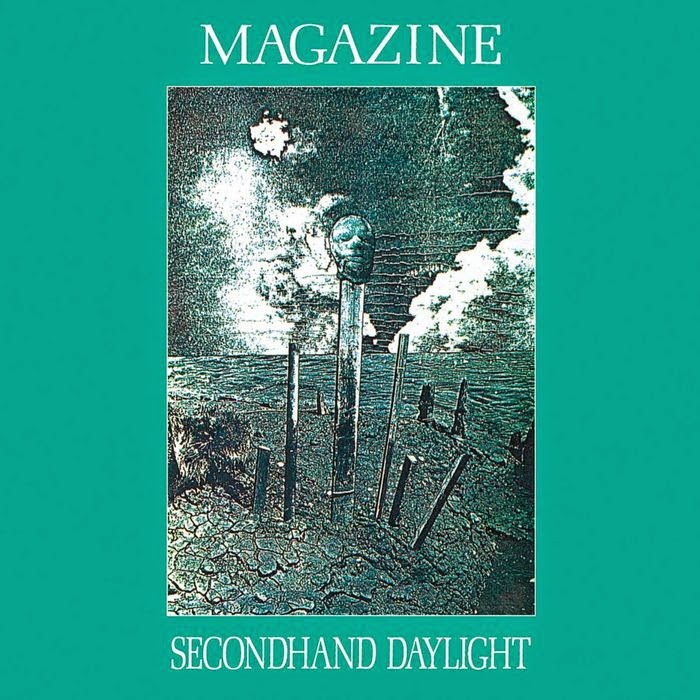 D: Some of the critics have revised their opinion: they’ve owned up and said they were wrong and actually really like it. So there’s been a reassessment, by critics and fans. A good friend of mine, a photographer who does a lot of photography for us, we have a joke about a lot of people coming up to me and almost weeping on my shoulder telling me how much they love ‘Secondhand Daylight’ – there’s real passion for it amongst people that I talk to. It’s great…well, we knew it was pretty good at the time, but there you go!
N: The funny thing about it is the guitar is mixed really quiet on virtually every track on that album and it’s not a problem; it’s not worse for it. It just creates a more subtle soundscape that’s more filmic. It’s the darkest of the records; it’s always been my favourite. Dave’s got a lot of flack at the time because everyone was blaming all the synths and saying it sounded very proggy. It was: it was the opposite of what all the punk bands were doing; it was going absolutely the opposite direction. That’s really a testimony to the personalities in the band, because I don’t think anyone in Magazine ever sat down and thought, ‘What kind of band are we?’ It was just the people, their personalities and their obsessions and that combination that just made that music, which makes it unique and wasn’t following any trends.
What’s your favourite Magazine album, Dave?
D: That’s difficult because there’s massive highlights on those [first] three particularly. So honestly, that’s almost an impossible question to actually say that’s my favourite. Ah OK – ‘Secondhand Daylight’. It depends on the time of day, the day of the week, the month which album you particularly prefer at any one time.
Dave, you mentioned that you’re not doing any new material with Noko, but you’ve got a solo album coming out?
D: I’ve probably got 40 tracks recorded at different stages of development, but mainly instrumental. I briefly touched on this with Noko, that maybe we should do something after these dates, before we go out again, depending on how it goes…maybe we could do a few things over the winter together. I think that would be a really positive thing to do. So there’s a possibility that we will work together on some new material.
How has the tour been selling?
D: The biggest hit is Manchester, London, Glasgow. Sales are good and there’s a lot of anticipation on social media, on Facebook, Instagram…there’s a lot of interest. Yeah, I think they’ll be really good. There’s an element, I’m sure, of people saying, ‘Let’s see what happens. Let’s read the reviews.’ But we’re [also] playing dates together in the summer, including Rebellion [festival] in August. We just take it as it goes. I think people are going to be really surprised and delighted. I think there’s a good chance that, if not later this year, certainly next year, we might do some more dates.
Do you prefer doing new material rather than nostalgia? Obviously fans appreciate it but as a musician, is that something that you mind revisiting frequently, to do nostalgia as opposed to moving forward with new adventures?
D: Well, because I’m pretty consistent when I’m recording and writing new stuff, to me that balances out. It’s over 15 years since I’ve indulged in this level of nostalgia so I don’t feel threatened by it. I feel really good about it because I’ll enjoy it, it’s like I mentioned, there’s a good chance it will push me to do more new stuff with Noko or not, or on my own, or with the guys in the band. Who knows what’s going to come out of this? I’m really pleased with the way things are going.
N: This isn’t my day job. My own band, Apollo 440, is my day job. This is just a nice little break to go back; slip back into the stuff we did 15 years ago. It’s like going on holiday.
Dave Formula and Noko’s ‘Songs From Under the Floorboards’ tour continues at the following UK dates: https://wire-sound.com/dave-formula-noko-uk-tour/
© Ayisha Khan.